Kharg Island Biodiversity Protection Amid War Tensions
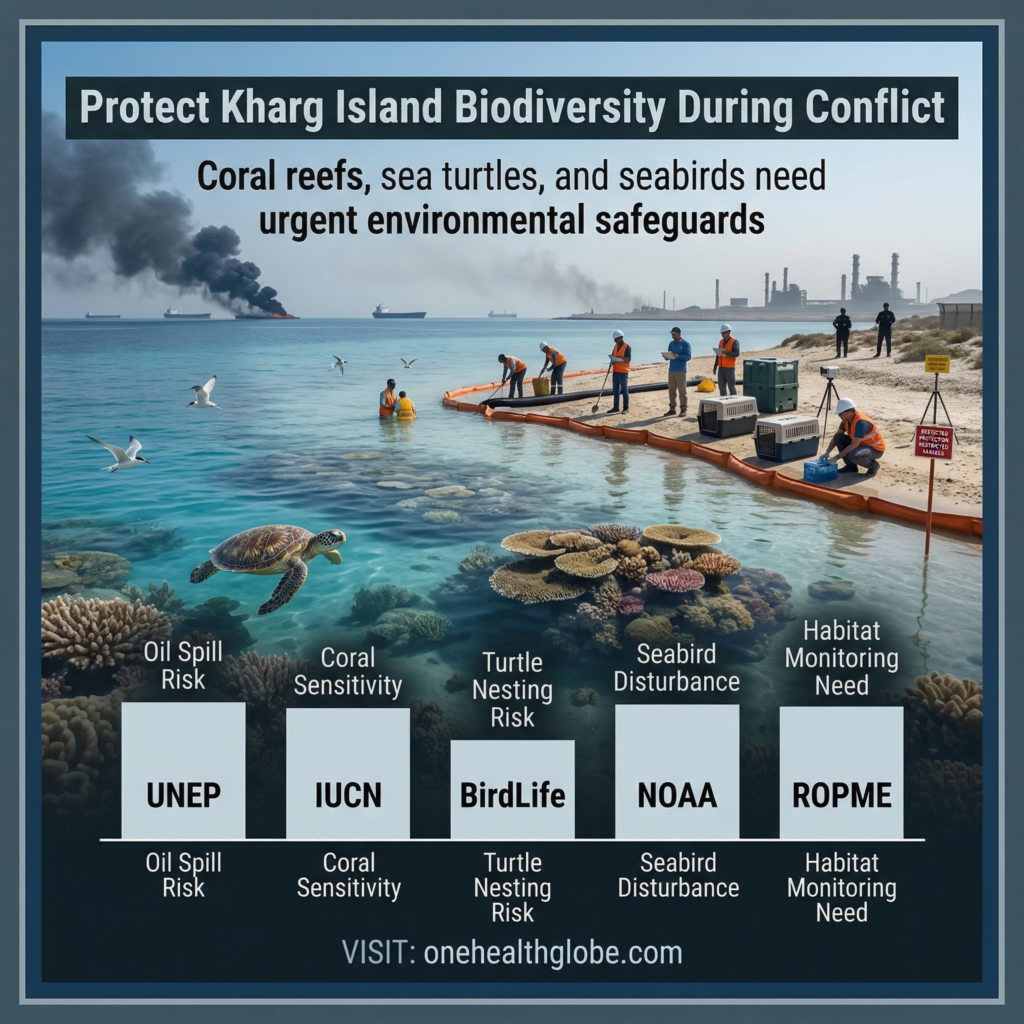
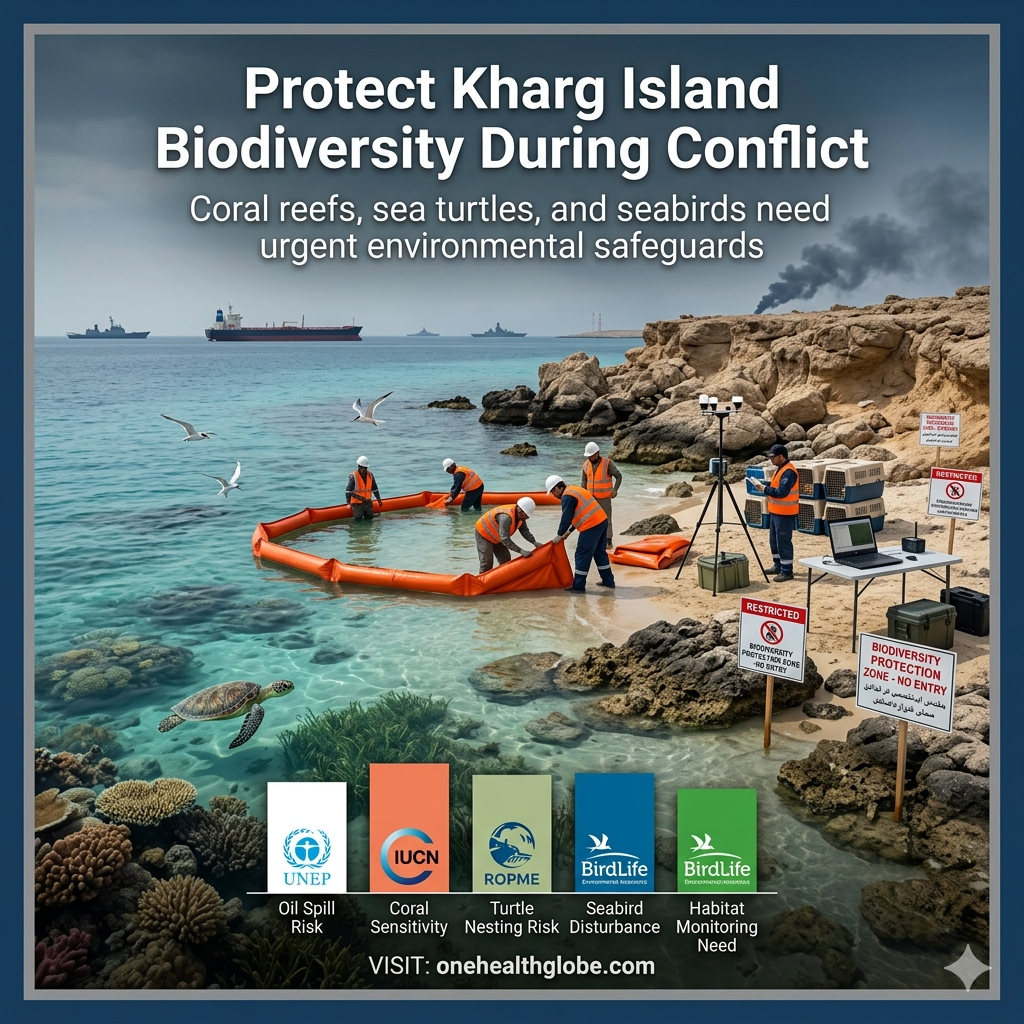
Kharg Island biodiversity protection has become an urgent environmental issue as rising war tensions increase the risk of oil spills, shipping disruption, habitat disturbance, and emergency stress on marine life in the Persian Gulf. When conflict threatens a sensitive island ecosystem, biodiversity protection is no longer only a conservation topic. It becomes a public health, coastal resilience, and environmental security priority.
Kharg Island is widely known for its strategic oil role, yet the island and its surrounding waters also matter for coral habitats, marine species, coastal birds, and fragile shoreline ecology. In times of tension, the smartest response is to reduce ecological damage before it happens. That means stronger prevention, faster monitoring, better wildlife rescue readiness, and tighter control over industrial and maritime risk.
Why Kharg Island biodiversity matters
The waters around Kharg Island are part of the wider Persian Gulf ecosystem, where coral habitats, fish communities, sea turtles, and seabirds face pressure from heat, pollution, shipping, and coastal activity. In a tense regional security situation, these natural systems can be pushed even closer to ecological breakdown.
Coral reefs are especially important because they support marine food chains, provide habitat for many organisms, and help stabilize local ecological balance. Sea turtles and coastal birds are also highly vulnerable during conflict periods because noise, light, contamination, and shoreline disruption can affect nesting, feeding, and survival.
1. Prevent oil spills before they become ecological disasters
The first priority is prevention. Around a high-risk energy hub, even a small leak can spread quickly through shallow coastal waters. Authorities should keep emergency containment booms, skimmers, shoreline cleanup kits, and rapid-response marine teams ready at all times. Tanker routes near sensitive reef zones should be monitored more strictly, and navigation buffers should be enforced where possible.
Public awareness also matters. Readers who want to understand how cleaner water supports marine ecosystems can explore One Health Globe for more environment and public health content, while broader marine conservation guidance can be learned from IUCN.
2. Create emergency biodiversity protection zones
Temporary conflict-time protection zones should be established around the most sensitive habitats. These zones can limit anchoring, dredging, shoreline disturbance, high-speed boat traffic, and unnecessary industrial movement in ecologically valuable areas. Even short-term restrictions can reduce damage to corals, turtle pathways, and bird resting sites.
Where seabird breeding or turtle activity is possible, access should be restricted during key periods. Temporary lighting controls are also useful because artificial night light can disrupt wildlife behavior and make already stressed habitats less stable.
3. Monitor coral reefs, turtles, and coastal birds continuously
Conflict periods demand more monitoring, not less. Coral bleaching checks, water-quality testing, shoreline patrols, turtle sighting records, and seabird disturbance logs can help conservation teams act faster. Remote sensing, drone surveys, and field observations should be combined to detect sudden habitat damage before it spreads.
For digital environmental communication and visual campaign work, creators covering ecosystem protection may also use tools such as Imgmi to improve awareness graphics, while site owners publishing conservation updates can strengthen their websites with Namecheap or WordPress tools like Slim SEO.
4. Prepare wildlife rescue and rehabilitation teams
If conflict-related contamination or shoreline disturbance increases, wildlife rescue teams must already have a plan in place. Sea turtles exposed to oil, exhausted seabirds, and polluted nearshore animals need rapid handling, cleaning, transport, and veterinary support. Local institutions should prepare response kits, mobile units, species handling guidance, and safe holding spaces before a crisis escalates further.
This is where the One Health idea is powerful. Protecting wildlife also helps protect fisheries, food systems, coastal livelihoods, and long-term environmental stability for people.
5. Reduce non-essential coastal pressure during high-risk periods
Another practical step is reducing avoidable ecological stress. Construction, waste dumping, noisy shoreline activity, unnecessary vessel movement, and unmanaged discharge should be minimized when security conditions are unstable. During tense periods, ecosystems have less resilience, so even ordinary pollution becomes more dangerous.
Households and institutions that care about sustainability can also support lower-impact living through practical products linked to greener habits, such as Mioeco for eco-friendly living or smart-home efficiency options like Lumary Smart when writing about energy-aware home lifestyles.
6. Treat biodiversity protection as environmental security
Kharg Island should not be discussed only as an oil location. It should also be treated as a sensitive environmental zone whose reefs, turtles, birds, and coastal waters deserve emergency protection standards during conflict. Governments, environmental agencies, researchers, and local stakeholders all have a role in keeping ecological damage from becoming permanent.
Readers who follow environmental resilience, marine protection, and family-safe sustainability topics can continue learning through related One Health Globe articles. For global biodiversity context, BirdLife International and UNEP remain useful public resources.
Final thought
War tension should never become an excuse to ignore ecosystems. In fact, it is the exact moment when biodiversity needs stronger protection. For Kharg Island, that means preventing spills, protecting coral habitats, reducing disturbance, monitoring wildlife, and preparing rescue systems before damage becomes irreversible. A secure coast is not only one that protects infrastructure. It is one that protects life.