Neuromarketing Impact on Mental Health and Decision Making
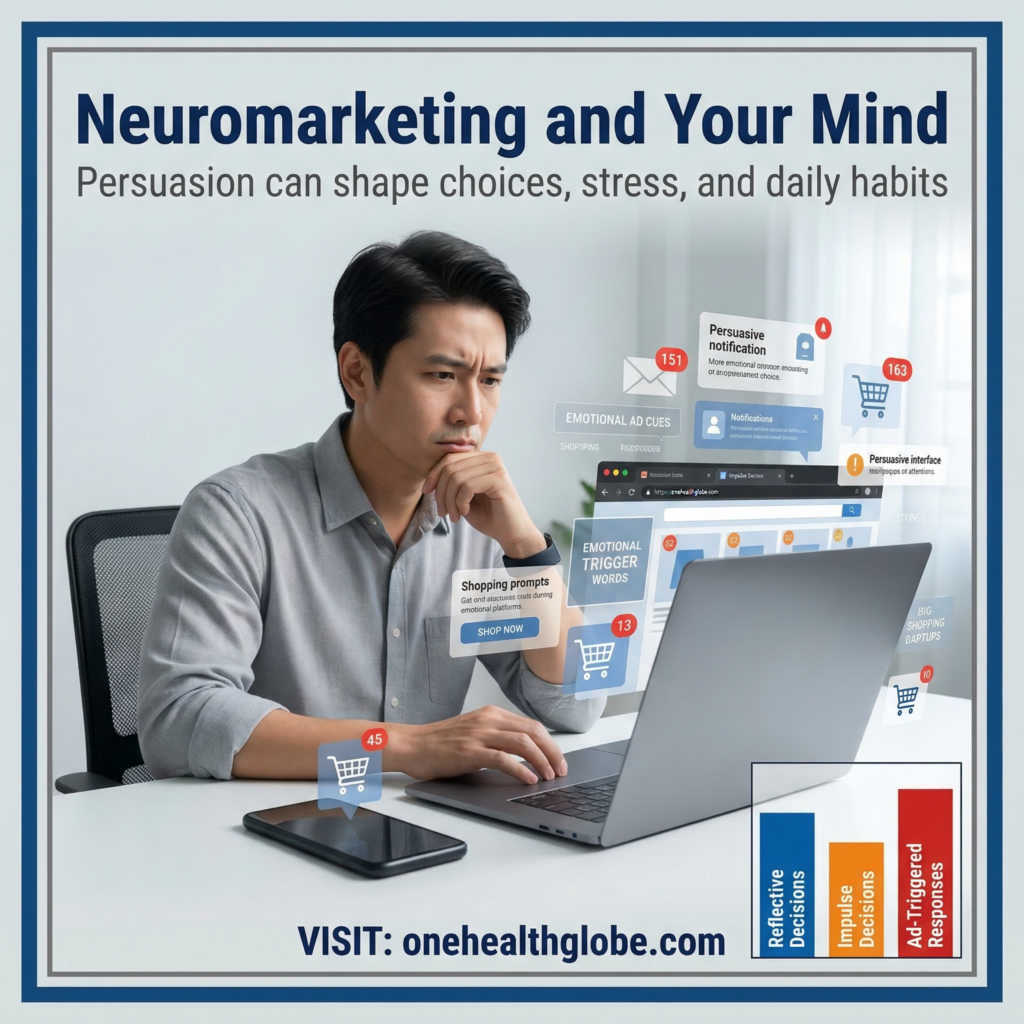
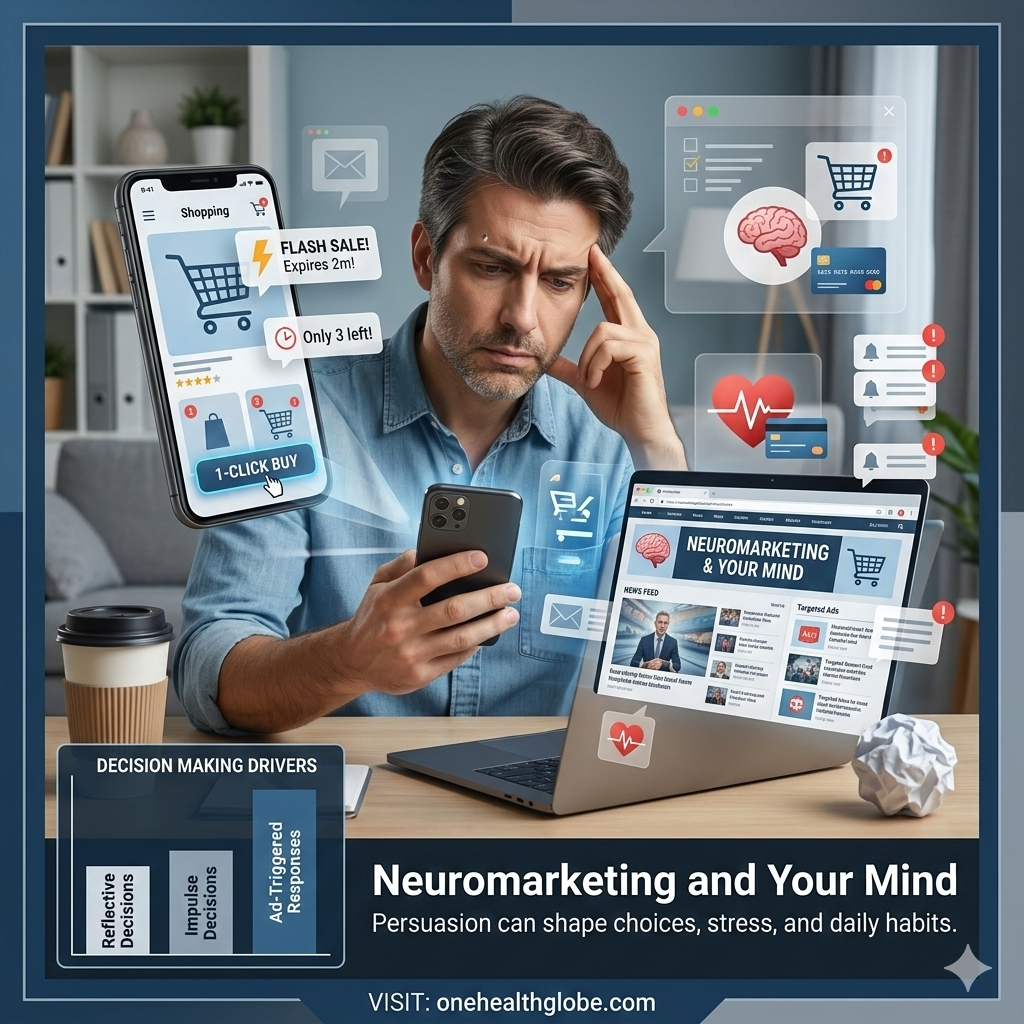
Neuromarketing impact is becoming more visible in modern digital life. Brands no longer rely only on simple advertisements. Instead, they study emotion, attention, memory, and behavioral patterns to shape what people notice and what they buy. As a result, marketing messages now feel more personal, more persuasive, and harder to ignore. This matters because repeated exposure to emotionally designed content can affect stress levels, impulse control, and everyday decision making habits.
Neuromarketing is not always harmful. In some cases, it helps businesses present information more clearly and understand what users prefer. However, problems begin when persuasive design starts pushing people toward emotional buying, compulsive scrolling, unhealthy comparison, or mental overload. Readers who want more public health and behavior-focused articles can also visit the One Health Globe homepage and explore the contact page for further guidance.
How Neuromarketing Influences the Mind
Neuromarketing uses ideas from psychology and brain science to improve marketing performance. It often focuses on emotional triggers, reward expectation, attention capture, and memory recall. Bright visuals, urgency phrases, personalized recommendations, and fear of missing out are common examples. These methods may not force a person to buy something, but they can reduce reflective thinking and encourage quick emotional reactions.
Over time, this can influence daily habits. People may compare less, click faster, and make choices based more on emotion than on evidence. They may also feel tired after constant digital persuasion. This weakens thoughtful decision making, especially in young people, stressed adults, and heavy social media users.
Possible Effects on Mental Health
The mental health side becomes more serious when marketing pressure is frequent and emotionally intense. Repeated exposure to highly targeted content can increase anxiety, dissatisfaction, and impulsive consumption habits. For example, ideal beauty ads, fear-based health promotions, and limited-time offers may create pressure, guilt, or emotional fatigue. In digital spaces, this can also encourage doom scrolling, social comparison, and stress-based purchases.
That is why balanced digital habits are important. Reliable health information from the World Health Organization and the CDC can help readers understand health communication in a more evidence-based way. Content creators who want to manage publishing more responsibly may also use Circleboom to plan posts more intentionally instead of adding to audience overload.
How Decision Making Habits Change
Decision making habits can slowly shift under repeated persuasion. Many users begin to rely on emotional signals instead of careful evaluation. They may choose what feels urgent rather than what is truly useful. This is especially common in online shopping, social media promotions, lifestyle products, and health-related marketing.
Common Behavioral Changes
First, people may become more impulsive in spending. Second, they may trust emotional branding more than verified facts. Third, they may need stronger stimulation before responding, because repeated persuasion reduces sensitivity. Finally, they may lose focus and time in endless recommendation loops designed to keep them engaged.
This is why healthy media literacy matters. Readers should pause before clicking, compare claims, and ask whether a message is informing them or simply triggering them. Website owners and ethical creators can also build online spaces more responsibly. For example, Namecheap can support website development, while Slim SEO may help improve visibility without depending on manipulative page design.
How to Protect Mental Balance
A few practical steps can reduce the negative influence of neuromarketing. Limit exposure to ad-heavy digital platforms. Avoid shopping when tired, stressed, or emotionally upset. Turn off unnecessary notifications. Follow trusted sources instead of sensational clickbait. Parents should also discuss persuasive digital content with children and teenagers, because younger users may respond more strongly to reward-based and socially driven messaging.
Creators, marketers, and website owners should also choose ethical communication. Clear information, respectful design, and honest claims build trust over time. Strong content does not need to manipulate people in order to perform well in search engines or reader engagement.
Final Thought
Neuromarketing can improve communication, but it can also shape unhealthy decision making habits when used without ethical limits. Its strongest effects often appear in attention, emotional response, and rapid consumer choices. Therefore, the goal should not be to fear all marketing. Instead, the goal should be to build awareness, protect mental health, and encourage slower, smarter, and more evidence-based decisions in digital life.
Keep Regular Visiting https://onehealthglobe.com/
FOLLOW PAGE FOR MORE https://web.facebook.com/onehealthglobe/
#OneHealth #MentalHealth #Neuromarketing #DecisionMaking #DigitalHealth #ConsumerBehavior #HealthyHabits #PublicHealth #MediaLiteracy #HealthAwareness