Reduce Cat Rough Play at Home to Prevent Injuries and Protect Decor
Reduce cat rough play at home by understanding one simple truth: most rough play is not “bad behavior” at first. It is often normal feline play that becomes too intense because the cat has extra energy, too little enrichment, or not enough suitable play outlets. When owners redirect that energy correctly, they can lower the risk of scratches, bites, knocked-over decor, and stress inside the home. Cats commonly show rough play through stalking, pouncing, grabbing, chasing, swatting, and biting, especially when they are under-stimulated. :contentReference[oaicite:2]{index=2}
If you want fewer injuries and less damage to cushions, curtains, or decorative items, the answer is not harsh punishment. The smarter solution is to create a home setup that gives your cat safe ways to climb, scratch, chase, and “hunt” without turning your hands, ankles, or furniture into the target. Veterinary guidance also notes that boredom can contribute to destructive behavior, and active play with acceptable toys is important. :contentReference[oaicite:3]{index=3}
Why Rough Play Happens at Home
Rough play usually grows when a cat has too much unused energy and too few appropriate outlets. Young cats, highly active indoor cats, and cats without enough stimulating activity may turn normal play into overly intense behavior. This can include sudden ankle attacks, pouncing on moving hands, jumping onto furniture, or scratching objects during bursts of excitement. VCA notes that under-stimulation, unused energy, and lack of suitable play opportunities can lead to play-related aggression and accidental injury. :contentReference[oaicite:4]{index=4}
This is why indoor enrichment matters so much. The American Association of Feline Practitioners states that cats are naturally curious and active, and that suitable environmental enrichment supports both physical and mental health. The same guidance also notes that lack of proper enrichment can increase stress and different forms of aggression. :contentReference[oaicite:5]{index=5}
Do Not Use Your Hands as Toys
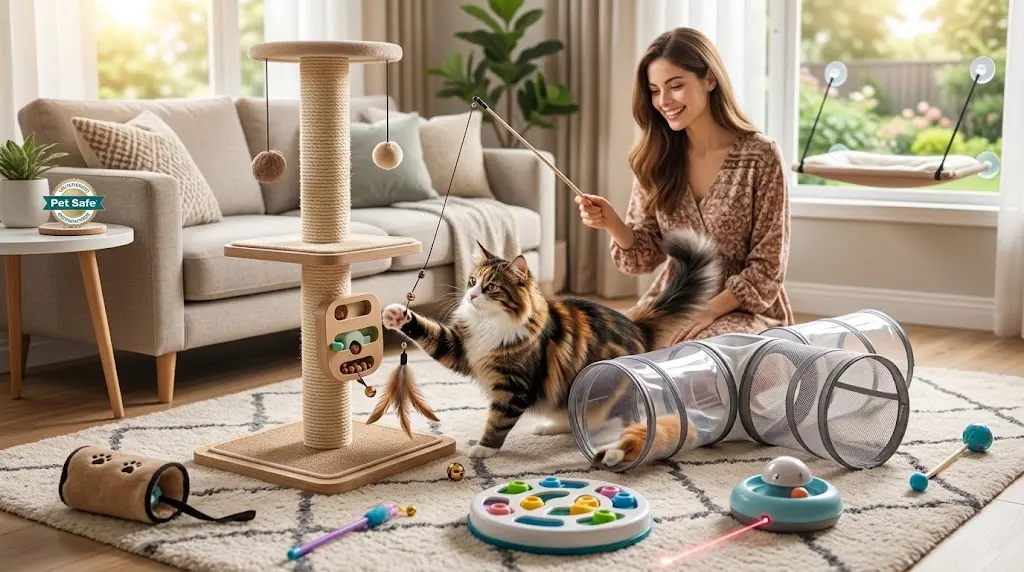
One of the biggest mistakes owners make is allowing kittens or young cats to wrestle directly with hands or feet. At first it seems cute. Later, the cat learns that human skin is part of the game. That habit can become painful and difficult to reverse. Instead, use wand toys, tossed soft toys, tunnels, and puzzle-based play so the cat chases an object rather than your body. VCA specifically recommends providing interactive and self-play options and not tolerating aggressive play directed toward you. :contentReference[oaicite:6]{index=6}
Use Daily Play Sessions to Redirect Energy
Daily play is one of the most effective ways to reduce cat rough play at home. Short, focused sessions often work better than waiting until the cat is already overstimulated. Try two or three active sessions each day, especially in the morning or evening when many cats are naturally more energetic. Move the toy like prey, let the cat stalk and pounce, then allow a satisfying “catch” moment at the end.
Rotating toys also helps. VCA advises daily toy rotation because cats may lose interest in one toy but become engaged again when something feels new. That novelty can reduce frustration and keep the cat focused on toys instead of on decor or people. :contentReference[oaicite:7]{index=7}
Create Safe Scratch Zones to Protect Furniture
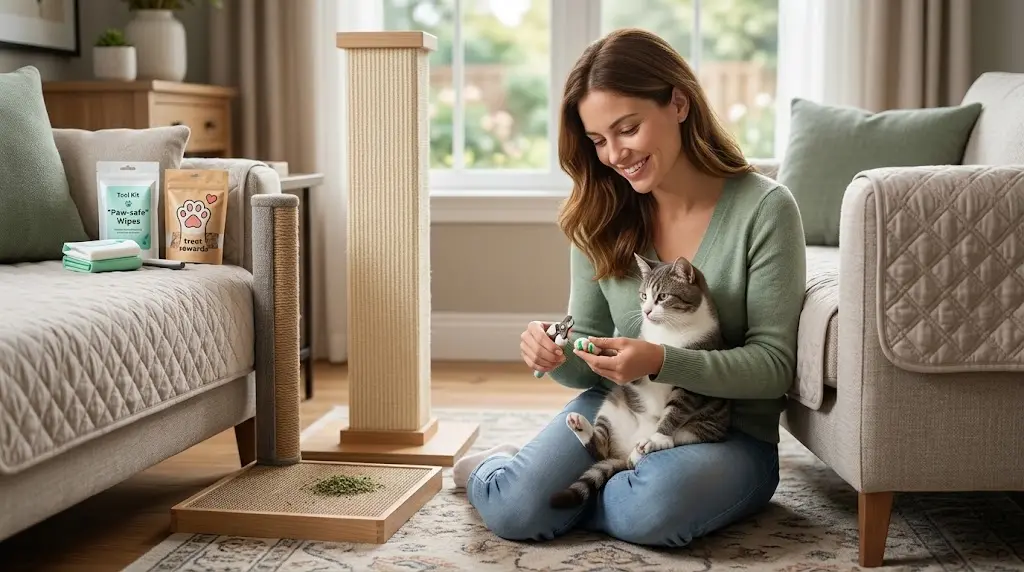
If you want your sofa and decorative fabrics to stay intact, give your cat better scratching choices. Cornell notes that providing acceptable scratching places is important and that matching your cat’s preference for horizontal or vertical scratching matters. Nail trimming can also help reduce damage. :contentReference[oaicite:8]{index=8}
Place a scratcher near the spots your cat already targets. If your cat loves the arm of a couch, put a strong scratcher next to that area instead of far away in another room. If you are refreshing your interior setup, home-focused options like decor-friendly accent pieces or a more durable room plan from stylish home furnishing collections can help you shape a cat-aware living space without giving up comfort or design.
Add Vertical Space and Safe Activity Areas
Cats often calm down when they have safe places to climb, observe, and retreat. Enrichment guidance highlights the importance of resources such as toys, safe places, and vertical space. A cat tree, window perch, shelf path, or elevated resting spot can reduce pent-up energy and keep the cat busy in healthier ways. :contentReference[oaicite:9]{index=9}
If you want better awareness of what triggers rough play during the day, a smart home camera system may help you observe when your cat becomes restless, which room attracts rough play, or whether play spikes happen during long quiet periods.
Keep the Home Cleaner and Easier to Manage
Rough play often spreads toys, hair, and dust into corners, under furniture, and across soft surfaces. A cleaner environment does not solve behavior by itself, but it supports better routines. Organized washing and toy-cleaning stations can make it easier to maintain hygiene, especially in homes with multiple pets. Tools such as practical sink accessories and eco-friendly reusable home essentials can fit naturally into a tidy pet-care area for mats, play items, and washable soft goods.
What to Do in the Moment When Rough Play Starts
If the cat suddenly pounces on your arm, ankle, or clothing, do not hit, yell, or turn it into a wrestling match. Freeze movement when safe, disengage calmly, and redirect the cat onto an appropriate toy. Then restart play on your terms. VCA also notes that owners should anticipate the cat’s need to play and provide outlets and opportunities for play on the owner’s terms. :contentReference[oaicite:10]{index=10}
If the rough play is intense, frequent, or seems truly aggressive rather than playful, a medical or behavioral evaluation may be needed. The AAFP position statement advises that if owners are already experiencing behavioral problems, a thorough medical evaluation should be performed before moving ahead with an enrichment plan. :contentReference[oaicite:11]{index=11}
When to Seek Extra Help
Get veterinary advice if your cat’s rough play suddenly worsens, causes repeated injuries, includes strong fear signs, or seems linked to pain, anxiety, or conflict with another pet. Cornell also notes that consultation with a veterinarian or veterinary behaviorist may help address destructive behavior and develop management strategies that protect both the cat and the household. :contentReference[oaicite:12]{index=12}
The Goal Is Redirection, Not Punishment
The best way to reduce cat rough play at home is to replace chaos with structure. Give your cat a hunting outlet. Give it scratching choices. Give it vertical space. Rotate toys. Protect your decor by designing for natural cat behavior, not by fighting against it. That approach helps prevent injury, lowers stress, and keeps the home more peaceful for everyone.
For more pet and home safety content, visit the One Health Globe homepage. You can also explore trusted feline behavior guidance from Cornell Feline Health Center and enrichment-focused veterinary guidance from AAFP feline environmental enrichment guidance. :contentReference[oaicite:13]{index=13}
Keep Regular Visiting https://onehealthglobe.com/
FOLLOW PAGE FOR MORE
https://web.facebook.com/onehealthglobe/
#OneHealth #CatSafety #IndoorCats #CatBehavior #PetWellness #CatEnrichment #HomeSafety #HealthyPets #PetCare #FurnitureProtection