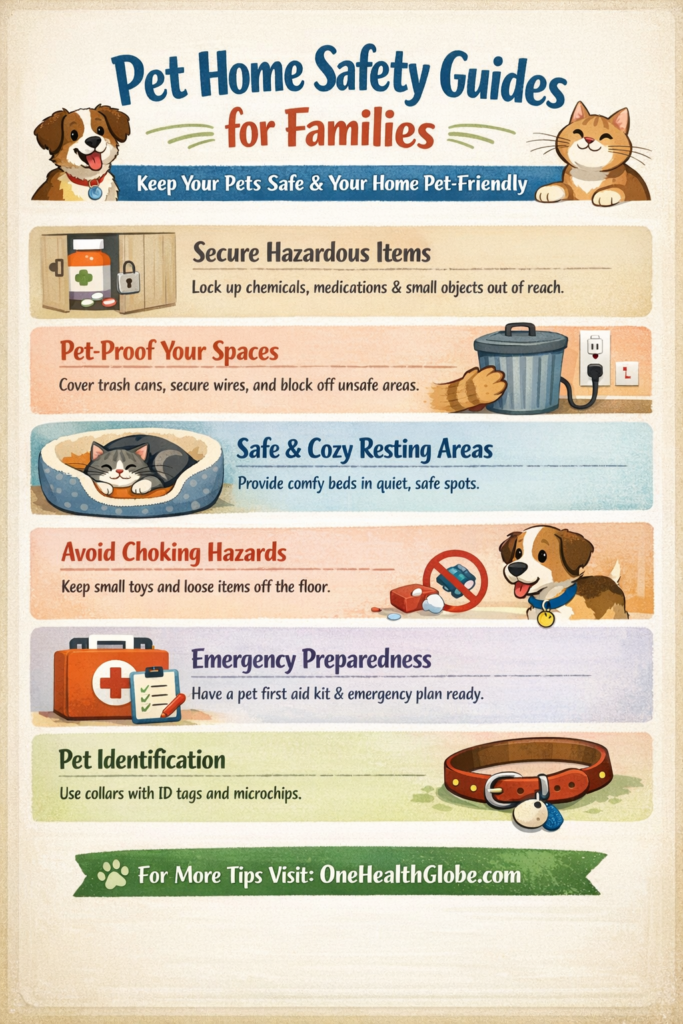
Pet Home Safety Guide for Families: Simple Ways to Pet-Proof Your Home
A pet home safety guide for families can help prevent avoidable accidents before they happen. Dogs and cats are curious by nature. They sniff, chew, climb, jump, and explore areas that adults often ignore. That is why a safer home setup matters. When families pet-proof their home with a few practical changes, they reduce the risk of poisoning, choking, burns, cuts, and escape incidents while making daily life calmer for both pets and people.
If you are building a safer routine for pets at home, you can also explore more practical tips in our pet care blog section. Families who are setting up feeding zones, resting areas, and hygiene routines may also want to browse our One Health Globe home resources for additional pet and family safety ideas.
Why pet home safety matters for modern families
Many household items look harmless to people but can be dangerous for pets. Veterinary and pet safety organizations regularly warn about common home hazards such as medications, cleaning products, loose electrical cords, uncovered trash, toxic foods, and unsafe small objects. A good family safety plan does not need to be complicated. It simply needs to be consistent.
Homes with children and pets need even more care because toys, food scraps, craft items, batteries, strings, and small plastic pieces can easily end up on the floor. A safe home reduces stress, lowers emergency risk, and helps pets feel secure in their environment.
Start with a room-by-room pet-proofing check
Kitchen safety for dogs and cats
The kitchen is one of the most overlooked danger zones. Store chocolate, grapes, raisins, xylitol-containing gum, onions, and alcohol well out of reach. Keep trash bins covered. Do not leave hot pans, sharp tools, or cleaning sprays where a curious pet can reach them. Laundry and dish detergents should stay in closed cabinets.
For hydration support at home, some families also like to upgrade their pet-friendly wellness setup with products linked through our site, such as hydration-friendly water solutions where relevant to their broader household wellness routine.
Living room and bedroom safety
Tuck away loose charging cables, blind cords, and extension wires. Remove small chewable decorations, children’s toy parts, coins, pins, and batteries. Secure shelves that may tip if a cat climbs them. Check reclining furniture carefully before use, because pets can hide underneath cushions or mechanisms.
Create a calm resting space with a washable bed or soft mat in a quiet area. Pets that feel safe and settled are often less likely to chew random items or pace around the home.
Bathroom and laundry room safety
These rooms often contain medications, razors, detergents, bleach, disinfectants, and toilet cleaners. Keep lids shut and cabinets closed. Do not leave damp chemical wipes, cotton buds, or capsules where pets can grab them. Always check the washer and dryer before starting them, especially if you have a cat.
Pet home safety guide for families with children
Families should teach children that pet safety starts with simple habits. Put toys away after play. Never leave slime, glue, crayons, or tiny blocks on the floor. Keep snacks in sealed containers. Show children how to close doors and gates properly so pets do not escape.
It also helps to create “pet-only zones” where your dog or cat can rest without being disturbed. This supports better behavior and lowers stress inside busy homes.
Emergency planning every family should have
Every household should keep a pet emergency plan. Save your veterinarian’s number and the number of a nearby emergency clinic. Keep a pet first-aid kit, updated ID tags, recent photos of your pet, and travel carriers ready. Microchipping and visible identification are especially important if a pet slips out during a delivery, gathering, or home repair visit.
Families preparing an emergency corner or travel-ready storage area may also find useful items through relevant household and safety tools such as smart home security devices, family travel safety gear, or portable outdoor hygiene gear when planning for both indoor and outdoor family routines.
Simple daily habits that keep pets safer at home
- Check floors each evening for dropped pills, food scraps, strings, and small objects.
- Store cleaners, medicines, and pest-control products in closed cabinets.
- Use covered trash bins.
- Keep electrical cords organized and out of reach.
- Refresh water bowls and wash feeding areas daily.
- Inspect windows, screens, balconies, and gates for escape risks.
- Update ID tags and keep recent pet photos on your phone.
How to make your home safer without making it feel restrictive
A safer pet home does not mean a colder home. It means a smarter one. Use baskets for children’s toys, cord covers for electronics, secure storage for chemicals, and pet-safe zones for sleep and feeding. Good pet home design supports both comfort and prevention.
If you enjoy improving your home environment, you may also like exploring practical home-focused products such as home organization and decor ideas, smart lighting options, and eco-friendly home essentials that can support a cleaner and more organized family space.
Final thoughts on a pet home safety guide for families
A strong pet home safety guide for families begins with awareness and improves through routine. Start in the kitchen, secure cords and chemicals, reduce floor clutter, prepare for emergencies, and give your pets safe places to rest. These steps are simple, affordable, and realistic for most homes. Over time, they can make a major difference in protecting your dog or cat from common household dangers.
For more pet-friendly family guidance, visit One Health Globe and continue reading through our latest pet safety blog content.