German Shorthaired Pointer Temperament, Health, Training & Care Guide
The German Shorthaired Pointer is an athletic, intelligent, and highly energetic temperament sporting dog known for its versatility, loyalty, and strong work drive. Learn detailed guide about German Shorthaired Pointer Temperament, Health, Training & Care Guide. This dog breed can be a wonderful companion for active families, but it needs structure, exercise, training, care and daily engagement to truly thrive.
In this complete guide, you will learn about German Shorthaired Pointer temperament, health care tips, common health problems, grooming, training advice, family suitability, breed facts, comparisons with other popular dogs, and the most searched owner FAQs.

German Shorthaired Pointer Visual Guide
Use this premium image strip to quick learn about German Shorthaired Pointer temperament, daily care, exercise needs, and family fit.

German Shorthaired Pointer Breed Facts
Sporting
Energetic, intelligent, affectionate, eager
Medium to large
Short, dense, easy to maintain
Very high
Active owners and sporty families
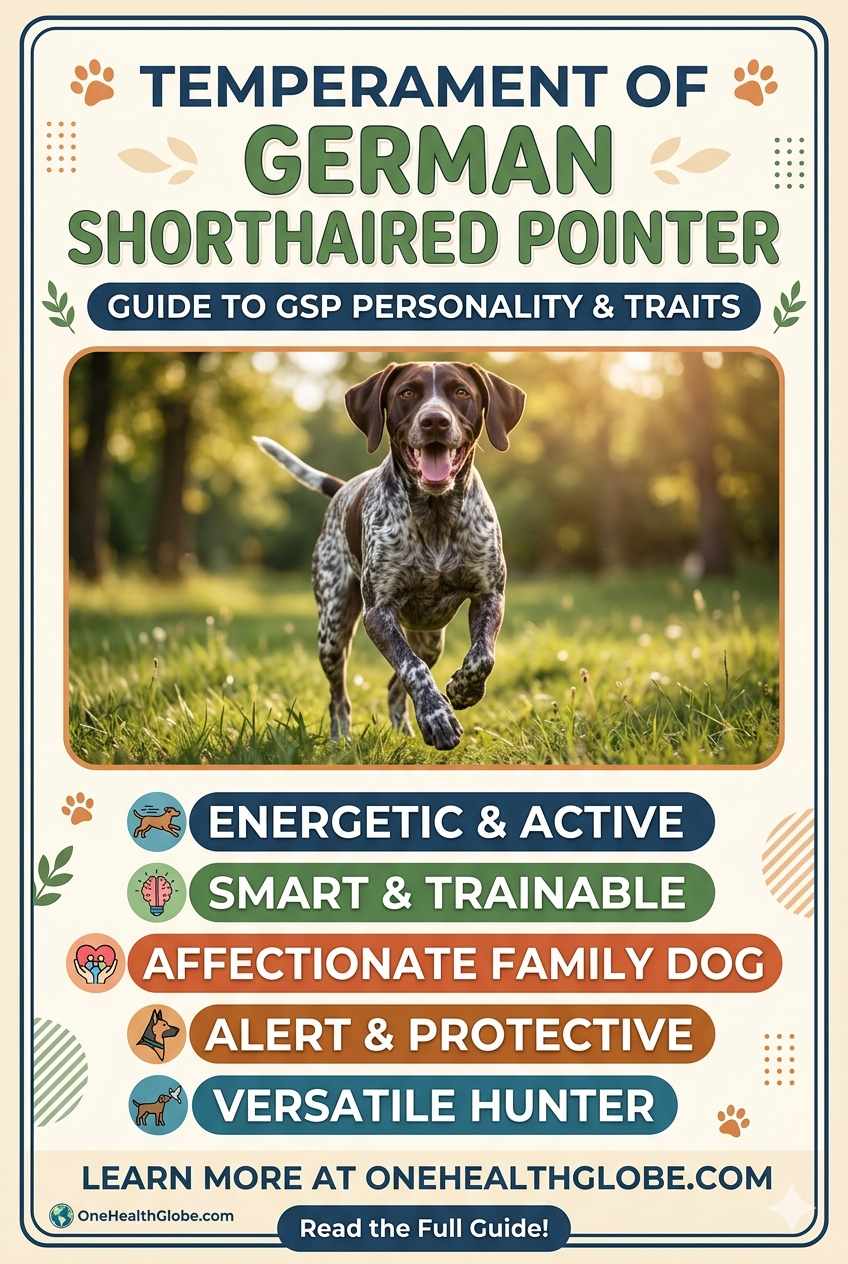
German Shorthaired Pointer Temperament
The German Shorthaired Pointer temperament is often described as alert, affectionate, enthusiastic, athletic, and highly responsive. This breed was developed to work closely with people, so it usually builds a strong bond with its family and prefers an involved lifestyle instead of being left alone for long periods.
German Shorthaired Pointers are usually friendly and eager, but they are also extremely active. If their daily needs are not met, they may become restless, noisy, destructive, or difficult to manage indoors. A properly exercised and mentally engaged Pointer is usually more settled and easier to live with.
- Strong bond with family members
- Very high energy and work drive
- Smart and trainable with consistency
- Can be playful and affectionate with children
- May show prey drive toward birds and small animals
- Usually does best with structure, routines, and active handling
Is a German Shorthaired Pointer a Good Family Dog?
Yes, a German Shorthaired Pointer can be a very good family dog for homes that enjoy exercise, routine, and outdoor activity. This breed is usually best for families who like long walks, running, field play, training sessions, fetch, hiking, or other forms of regular movement.
In low-activity homes, the breed may become frustrated. Because this dog is athletic and enthusiastic, families with young children should use supervision and early manners training. If you want more household safety tips for active dogs, visit the Pet Safety Hub.
German Shorthaired Pointer Health Care Tips
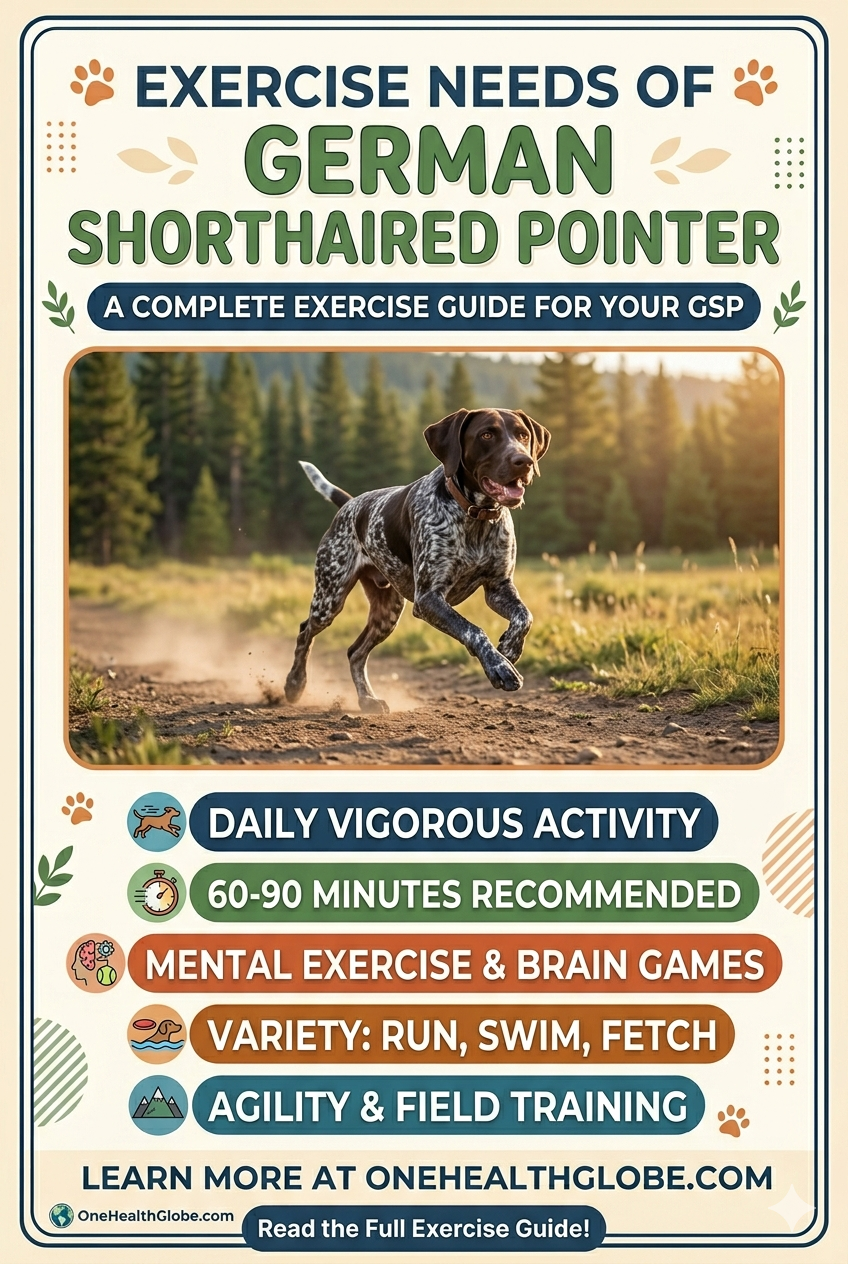
- Provide vigorous daily exercise and breed-appropriate mental stimulation.
- Keep body weight healthy to reduce unnecessary stress on joints.
- Use regular veterinary checkups for preventive health monitoring.
- Check ears often, especially after swimming or outdoor activity.
- Maintain flea, tick, and parasite prevention year-round.
- Inspect paws, nails, and skin after rough terrain or field work.
- Feed on a routine and avoid intense exercise around meal times.
- Use safe home and outdoor handling practices from the Pet Safety Hub.
Common German Shorthaired Pointer Health Problems
Like many athletic medium-to-large dogs, the German Shorthaired Pointer may face some inherited or activity-related health concerns. Good breeding, preventive care, and healthy body condition can support better long-term outcomes.
Hip Dysplasia
Can affect comfort, movement, and long-term mobility, especially in active dogs.
Elbow Dysplasia
May contribute to front-leg discomfort or limping over time.
Bloat / GDV Risk
Deep-chested breeds may face a bloating or stomach-twisting emergency risk.
Ear Issues
Water-loving and outdoor dogs may need regular ear inspection and cleaning advice from a vet.
Skin Scrapes or Field Injuries
Outdoor-running dogs may get scrapes, irritations, or tick exposure after activity.
Eye Concerns
Regular veterinary screening helps catch possible eye issues early.
German Shorthaired Pointer Training Tips and Care
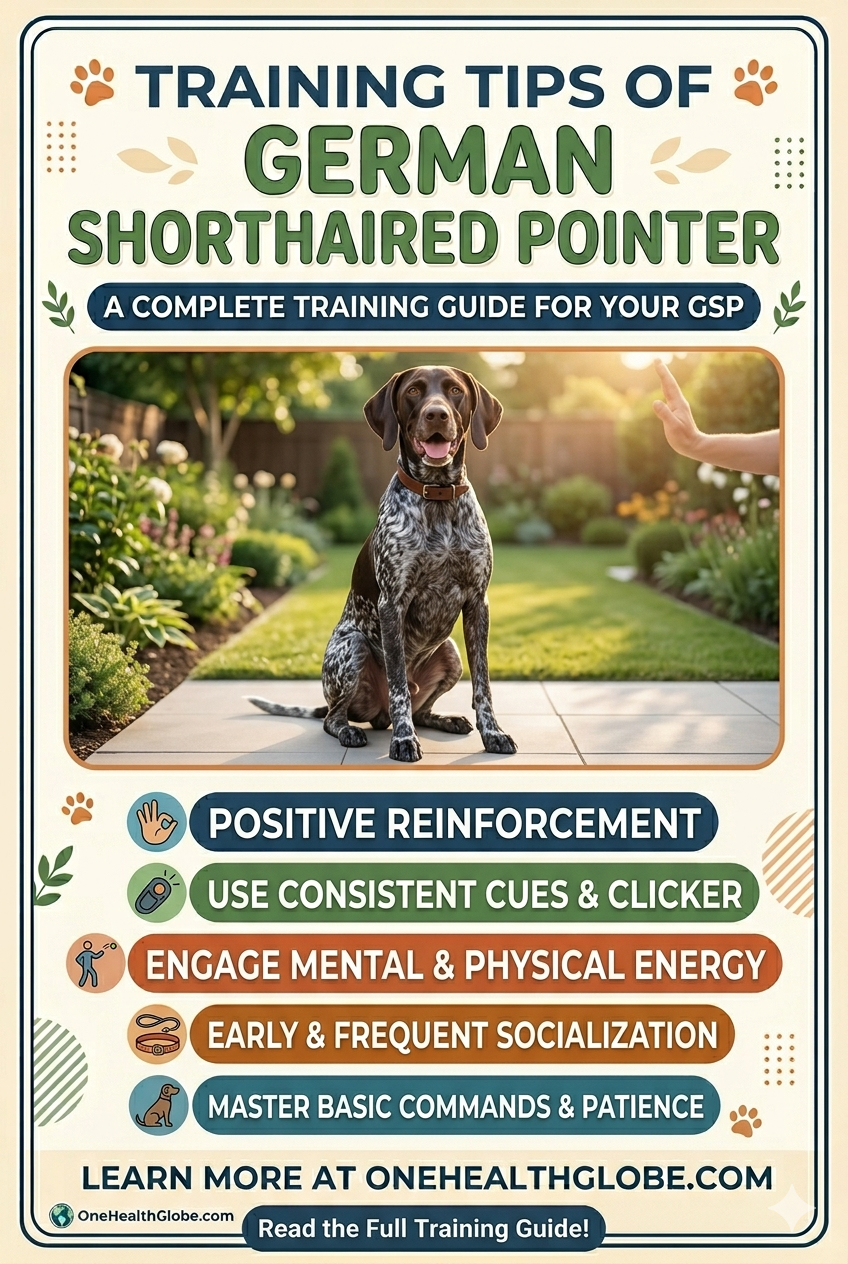
Training a German Shorthaired Pointer is often enjoyable because this breed is sharp, eager, and responsive. The biggest challenge is usually not intelligence but energy. Young dogs especially need clear routines, positive reinforcement, and daily outlets for movement and focus.
- Start recall training early and practice it often.
- Use short, positive sessions with rewards and praise.
- Teach loose-leash walking before adolescent strength increases.
- Train calm settling at home, not only active obedience.
- Use fetch, scent work, puzzle games, and structured routines.
- Socialize early with people, sounds, places, and surfaces.
- Prevent boredom by rotating exercise and training activities.
If you enjoy intelligent working or sporting dogs, also compare this breed with the Labrador Retriever, Golden Retriever, Australian Shepherd, and German Shepherd.
German Shorthaired Pointer Grooming and Daily Care
The German Shorthaired Pointer has a short coat that is easier to maintain than many longer-coated breeds. Even so, regular care still matters. Weekly brushing, routine ear care, nail trimming, dental care, and paw inspection help keep this dog comfortable and healthy.
- Brush once or twice weekly
- Bathe only as needed
- Inspect ears after swimming or baths
- Trim nails routinely
- Brush teeth regularly
- Check paws after outdoor sessions
German Shorthaired Pointer vs Other Popular Breeds
| Breed | Energy Level | Trainability | Family Fit | Best For |
|---|---|---|---|---|
| German Shorthaired Pointer | Very High | High | Great for active families | Sporty, outdoorsy owners |
| Labrador Retriever | High | High | Very family-friendly | Friendly companion homes |
| Golden Retriever | High | High | Gentle and social | Families and beginners |
| Australian Shepherd | Very High | Very High | Great with structure | Training-focused homes |
| German Shepherd | High | High | Loyal and trainable | Working and family homes |
Related Breed Guides and Safety Resources
German Shorthaired Pointer FAQs
Yes, especially for active families who can provide training, structure, and daily exercise.
They are not usually known for aggression, but lack of exercise, training, or socialization can create behavior problems.
This breed usually needs a high amount of daily physical and mental activity.
Yes, they are intelligent and eager, but they need consistency and positive reinforcement.
They can bark when bored, excited, or under-stimulated.
Usually yes, but supervision is important because they are enthusiastic and energetic.
Some can live with cats if introduced properly, but prey drive may be strong.
Yes, they do shed, though their coat is shorter and easier to maintain than many other breeds.
It may be difficult unless the dog’s exercise needs are fully met every day.
The breed is often described as living into the low-to-mid teen years with good care.
Commonly discussed concerns include hip dysplasia, elbow dysplasia, bloat risk, ear issues, and some eye concerns.
No, they are not considered hypoallergenic.
Many enjoy swimming and water-based activity.
A yard can help, but it does not replace real exercise and interaction.
They can be challenging for beginners unless the owner is very active and committed to training.
Many remain energetic through adolescence and young adulthood.
Weekly brushing and routine ear, nail, paw, and dental care are usually enough.
That depends on your lifestyle. Labradors often suit broader family homes, while German Shorthaired Pointers usually fit highly active homes best.
They usually do best with companionship and may struggle if left alone for long periods too often.
Visit the Dog Breeds directory and the Pet Safety Hub.
Explore More Safe and Smart Pet Care Guides
Continue learning with breed comparisons, dog temperament guides, owner-friendly care advice, and safety resources designed to help families make better pet decisions.
Vet-Approved Products Every Dog Owner Should Know About
Whether your dog is battling shedding season, digestive issues, or just needs better everyday care, these are the vet-recommended brands trusted by thousands of U.S. dog owners in 2026.
Struggling with your dog's dull coat or picky appetite? Ruff Greens is a vet-formulated superfood supplement supporting digestion, skin, and coat health in one daily scoop.
🐾 Try Ruff Greens TodayCan't get a same-week vet appointment? Dutch connects you with licensed U.S. veterinarians online for fast diagnosis, prescriptions, and care plans — often within hours.
🩺 Talk to a Vet Online NowTired of inconsistent feeding schedules? Petlibro's smart automatic feeders and fountains keep meals and water on schedule, even when you're away.
🍽️ Shop Petlibro Smart FeedersWorried about catching cancer too late? Oncotect is an at-home early cancer screening kit for dogs, with lab results in days instead of invasive vet testing.
🔬 Get Your Oncotect Screening KitCurious what's really in your dog's DNA? Basepaws' breed and health DNA test reveals ancestry, breed traits, and potential genetic health risks.
🧬 Get Your Basepaws DNA KitIs your dog anxious during storms, car rides, or vet visits? Bailey's CBD offers vet-formulated, third-party-tested calming chews and oils made for dogs' natural stress response.
🌿 Calm Your Dog with Bailey's CBDWant more breed-specific care guides? Explore our full Dog Breeds Hub →