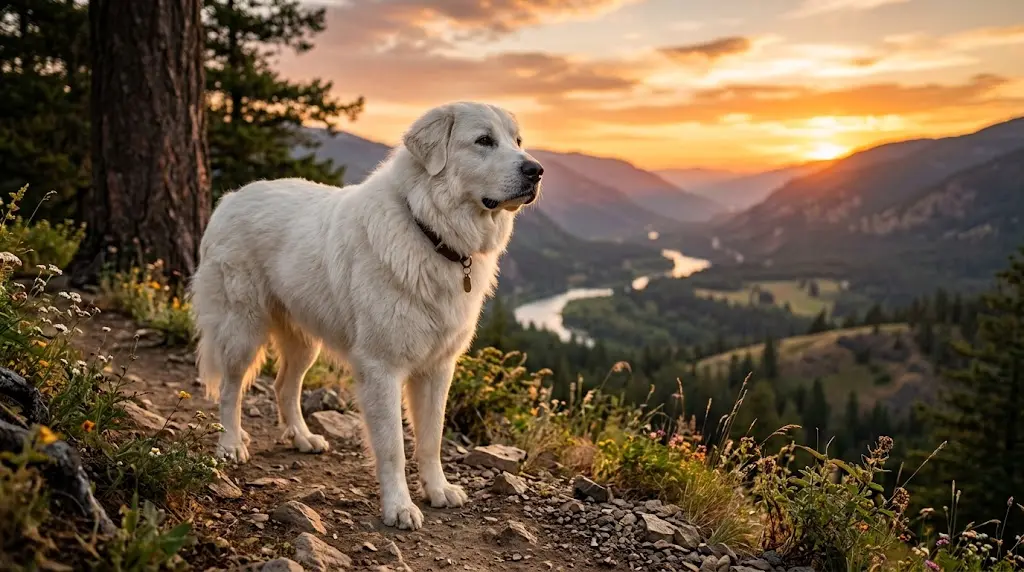
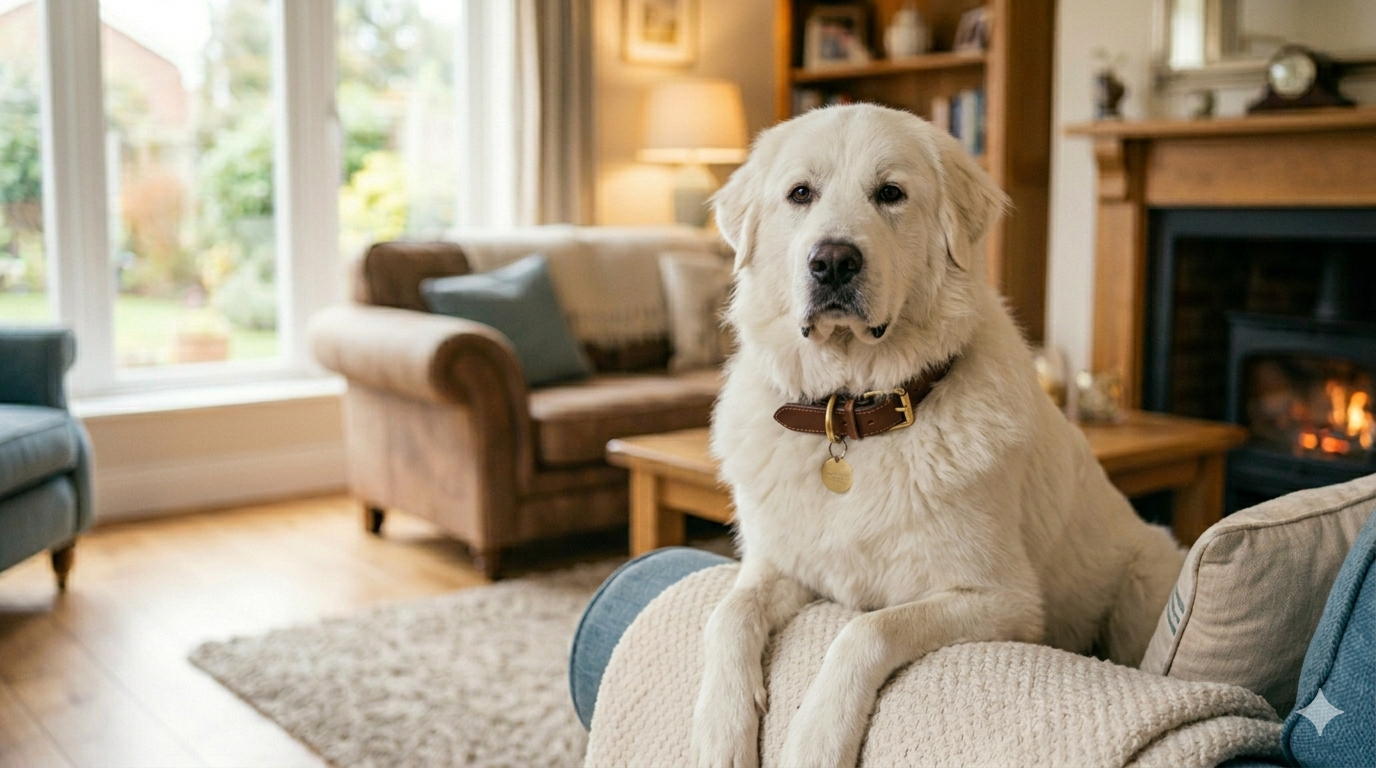
The Great Pyrenees is one of the most misunderstood breeds in America. Families are drawn to the stunning white coat and calm demeanor — then surprised by the nocturnal barking, independent personality, and giant-breed health demands that come with it. This guide gives you the honest, complete picture so you can make the right decision and give your Great Pyrenees the care it actually needs. For breed-specific tools, use our free Dog Paw Scanner and Pet Vaccine Tracker.
1. Great Pyrenees Temperament — What Owners Actually Experience
The Great Pyrenees temperament is best described as calm, watchful, patient, and independently minded. This breed spent centuries guarding livestock alone in mountain terrain — making decisions without human direction. That heritage shapes everything about how the breed thinks and responds today.
Great Pyrenees dogs are deeply affectionate with their family but reserved or aloof with strangers. They do not aim to please the way a Labrador or Golden Retriever does. They assess situations, make their own judgments, and act accordingly. This is not stubbornness — it is the breed doing exactly what it was designed to do.
Great Pyrenees Temperament Traits
2. Is the Great Pyrenees a Good Family Dog?
Yes — for the right family. Great Pyrenees dogs are exceptionally gentle, calm, and patient with children they’ve grown up with. They are naturally protective and often position themselves between their family and perceived threats. Many owners describe them as the most loyal dog they’ve ever owned.
However, this breed has specific requirements that make it a poor choice for many households:
✅ Great Pyrenees Is a Good Fit If You Have:
- A securely fenced yard — they will roam for miles if given the chance
- Experience handling large or independent breeds
- Patience for slower training progress
- Tolerance for heavy shedding year-round
- Neighbors who can handle occasional alert barking
- A home where the dog can bond with a consistent family unit
❌ Great Pyrenees Is a Poor Fit If You Have:
- An apartment or home with no secure outdoor space
- No prior experience with giant or guardian breeds
- Very young children under 3 — size alone creates accidental knock-over risk
- Close neighbors who cannot tolerate nighttime barking
- A preference for a highly obedient, eager-to-please dog
- Limited time for daily grooming commitment
3. Great Pyrenees Health Issues — What Every Owner Must Know
As a giant breed, the Great Pyrenees is prone to specific health conditions that require proactive veterinary management. Giant breeds age faster than smaller dogs — a 7-year-old Great Pyrenees is already a senior. Early preventive care makes a measurable difference in quality of life and lifespan.
Hip & Elbow Dysplasia
The most common orthopedic issue in Great Pyrenees. Dysplasia occurs when the joint doesn’t develop properly, leading to cartilage damage, pain, and progressive arthritis. Signs include stiffness after rest, reluctance to climb stairs, bunny-hopping gait, and reduced activity. Maintaining a lean body weight is the single most impactful thing an owner can do to delay onset and severity.
Bloat (Gastric Dilatation-Volvulus — GDV)
Bloat is a life-threatening emergency in deep-chested giant breeds. The stomach fills with gas and can rotate, cutting off blood supply. GDV can kill within hours. Signs: distended abdomen, unproductive retching or gagging, restlessness, drooling, and pale gums. If you see these signs, go to an emergency vet immediately — do not wait.
- Feed two smaller meals daily — never one large meal
- Do not allow vigorous exercise for 1 hour before or after eating
- Use a slow-feeder bowl to reduce air swallowing
- Discuss prophylactic gastropexy with your vet — surgical stomach tacking that prevents rotation
- Know your nearest 24-hour emergency vet clinic before an emergency happens
Other Key Health Concerns
- Patellar luxation — kneecap displacement, especially in younger dogs
- Ear infections — heavy ears trap moisture; check and clean monthly
- Skin and coat issues — matting hides hot spots, sores, and parasites
- Heart conditions — some lines have increased risk of dilated cardiomyopathy
- Bone cancer (osteosarcoma) — elevated risk in giant breeds, typically affects legs
Dutch Pet — Joint Supplement for Large Dogs + Vet Consultation
Great Pyrenees dogs over 5 years old — and younger dogs showing stiffness or reluctance to move — benefit significantly from daily joint supplementation. Dutch connects you with a licensed US vet tonight who can assess your dog’s joint health, recommend the right supplement protocol, and prescribe pain management if needed — without a clinic trip.
- ✅ Vet-formulated joint supplement — glucosamine, chondroitin, MSM for large breeds
- ✅ Licensed vet consultation same day — no waiting room, no travel
- ✅ Prescription anti-inflammatory if OTC supplements aren’t enough
- ✅ Delivered to your door in 1–3 days
4. Great Pyrenees Grooming — Managing the Famous White Coat
The Great Pyrenees has a thick double coat — a coarse weatherproof outer layer and a dense, woolly undercoat. This coat sheds heavily year-round with two major shedding seasons in spring and fall when the undercoat “blows” in large clumps. Weekly brushing is the minimum — during shedding seasons, daily brushing is necessary to keep matting under control.
Great Pyrenees Grooming Schedule
- Daily (shedding seasons): Undercoat rake, then slicker brush — pay special attention to armpits, collar area, behind ears, and belly where mats form first
- Weekly (non-shedding periods): Full brush-through with slicker brush + metal comb check
- Monthly: Nail trim, ear cleaning, full health check during grooming session
- Every 6–8 weeks: Professional groom recommended for heavy-coat maintenance
- Never: Shave the coat — the double coat protects against both heat and cold. Shaving causes permanent coat damage and increases sunburn risk.
During grooming sessions, check for lumps, skin sores, hot spots, and parasites that hide easily under the dense coat. A Great Pyrenees with a neglected coat can harbor skin infections for weeks before they’re visible. Use our Dog Paw Scanner to check paw pad health between grooming sessions.
Ruff Greens Skin & Coat Booster — Address Shedding From the Inside Out
Excessive shedding, dull coat, or persistent skin irritation in a Great Pyrenees often signals a nutritional gap — not just a grooming issue. Ruff Greens Skin & Coat Booster is a USA-made daily supplement you sprinkle on existing food. It supports skin barrier function, coat quality, and reduces excessive shedding from the inside. The free JumpStart bag lets you test it risk-free.
- ✅ Sprinkles on any existing food — no diet switch needed
- ✅ Targets skin barrier, coat shine, and shedding volume
- ✅ USA-made, vet-formulated, 4.9/5 stars
- ✅ Free JumpStart trial — just pay shipping
5. Great Pyrenees Training Tips That Actually Work
Great Pyrenees training frustrates owners who expect German Shepherd or Border Collie responsiveness. This breed thinks for itself. A Great Pyrenees will assess a command, decide whether it makes sense in the current situation, and then respond — or not. Understanding this is the foundation of successful training.
What Works
- Start early: Puppyhood socialization with people, dogs, environments, and sounds is critical — an unsocialized Great Pyrenees becomes an anxious, reactive adult
- Positive reinforcement only: Harsh corrections cause this breed to shut down completely. High-value treats, calm praise, and patience work
- Short sessions: 5–10 minutes, 2–3 times daily — this breed loses interest in long repetitive drills
- Leash control from day one: A 100+ lb dog that pulls is a safety hazard — front-clip harness training should begin at 8 weeks
- Recall in fenced areas only: Great Pyrenees have a strong roaming instinct — never rely on off-leash recall near roads or open spaces
- Bark boundaries: Teach a “quiet” cue early — reward silence immediately and consistently
Bailey’s CBD — Vet-Formulated Calming Oil for Large Dogs
Some Great Pyrenees develop anxiety around thunderstorms, fireworks, or separation — which amplifies barking and makes training sessions counterproductive. Bailey’s CBD Calming Oil is vet-formulated for large dogs, works within 30–45 minutes, and calms the nervous system without sedation so your dog can engage with training and daily routines.
- ✅ Formulated for large breed weight ranges
- ✅ Works in 30–45 minutes — use before storms, guests, or training sessions
- ✅ No sedation — calm without affecting alertness
- ✅ Consult your vet before use, especially alongside other medications
6. Great Pyrenees Feeding Plan — Giant Breed Nutrition Guide
Feeding a Great Pyrenees correctly is more important — and more nuanced — than most owners realize. Giant breed puppies must be fed large-breed puppy formula, not standard puppy food. Regular puppy food causes growth that’s too fast, putting dangerous stress on developing joints and increasing long-term dysplasia risk.
Great Pyrenees Feeding Guidelines
- Puppies (under 18 months): Large-breed puppy formula — controlled calcium and phosphorus ratios support healthy bone development
- Adults: Large-breed adult formula — split into 2 meals daily minimum. Never free-feed a giant breed.
- Seniors (7+): Senior or joint-support formula with added glucosamine — discuss with your vet at the 7-year checkup
- Portion control: Follow package guidelines by weight, not by “looks hungry.” Giant breeds hide weight gain under thick coats — feel the ribs regularly.
- Bloat prevention: Two smaller meals over one large meal. No exercise for 1 hour before or after eating. Slow-feeder bowl recommended.
- Fresh water: Always available — giant breeds dehydrate faster than smaller dogs during activity
Ruff Greens — Free JumpStart Trial for Large Dogs
Even high-quality large-breed food often lacks the full micronutrient profile a Great Pyrenees needs for joint health, coat quality, digestion, and immune function. Ruff Greens JumpStart is a daily supplement you sprinkle on existing food — no diet switch needed. The free trial lets you see results before committing to a subscription.
- ✅ Covers 20+ vitamins, minerals, and probiotics in one daily scoop
- ✅ Supports joints, coat, digestion, and immune function — all priority areas for this breed
- ✅ USA-made, vet-formulated, compatible with any food brand
- ✅ Free JumpStart bag — just pay shipping. Risk-free.
7. Great Pyrenees vs Golden Retriever vs German Shepherd — Side-by-Side
| Trait | Great Pyrenees | Golden Retriever | German Shepherd |
|---|---|---|---|
| Weight | 85–160 lbs | 55–75 lbs | 50–90 lbs |
| Temperament | Calm, independent, protective | Friendly, social, eager to please | Alert, intelligent, loyal |
| Training ease | Moderate–Hard (independent) | Easy (eager to please) | Easy–Moderate (focused) |
| Barking | Very High — especially at night | Low–Moderate | Moderate |
| Shedding | Very High (year-round) | High (seasonal peaks) | High (year-round) |
| Good with kids | Yes — when socialized early | Excellent | Yes — with structure |
| Apartment suitable | No | Possible with exercise | Possible with exercise |
| Guardian instinct | Very High | Low | High |
| Top health concern | Hip dysplasia + Bloat | Cancer, hip dysplasia | Hip dysplasia, DM |
| Best for | Experienced owners, rural/suburban | All families, beginners | Active, experienced owners |
Related Dog Breed Guides
Golden Retriever
Compare family fit, trainability, health, and temperament with the Great Pyrenees.
🐕 Working BreedGerman Shepherd
See how this intelligent working breed compares on training, health, and guardian instinct.
🐕 Guardian BreedRottweiler
Another powerful protective breed — compare guardian traits, health needs, and family fit.
🐕 Beginner-FriendlyLabrador Retriever
America’s most popular dog — see how it compares with the Pyrenees for active families.
Great Pyrenees Frequently Asked Questions
Is the Great Pyrenees a good family dog?
Yes — for the right family. Great Pyrenees are calm, deeply loyal, and gentle with children they’ve bonded with. They work best in homes with secure fencing, experienced owners, and realistic expectations about independent behavior and heavy shedding. They are not ideal for apartments or first-time dog owners.
Do Great Pyrenees bark a lot?
Yes — this is one of the most important things to know before getting one. They were bred to bark at night to deter predators from livestock. Nighttime alerting, barking at sounds, and vocalizing when they detect movement are deeply ingrained breed behaviors. Early bark-boundary training helps manage but cannot eliminate this trait.
Are Great Pyrenees easy to train?
They are intelligent but highly independent — they assess situations before responding rather than obeying commands instantly. Patience, positive reinforcement, short sessions, and early socialization are essential. Harsh corrections cause them to shut down. Experienced giant breed trainers recommend expecting slower progress than with retrievers or shepherds.
What are the most common Great Pyrenees health problems?
Hip and elbow dysplasia, bloat (GDV — a life-threatening emergency), patellar luxation, ear infections, and skin issues from coat neglect are the most common. Bloat prevention — two smaller meals, no vigorous post-meal exercise, and discussing prophylactic gastropexy with your vet — is one of the highest-impact health decisions a Pyrenees owner can make.
How much does a Great Pyrenees weigh?
Adult males typically weigh 100–160 lbs (45–73 kg). Females range from 85–115 lbs (38–52 kg). As a giant breed, they require large-breed specific nutrition, joint supplementation from middle age onward, and careful weight management throughout life. Running your hand along the ribs regularly is the most reliable way to monitor body condition under the thick coat.
Can Great Pyrenees live in apartments?
No — not comfortably. This breed needs secure outdoor space to patrol, adequate room to move its large body without stress, and the ability to express its natural guardian behaviors. Apartment confinement leads to boredom, anxiety, destructive behavior, and excessive barking that affects neighbors significantly.
Are Great Pyrenees aggressive?
Well-socialized Great Pyrenees are calm and gentle — not aggressive. However, they are naturally protective and watchful. Without proper socialization from puppyhood, they can become reactive, fearful, or overly protective of their territory. Introduce them to a wide variety of people, sounds, and environments before 16 weeks of age.
How much exercise does a Great Pyrenees need?
Despite their size, Great Pyrenees have moderate exercise needs — roughly 30–60 minutes of calm daily activity. They are not high-energy running partners. Avoid high-impact exercise on hard surfaces for puppies under 18 months to protect developing joints. Long calm walks, free exploration in a fenced yard, and mental enrichment are ideal.
Give Your Great Pyrenees the Care This Breed Deserves
The Great Pyrenees is one of the most rewarding dogs an owner can raise — if they go in fully informed. Use the tools below to stay ahead of joint health, parasite prevention, and emergency readiness for your gentle giant.
Follow @ohgpetscare on YouTube for weekly giant breed health tips
Vet-Approved Products Every Dog Owner Should Know About
Whether your dog is battling shedding season, digestive issues, or just needs better everyday care, these are the vet-recommended brands trusted by thousands of U.S. dog owners in 2026.
Struggling with your dog's dull coat or picky appetite? Ruff Greens is a vet-formulated superfood supplement supporting digestion, skin, and coat health in one daily scoop.
🐾 Try Ruff Greens TodayCan't get a same-week vet appointment? Dutch connects you with licensed U.S. veterinarians online for fast diagnosis, prescriptions, and care plans — often within hours.
🩺 Talk to a Vet Online NowTired of inconsistent feeding schedules? Petlibro's smart automatic feeders and fountains keep meals and water on schedule, even when you're away.
🍽️ Shop Petlibro Smart FeedersWorried about catching cancer too late? Oncotect is an at-home early cancer screening kit for dogs, with lab results in days instead of invasive vet testing.
🔬 Get Your Oncotect Screening KitCurious what's really in your dog's DNA? Basepaws' breed and health DNA test reveals ancestry, breed traits, and potential genetic health risks.
🧬 Get Your Basepaws DNA KitIs your dog anxious during storms, car rides, or vet visits? Bailey's CBD offers vet-formulated, third-party-tested calming chews and oils made for dogs' natural stress response.
🌿 Calm Your Dog with Bailey's CBDWant more breed-specific care guides? Explore our full Dog Breeds Hub →