
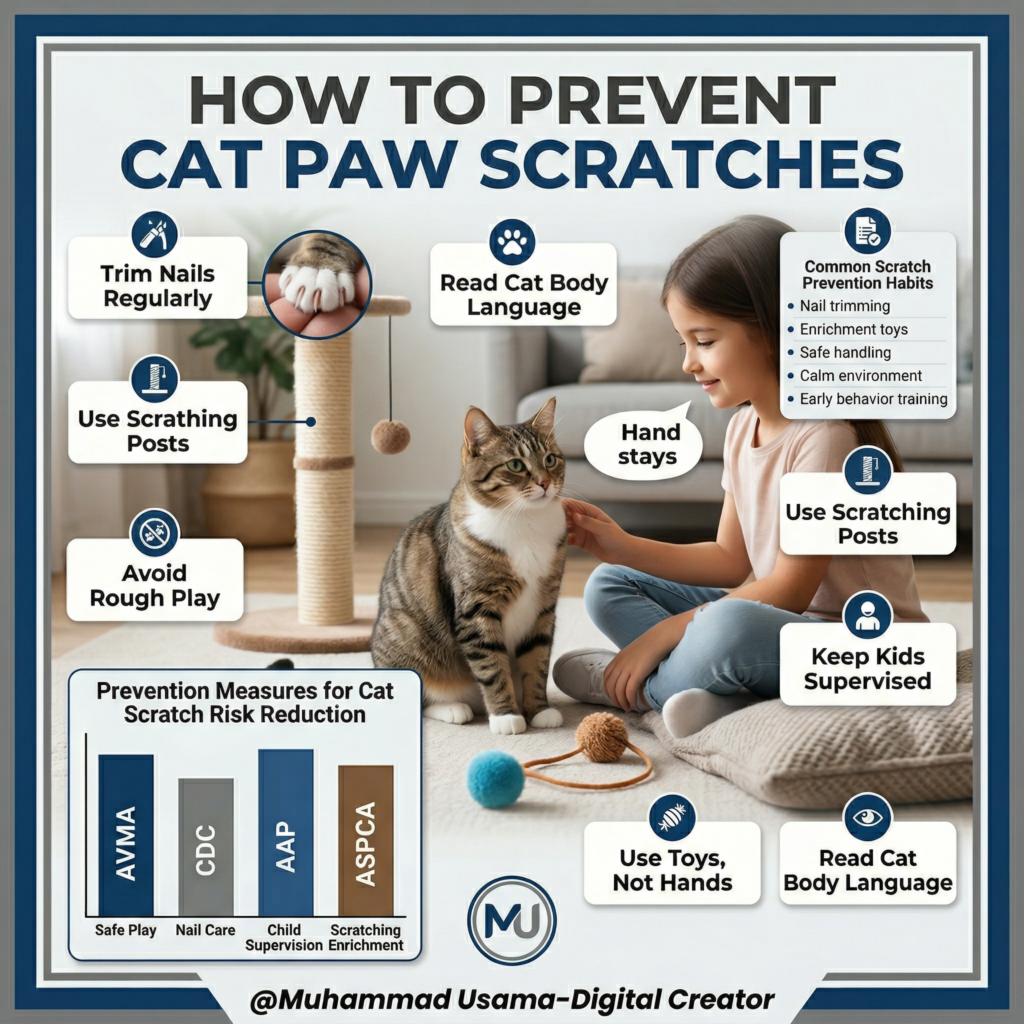
How to Prevent Cat Paw Scratches at Home
Cat paw scratches are common, but many of them can be prevented. In most homes, scratching is not caused by aggression alone. It often happens during rough play, fear, overstimulation, or poor handling. When families understand why cats scratch, they can lower the risk and create a safer environment for everyone.
Why Cats Scratch During Daily Life
Cats use their paws to play, stretch, defend themselves, and communicate discomfort. A cat may scratch if it feels trapped, annoyed, or overexcited. This is why learning early warning signs matters. Flattened ears, a flicking tail, wide pupils, or a stiff body often show that the cat needs space.
Understanding these signs helps families <strong>prevent cat paw scratches</strong> before they happen. It also improves trust between the animal and the people around it.
Use Toys Instead of Hands
A very common mistake is using fingers or hands during play. This teaches the cat that human skin is a toy. Over time, that habit increases the chance of accidental scratches.
Instead, use feather wands, soft balls, and safe chase toys. These tools let cats release energy without targeting hands. This approach also supports better pet wellbeing, which fits the wider safety focus of <a href=”https://onehealthglobe.com/” rel=”dofollow”>One Health Globe</a>.
Nail Care and Scratching Posts Matter
Regular nail trimming helps reduce the severity of scratches. It does not remove natural behavior, but it can lower the damage caused by accidental contact. Scratching posts are also very important. They give cats a proper place to stretch, mark, and maintain claw health.
Place scratching posts in areas where the cat already spends time. A calm, comfortable indoor setup can also help. Some families improve the home environment with <a href=”https://tuesdaymorning.sjv.io/1ryEoa” rel=”dofollow sponsored”>home comfort and organization products</a> that support better pet-friendly spaces.
Teach Children Safe Interaction
Children should be taught not to grab, chase, or disturb a cat while it is eating or resting. Gentle petting, quiet behavior, and supervised interaction reduce the chance of defensive scratching. Families should also remind children to use toys rather than hands during play.
Trusted guidance from <a href=”https://www.avma.org/” rel=”dofollow”>AVMA</a> and <a href=”https://www.cdc.gov/” rel=”dofollow”>CDC</a> supports safe pet handling and good hygiene after scratches or close contact.
Keep the Home Calm
Cats respond better in predictable, low-stress homes. Loud noise, forced holding, and sudden touching can raise stress and increase scratching risk. A calm routine with regular feeding, play, and rest makes cats feel more secure.
When people respect feline behavior, it becomes much easier to <strong>prevent cat paw scratches</strong> in a natural and humane way.
Final Thought
To prevent cat paw scratches, focus on safe play, gentle handling, child supervision, nail care, and stress reduction. Small daily habits make a big difference. A safer home protects both the cat and the family.
Keep Regular Visiting <a href=”https://onehealthglobe.com/” rel=”dofollow”>https://onehealthglobe.com/</a> FOLLOW PAGE FOR MORE <a href=”https://web.facebook.com/onehealthglobe/” rel=”dofollow”>https://web.facebook.com/onehealthglobe/</a> #OneHealth #AnimalSafety #PublicHealth #ZoonoticDiseases #PetSafety #FamilySafety #FoodSafety #RabiesPrevention #HealthyCommunities #HealthSecurity
#CatSafety #CatScratchPrevention #PetCare #HealthyPets #IndoorCats #FamilySafety #PetBehavior #AnimalWellbeing