Safe Home Habits for Dogs and Families
Safe home habits for dogs and families can make daily life calmer, cleaner, and far less risky. A dog-friendly home is not only about love and comfort. It is also about preventing bites, stress, poisoning, chewing accidents, and common indoor injuries. When families build simple safety habits into daily life, both dogs and people benefit.
Many home problems start with small oversights. A child disturbs a resting dog. A cleaning product stays within reach. A cord hangs loose near a curious puppy. A decorative item falls because the dog runs through the room too fast. These moments are common, but they are also preventable when the home is designed around safe routines.
1. Supervise Children Around Dogs
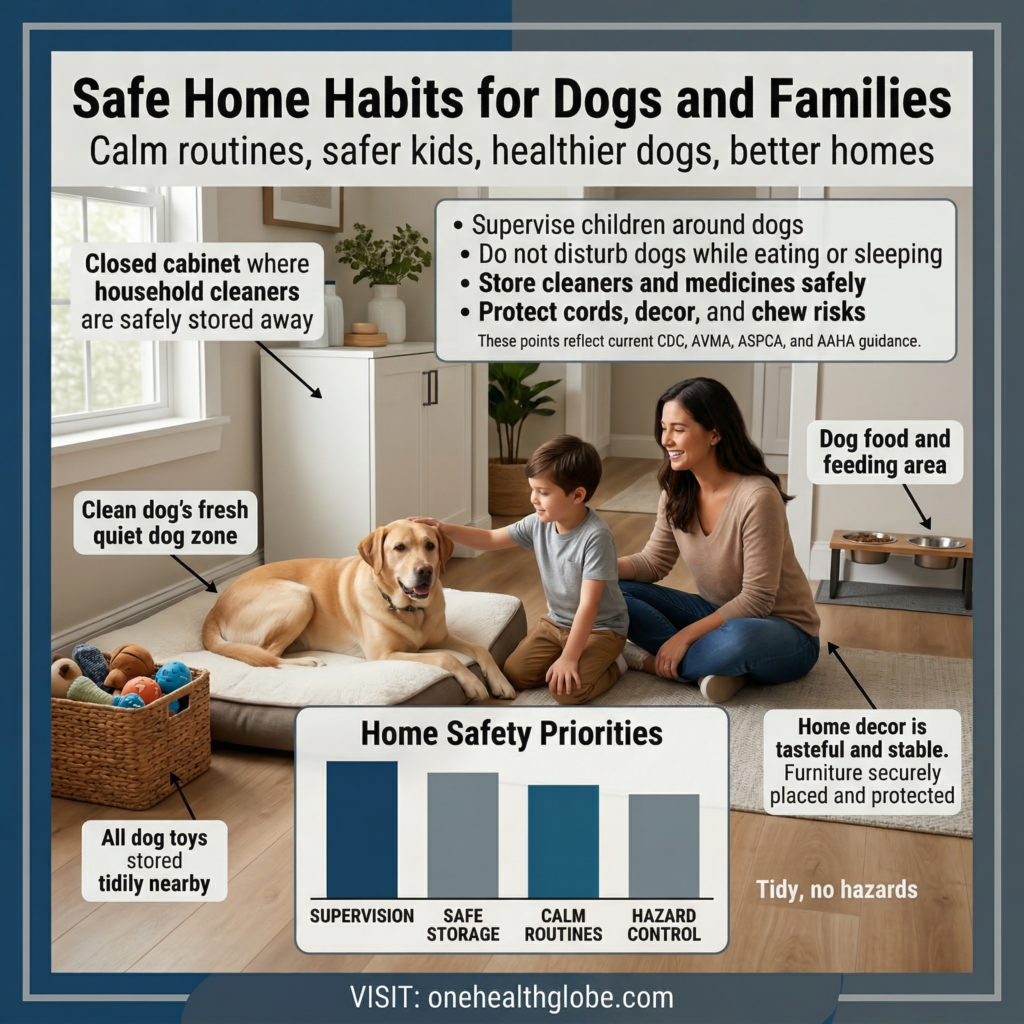
One of the most important home habits is active supervision. Children should not be left alone with a dog, especially babies and small children. AVMA states that a baby or small child should never be left alone with a dog, and CDC also advises people not to disturb dogs that appear to want time alone or are in sensitive situations. :contentReference[oaicite:3]{index=3}
Supervision matters during play, rest time, feeding time, and even quiet family moments. A good dog may still react if frightened, cornered, or startled. Parents should watch for signs of discomfort such as stiff posture, growling, lip licking, turning away, or trying to leave.
2. Do Not Disturb Dogs While Eating or Sleeping
Families should teach children a very clear rule: never bother a dog while it is eating, sleeping, or caring for puppies. CDC specifically warns not to disturb a dog in these moments, because many bites happen when dogs are interrupted or feel threatened. :contentReference[oaicite:4]{index=4}
This means no touching the food bowl, no sudden hugging during naps, and no teasing with treats or toys. Giving the dog a calm private area for rest can reduce stress and help the whole household feel more stable.
3. Store Cleaners, Medicines, and Toxic Items Safely
Household products are a real risk for dogs. ASPCA notes that many cleaning products can be hazardous if misused or ingested, and recent ASPCA toxin data continues to list household products among common pet exposures. :contentReference[oaicite:5]{index=5}
Families should keep bleach, detergent pods, insecticides, paints, medicines, and beauty products in closed cabinets or drawers. Dogs do not understand labels, and some will chew bottles, lick residues, or investigate sweet-smelling liquids. This is especially important in homes with both pets and children, because unsafe storage can put everyone at risk.
4. Protect Cords, Decor, and Breakable Items
AAHA advises that electrical cords can become chew hazards and even fire risks, while decor and furniture can be knocked over or damaged by curious pets. :contentReference[oaicite:6]{index=6}
Good home habits include hiding or covering cords, choosing stable decor, keeping glass and sharp objects out of reach, and using durable fabrics where possible. If you are organizing your pet-friendly space, items such as smart home monitoring devices may help you observe where your dog spends time, while home organization and decor pieces can support a cleaner and more practical setup for shared living areas.
5. Create a Quiet Safe Zone for the Dog
Every dog should have a quiet place to rest. This may be a bed corner, crate area, or low-traffic room. When dogs have a reliable safe zone, they are less likely to become overwhelmed by noise, guests, or child activity. Calm spaces are especially useful in busy family homes.
Children should be taught that the dog’s rest area is private. No chasing into that space. No climbing into the crate. No trying to “wake up” the dog for play. Respecting this boundary can reduce stress-driven reactions.
6. Separate Child Play Areas from Dog Feeding Areas
Dogs should eat in peace. Families should avoid mixing pet feeding space with active children’s play space. This helps prevent resource guarding issues, food stealing, bowl tipping, and accidental confrontations. CDC’s bite-prevention guidance supports avoiding disturbance during feeding. :contentReference[oaicite:7]{index=7}
A simple layout change can make a big difference. Keep bowls in a quieter corner, away from fast movement and toys. This habit supports better behavior and lowers tension at mealtime.
7. Keep the Floor Clean and the Routine Predictable
Chewable clutter creates avoidable problems. Hair ties, batteries, snacks, socks, small toys, and wrapping materials can quickly become swallowing hazards. Families should do short floor checks each day, especially in homes with puppies or curious dogs.
Predictable routines also help. Dogs often do better when walks, feeding, rest, and play happen on a steady schedule. A calmer routine can reduce hyperactivity, frustration, and destructive behavior. For general pet-proofing support, AAHA recommends thinking ahead about furniture, cords, and common household hazards. :contentReference[oaicite:8]{index=8}
8. Use Gentle Handling and Teach Respectful Interaction
Children should learn to pet gently and avoid pulling ears, grabbing tails, sitting on dogs, or crowding them. AVMA bite-prevention guidance emphasizes respectful interaction and caution in situations that could escalate. :contentReference[oaicite:9]{index=9}
Dogs are living family members, not toys. The more children understand this, the safer the home becomes. Calm touch, quiet voices, and respectful distance are simple habits with big long-term value.
9. Prepare for Pet-Proofing During Home Changes
Renovation materials, paints, nails, adhesives, and tools can create extra danger for dogs. AAHA has also highlighted DIY home project hazards for pets, including toxic supplies and sharp materials. :contentReference[oaicite:10]{index=10}
During repairs or room changes, keep dogs away from active work zones. Store supplies immediately after use. If you are improving the home overall, practical household products such as cleaning and sink accessories and eco-friendly home essentials can help support tidier, more manageable pet-care areas.
10. Build a Family Habit of Clean Hands and Quick Response
After touching the dog, cleaning waste, handling toys, or dealing with scratches, family members should wash their hands. If a scratch or bite happens, wash the area right away and seek medical advice when needed. CDC includes bite and scratch prevention as an important part of staying healthy around pets. :contentReference[oaicite:11]{index=11}
Families should also keep the veterinarian’s number accessible and know what to do if a dog chews a chemical, swallows a small object, or shows sudden illness.
Why These Habits Matter
Safe home habits for dogs and families are not complicated, but they do need consistency. Supervision, safe storage, chew-hazard control, calm feeding routines, and respectful handling can prevent many of the most common household problems. That protects the dog, protects children, and keeps the home more peaceful.
For more pet and family safety guidance, visit the One Health Globe homepage. You can also review dog safety guidance from the CDC Healthy Pets resource, bite-prevention advice from the American Veterinary Medical Association, and household toxin information from the ASPCA Poison Control Center.
Keep Regular Visiting https://onehealthglobe.com/
FOLLOW PAGE FOR MORE
https://web.facebook.com/onehealthglobe/
#OneHealth #DogSafety #FamilySafety #HealthyHomes #PetCare #DogBitePrevention #PetProofing #IndoorSafety #AnimalSafety #HomeHygiene