Could Your Cat Be Showing Signs of Osteoarthritis? Simple Home Tips
Signs of osteoarthritis in cats can be easy to miss. Many cats do not cry out or limp in an obvious way. Instead, they often show quiet changes at home. A cat may jump less, move more slowly, hesitate before using stairs, sleep more, or seem less interested in play. Because these changes can look like “normal aging,” feline joint pain is sometimes noticed late.
Why osteoarthritis in cats is often missed
Cats are very good at hiding discomfort. That is one reason osteoarthritis is often underrecognized. Veterinary guidance notes that signs can be subtle, and caregivers may notice them at home before they are obvious during a clinic visit. Watching daily routines closely can make a big difference.
Common home signs to watch for
Reduced jumping
A cat that once jumped easily onto a bed, sofa, or window perch may begin avoiding those spots or making smaller, cautious jumps.
Slower movement after rest
Some cats seem stiff when they first get up, especially after sleeping.
Less interest in stairs or climbing
Difficulty going up or down stairs can be a sign of joint discomfort.
Lower activity and play
A cat with sore joints may play less, explore less, or rest more often.
Changes in posture or grooming
Some cats develop a more hunched posture or groom less effectively because certain movements become uncomfortable.
Simple home tips that may help
Make favorite places easier to reach
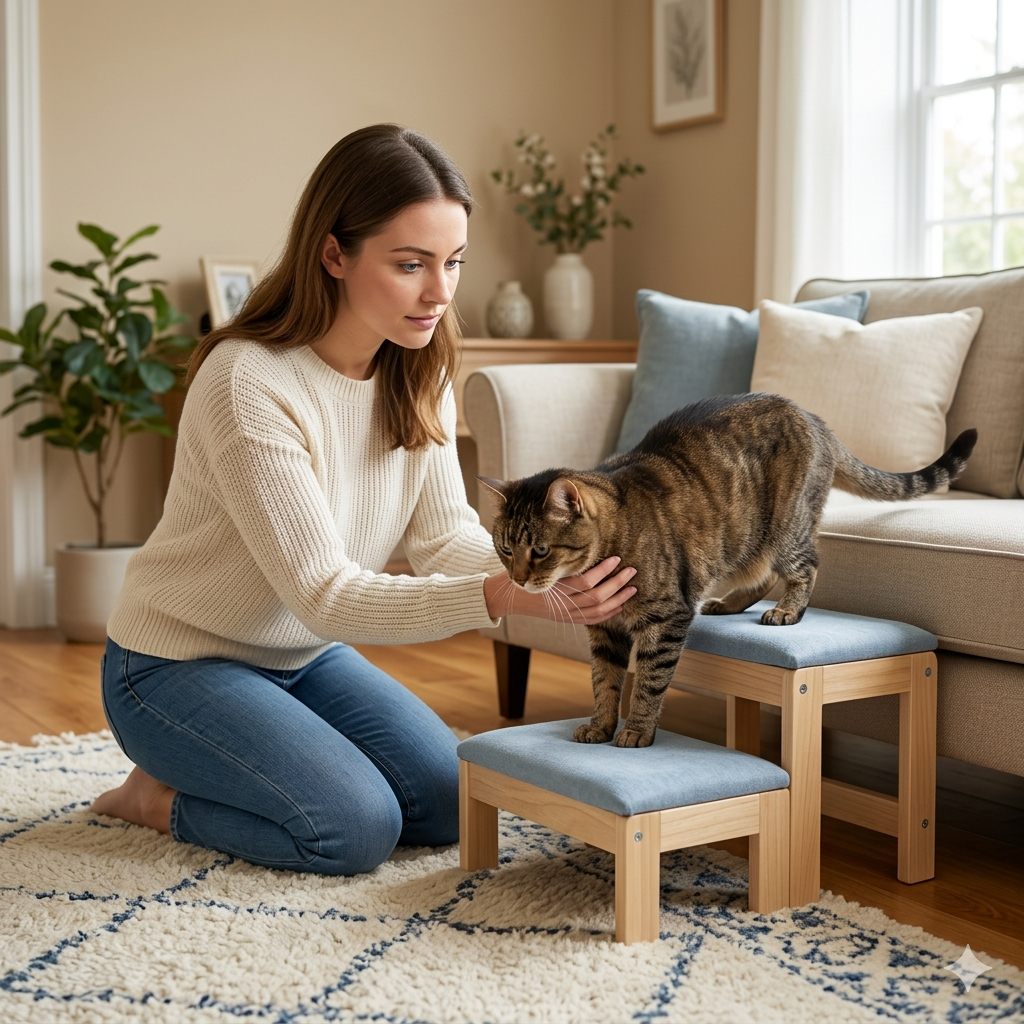
Use low steps, stable stools, or pet ramps near beds, couches, and window areas. This can reduce the strain of repeated jumping.
Choose soft, warm resting spaces
Supportive bedding in a quiet area may help improve comfort during rest.
Keep essentials easy to access
Place food, water, litter boxes, and resting areas where your cat does not need to climb too much.
Use litter boxes with easy entry
A lower-entry box can be more comfortable for a cat with reduced mobility.
Track small changes
Keep notes or short videos of walking, jumping, grooming, or stair use. These details can help your veterinarian assess what is changing over time.
When to speak with your veterinarian
If you notice reduced jumping, stiffness, decreased activity, or other mobility changes, book a veterinary visit. Osteoarthritis cannot be confirmed by guesswork alone. A proper exam helps rule out other problems and allows your veterinarian to discuss pain management, weight support, exercise adjustments, and home modifications tailored to your cat.
Final thought
Small behavior changes can mean more than many owners realize. If your cat seems slower, stiffer, or less willing to jump, it may be time to think about joint health. Early attention and simple home changes may improve comfort and quality of life.
While creating a more comfort-friendly home, you may also like household essentials from Lotus’s Malaysia, home cleaning tools from Happy Sinks, home and outdoor gear from Cloudfield, family wellness support from Gafly, pet keepsakes from BondWithPet, and Namecheap for building your own pet resource website.
Pet Safety Hub, Blog / Pet Guides, and Pet FAQs.
Keep Regular Visiting https://onehealthglobe.com/
FOLLOW PAGE FOR MORE
https://web.facebook.com/onehealthglobe/
#OneHealth #CatCare #CatArthritis #OsteoarthritisInCats #SeniorCatCare #PetSafety #FelineHealth #HealthyPets #MobilitySupport #FamilySafety