Pet Protection in Extreme Heat Watch: Best Ways to Keep Dogs and Cats Safe
Pet protection in extreme heat watch conditions should never be taken lightly. When dangerous heat is possible, dogs and cats can overheat fast, especially if they are left outside too long, walked on hot pavement, or kept in stuffy indoor spaces without enough cooling. The good news is that a few smart steps can greatly reduce risk and help your pets stay safe, calm, and hydrated.
During an Extreme Heat Watch, pet owners should prepare early instead of waiting for heat illness signs to appear. That means adjusting walk times, improving indoor cooling, checking water more often, and keeping pets away from parked cars, direct afternoon sun, and overheated surfaces. These small actions can make a big difference.
1. Keep fresh water available all day
Hydration is the first line of defense. Refill bowls often and place them in shaded or cooler indoor areas. If you are traveling, take portable water and a collapsible bowl with you. In very hot weather, adding an extra water station in another room can help. You can also improve home comfort and cooling awareness with smart-home tools like eufy and lighting control options from Lumary Smart for safer indoor summer setups.
2. Walk pets only during cooler hours
Early morning and late evening are the safest times for most walks in hot seasons. Midday walks are risky because pets can overheat quickly, and hot asphalt can burn paw pads. Choose shaded routes, grassy paths, and shorter exercise sessions. If the ground feels too hot for your hand, it is too hot for paws.
For more practical family and animal safety content, visit our Pet Safety hub and explore broader hot-weather guidance from AVMA.
3. Never leave pets in parked cars
This is one of the most important rules. Even if a window is cracked, a parked car can become dangerously hot very quickly. A pet left inside may suffer heat stress, organ damage, or death within a short time. If you cannot bring your pet somewhere safe and cool, leave them at home.
4. Create a cooler indoor zone
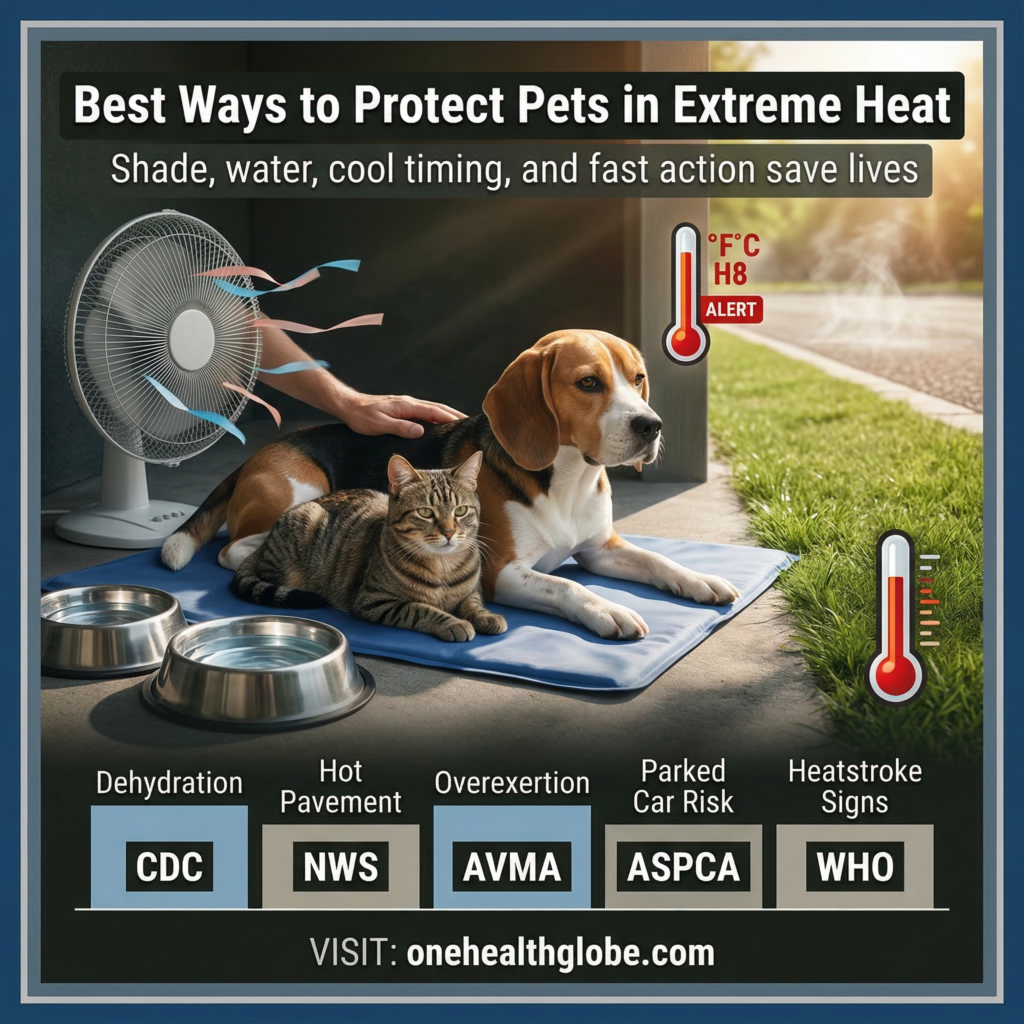
Pets need access to a cooler place during heat alerts. Use fans for airflow, close curtains during peak sun, and keep one room as the main cool zone. Cooling mats, tiled floors, and damp towels can help some pets rest more comfortably. For outdoor trips, camping, or travel days, products such as Flextail may also support better water access and portable cooling routines when used sensibly.
5. Watch for pet heatstroke warning signs
Fast panting, heavy drooling, weakness, vomiting, confusion, bright red gums, collapse, or unusual agitation can all be warning signs. Flat-faced breeds, older pets, overweight pets, and animals with heart or breathing problems are often at higher risk. If symptoms appear, move the pet to shade or a cool indoor space immediately and contact a veterinarian as soon as possible.
For official public-health heat awareness, see CDC pet heat guidance and National Weather Service heat alerts.
6. Reduce outdoor play and overexertion
Many pets still want to run, fetch, or chase even when conditions are unsafe. Owners must step in early. Keep play shorter, offer more rest breaks, and avoid intense activity in direct sun. A shaded backyard is better than an exposed one, but even then, hot and humid conditions can still become dangerous.
For eco-friendlier summer home habits that support cleaner, more comfortable living areas, you can also explore Mioeco. If you create pet awareness content or safety graphics for your website, tools like Imgmi and site-building services such as Namecheap can help you publish helpful resources faster.
7. Protect pets during power cuts or weak cooling
Extreme heat becomes even more dangerous when cooling systems fail. Keep backup water ready, move pets to the shadiest room, improve airflow, and avoid crowding. In severe conditions, take pets to a safer cooler location if possible. Planning ahead matters most for puppies, kittens, senior pets, and animals with medical problems.
Final thoughts
Pet protection in extreme heat watch periods is about preparation, not panic. Fresh water, shade, cooler walking hours, indoor rest, and fast response to warning signs can protect dogs and cats from serious heat illness. A heat alert is your signal to change the daily routine before your pet gets into danger.
Keep Regular Visiting https://onehealthglobe.com/
FOLLOW PAGE FOR MORE
https://web.facebook.com/onehealthglobe/
#OneHealth #AnimalSafety #PublicHealth #ZoonoticDiseases #PetSafety #FamilySafety #FoodSafety #RabiesPrevention #HealthyCommunities #HealthSecurity