First Week Home Setup Tips for Pets: Safe and Simple Start
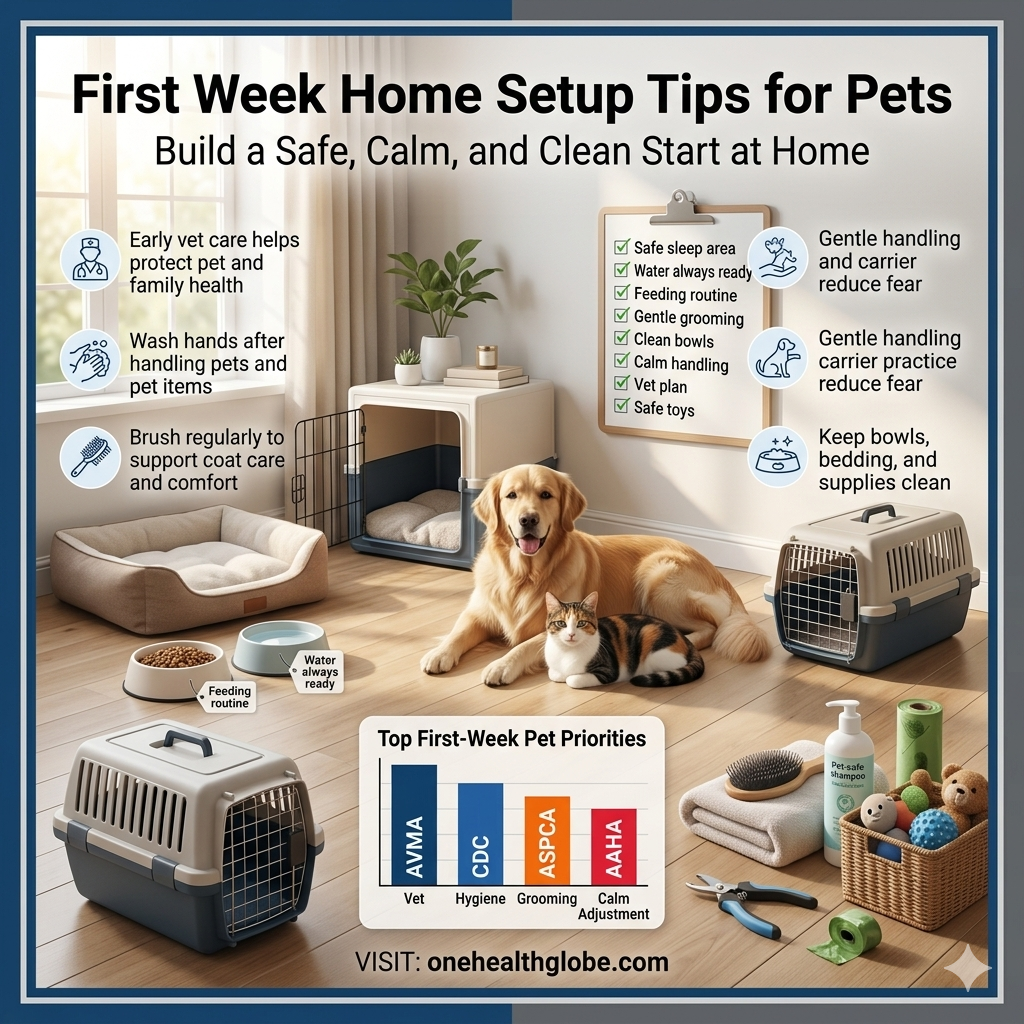
First week home setup tips for pets can make a huge difference in how quickly a new dog or cat feels safe, clean, and settled. The first days should focus on a quiet sleeping area, clean food and water stations, gentle handling, early grooming habits, and a plan for veterinary care. Trusted guidance from AVMA, CDC, ASPCA, and AAHA all points to the same basics: keep routines simple, maintain hygiene, and make the new environment calm and predictable. One Health Globe supports this prevention-first approach because healthy pets also support healthier homes. :contentReference[oaicite:1]{index=1}
Create One Quiet Safe Zone First
Your pet does not need full access to the whole house on day one. A better start is one calm, low-stress area with bedding, shade, light airflow, and distance from loud noise. This setup helps reduce anxiety and makes eating, resting, and toilet habits easier to observe. For cats especially, stress from sudden change can affect behavior, and ASPCA notes that cats may need patient adjustment when home conditions shift. For a cleaner pet corner, storage baskets, washable mats, and soft decor from Tuesday Morning can help you build an organized setup without making the room feel crowded. :contentReference[oaicite:2]{index=2}
Set Up Food and Water Before the Pet Arrives
Place food and water bowls in a stable, easy-to-clean location from the beginning. Predictable feeding and hydration help new owners notice problems early, such as poor appetite, vomiting, or low energy. ASPCA advises feeding a high-quality diet that matches your pet’s life stage and energy needs, while clean water should always be available. Some households also like to improve their own hydration habits around busy pet-care routines with products like the Echo Water bottle. :contentReference[oaicite:3]{index=3}
Keep Bowls, Bedding, and Pet Supplies Clean
CDC advises washing hands thoroughly with soap and water after handling animals and items that come into contact with them. That includes bowls, bedding, waste tools, toys, and carriers. CDC also says pet items can sometimes be contaminated with germs and should be cleaned and disinfected frequently. In the first week, this is one of the easiest habits to build because your cleaning routine is still new. A simple supply shelf, drying tray, and washable accessories can keep the pet area tidy and safer for children and adults. :contentReference[oaicite:4]{index=4}
Start Gentle Grooming Immediately
The first week is the right time to begin calm handling of paws, ears, coat, collar area, and carrier entry. ASPCA says cats rarely need baths but benefit from regular brushing, while dog grooming guidance emphasizes brushing before bathing and keeping bath routines gentle and safe. AAHA guidance for kittens also highlights gentle, respectful handling and acclimating pets to healthcare tasks early so they do not grow fearful later. Keep sessions short and positive. If your pet comes in dirty from outdoor walks or travel, portable cleanup tools such as the Flextail portable shower can be useful in some situations. :contentReference[oaicite:5]{index=5}
Make Grooming Supplies Easy to Reach
Keep a basic first-week kit ready: brush, towel, nail tool, pet-safe shampoo, waste bags, and spare bedding. This reduces stress because you do not need to search for items when your pet has an accident or needs quick cleanup. If you are setting up a larger pet-and-family outdoor area, practical gear from Cloudfield may help with outdoor organization, while smart monitoring tools from eufy can help some households keep an eye on entry areas, rooms, or daily pet movement. These additions are optional, but organized homes usually make first-week pet care easier. :contentReference[oaicite:6]{index=6}
Plan the First Vet Visit Early
CDC says regular veterinary visits are essential to keeping your pet and family healthy. AVMA resources also emphasize talking to a veterinarian early, especially when travel, routine changes, or health questions are involved. In the first week, a vet visit helps confirm vaccines, deworming, flea and tick control, and any breed-specific care needs. It also gives new owners a trusted place to ask about feeding, grooming, skin, ears, stool changes, and behavior. :contentReference[oaicite:7]{index=7}
Use the Carrier and Home Pathways as Training Tools
Do not wait for an emergency before introducing the carrier, leash, car movement, or room boundaries. AAHA guidance notes that pets, especially kittens, benefit from early acclimation to carriers and gentle healthcare-related handling. That same idea works for dogs as well. In the first week, let the carrier stay open in the room, place a towel inside, and reward calm entry. If you travel often, pet-related comfort gear and even longer-term memory items such as BondWithPet keepsakes may later become meaningful for strong pet-family bonds, though the first focus should stay on safety and routine. :contentReference[oaicite:8]{index=8}
Watch Behavior Closely During the First Week
During the first seven days, note eating, drinking, sleep, stool quality, grooming behavior, scratching, sneezing, vomiting, and energy level. AAHA’s kitten guidance says changes such as poor eating or sudden behavior differences are good reasons to call a veterinarian. A calm first-week setup helps you notice these changes faster because there is less household chaos. For more support ideas, visit our Resources page, where practical tools and useful recommendations can support healthier pet routines. :contentReference[oaicite:9]{index=9}
Quick First-Week Home Setup Checklist
- Prepare one quiet resting area.
- Set food and water bowls before arrival.
- Keep bowls, bedding, and toys clean.
- Wash hands after handling pets and supplies.
- Start gentle brushing and calm handling.
- Introduce the carrier in a positive way.
- Book an early veterinary visit.
- Watch closely for appetite, stool, coat, or behavior changes.
A good first week is not about buying everything at once. It is about creating a calm system your pet can understand. Simple routines, basic hygiene, safe grooming, and early vet planning are what turn a stressful arrival into a healthier beginning.
Keep Regular Visiting https://onehealthglobe.com/ FOLLOW PAGE FOR MORE https://web.facebook.com/onehealthglobe/ #OneHealth #AnimalSafety #PublicHealth #ZoonoticDiseases #PetSafety #FamilySafety #FoodSafety #RabiesPrevention #HealthyCommunities #HealthSecurity
::contentReference[oaicite:10]{index=10}