Boxer Dog Temperament 2026: Personality, Health Risks, Best Food, Supplements & Complete Care Guide
Boxer breed temperament is one of the most joyful, family-oriented, and genuinely entertaining in the dog world. Playful, fiercely loyal, deeply affectionate, and athletically powerful — Boxers bring extraordinary energy to the right home. But they also carry some of the most serious genetic health risks of any popular breed: Dilated Cardiomyopathy (DCM) is the #1 cause of Boxer death, and their cancer incidence is above average across multiple tumour types. This complete guide covers personality, family suitability, training, the 6 health risks every owner must know, best food choices, and the supplements that directly protect this breed’s most vulnerable systems.
Quick Boxer Breed Facts at a Glance
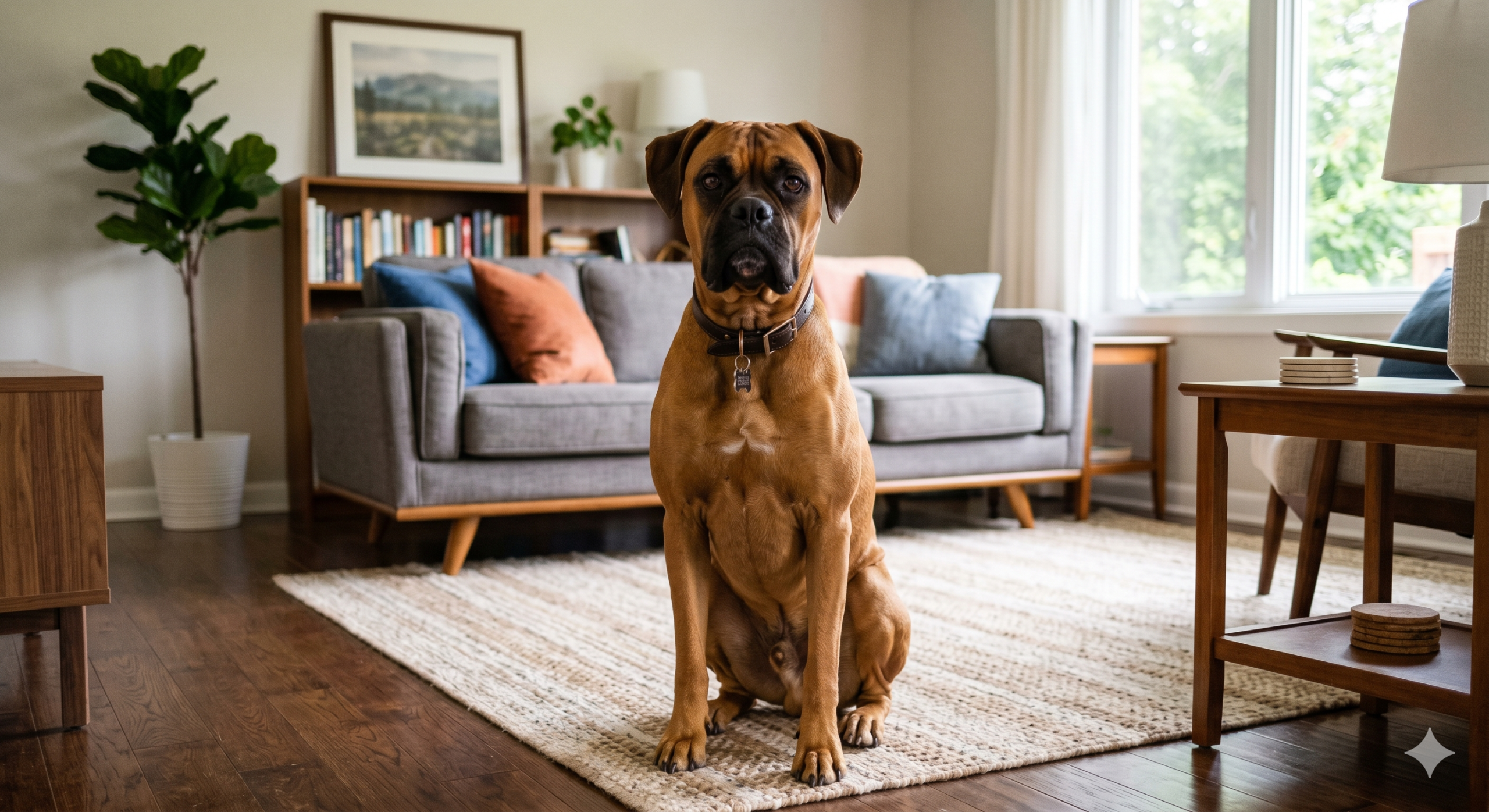
Medium-Large · 50–80 lbs · 21–25″ tall
Very High · 60–90 min exercise/day
High · Playful learner · Needs engagement
10–12 years · DCM + cancer risks critical
DCM heart disease · Taurine critical
Active families · House + yard · Structured home
Boxer Personality — What Owners Really Experience
The Boxer personality is unique among large breeds — simultaneously the most playful adult dog you will ever own and one of the most deeply loyal guardians. Boxers are renowned for maintaining a puppy-like enthusiasm well into their 7th and 8th year, earning them the reputation of “the Peter Pan of the dog world.” This is not a calm, passive companion breed. It is an active, emotionally engaged family member who wants to be involved in everything you do.
Boxers form intense attachments to their household. They physically follow their people, position themselves protectively, and show consistent emotional attunement that experienced owners find extraordinary.
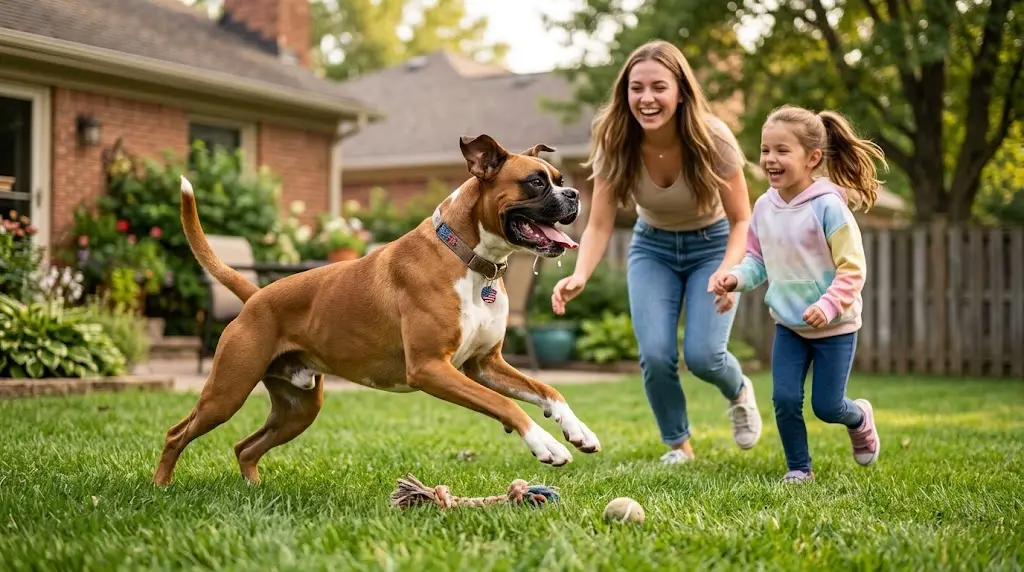
The Boxer zoomie is legendary. Full-body wiggles, bouncy greetings, animated front-paw play — this breed brings a physical expressiveness and comedic energy that active families find infectious.
Alert, watchful, and instinctively positioned between their family and any perceived threat. This guarding instinct is reliable and genuine — not trained in, simply wired in from their working heritage.
Boxers learn quickly when motivated — they respond best to reward-based training with a playful energy. Their “stubbornness” is almost always distraction or insufficient reward value, not genuine defiance.
Are Boxers Good Family Dogs?
Yes — consistently among the top 5 family-friendly large breeds when properly raised. Boxers are genuinely patient with children, deeply invested in family routines, and naturally inclined to protect the members of their household. Their size and strength do require training and supervision around young children and elderly family members, but the breed’s instinctive gentleness with their own people is real.
- 👨👩👧 With children: Typically affectionate, playful, and protective. Supervision matters for toddlers given the size and bounce — adult Boxers are physically exuberant even when being gentle.
- 🐕 With other dogs: Generally sociable when well-introduced. Some male Boxers can be same-sex selective with other males. Early multi-dog socialisation resolves most issues.
- 🏡 Space needs: A house with a yard is strongly preferred. Apartment living is possible with committed 90-minute daily exercise, but this breed was built to move and thrives with space.
- 😟 Separation: Boxers dislike extended alone time. They are highly people-dependent and can develop anxiety, destructive behaviour, or excessive barking when regularly left for long periods.
For safer home routines, visit our Pet Safety Hub and our Free Pet Care FAQ Resource.
Common Boxer Behavior Problems — Causes & Solutions
Every Boxer behavior challenge has an identifiable root cause — and every one is addressable. Understanding which cause applies determines the correct solution.
Cause: Exuberant greeting instinct + inadvertent reinforcement (people respond when jumped on). Solution: Train a four-paws-on-floor greeting from puppyhood. Turn away and ignore all jumping. Only reward and greet when all four paws are down. This takes 2–3 consistent weeks. Never allow it as a puppy — a 70 lb adult Boxer jumping is genuinely dangerous.
Cause: Boredom and under-exercise. A Boxer who has had 90 minutes of meaningful exercise and 10 minutes of training rarely chews inappropriately. Solution: Increase exercise before periods of confinement. Provide appropriate chews. Use puzzle feeders to extend mental engagement. Management (crate training) prevents damage while training is ongoing.
Cause: High social dependency + insufficient independence training. Solution: Build departure tolerance from puppyhood — short absences rewarded with calm behaviour. A remote camera with treat dispenser lets you monitor and reward calm behaviour remotely. Avoid dramatic departure/arrival routines that amplify emotional transitions.
Cause: Insufficient early leash training + high arousal. Solution: Loose-leash training must begin at 8 weeks. Use a front-clip harness to reduce leverage while training. Reward every moment of a loose lead with high-value treats. Consistency in the first 6 months establishes the adult walking pattern.

Training & Exercise — What Works for Boxers
Boxer training is one of the most enjoyable experiences in dog ownership when approached correctly — because this breed genuinely wants to engage, responds visibly to praise, and brings playful enthusiasm to every session. The challenge is channelling that enthusiasm productively.
- 🏃 60–90 minutes daily exercise: Two sessions — morning and evening. Fetch, structured walking, off-lead play in secured spaces, and agility work. Vary activities to maintain mental engagement.
- 🧩 Mental stimulation is equally important: 10 minutes of focused training tires a Boxer as effectively as 30 minutes of running. Obedience sessions, scent games, and puzzle feeders extend engagement beyond physical exercise.
- 🎓 Short, playful training sessions: 5–8 minutes, 2–3× daily. End on a success always. Boxers lose interest in repetitive, joyless training — keep sessions dynamic and reward-rich.
- 🐶 Socialise from 8 weeks: People of all ages, sounds, environments, vehicles, other animals. The 8–16 week window shapes the adult brain’s response to novelty permanently.
- 📏 Manage heat exposure: Boxers have a shorter muzzle than most large breeds — their cooling efficiency is reduced. Never exercise intensely above 25°C (77°F). Always provide shade and water.
Support your Boxer’s daily routine with our Pet Food Queries page and our Products page.
Boxer Health Risks — 6 Critical Conditions Every Owner Must Know
Boxers are among the most health-challenged popular breeds. Their risks are not vague — they are documented, breed-specific, and directly influenced by nutrition. Understanding them is the most important thing a new Boxer owner can do.
The #1 cause of Boxer death. A progressive weakening of the heart muscle leading to heart failure. Boxers have the highest DCM prevalence of any large breed. Taurine and L-carnitine are the two most critical preventive nutrients — both must be supplemented as most kibble provides insufficient levels for Boxer-level cardiac protection.
Boxers have one of the highest cancer rates of any breed. Mast cell tumours, brain tumours, lymphoma, and hemangiosarcoma all occur at above-average rates. Antioxidant-rich diets (Vitamins C, E, Selenium) and Omega-3 supplementation are associated with reduced inflammatory cancer risk. Regular body checks from 5 years onward are essential.
Shorter muzzle = reduced panting efficiency = faster overheating. Boxers reach dangerous body temperatures more rapidly than longer-muzzled breeds. Obesity dramatically worsens this. Weight management is the single most controllable factor for respiratory health in this breed.
Deep-chested breed with elevated GDV risk. Feed 2 small meals daily — never one large meal. No vigorous exercise 1 hour before or after eating. Know the emergency signs: distended abdomen, unproductive retching, rapid distress. GDV can kill within hours without emergency surgery.
Less prevalent than in Rottweilers or GSDs but still an above-average risk. Combined with their athleticism and tendency to impact-heavy play, joint protection from puppyhood matters. Glucosamine, chondroitin, and Omega-3 supplementation from 8 weeks is the most evidence-based prevention.
Boxers have sensitive digestive systems with above-average rates of food allergies and IBD. Their diet affects mood and behaviour — a Boxer with chronic gut discomfort becomes restless and difficult to manage. Probiotic and digestive enzyme supplementation stabilises gut function measurably.
Best Food for Boxers — Nutrition That Protects Their Biggest Risks
For a breed where DCM is the #1 cause of death and cancer rates are above average, food is not just maintenance — it is protection. The right nutrition from puppyhood can add 2–3 healthy years to a Boxer’s life.
What Every Boxer Diet Must Contain
- Taurine — the most critical Boxer-specific nutrient. Cardiac-protective amino acid. Must be supplemented as most commercial kibble does not provide therapeutic levels for DCM-predisposed breeds
- L-Carnitine — supports heart muscle function and fat metabolism. The combination of taurine + L-carnitine provides synergistic cardiac protection
- Omega-3 EPA + DHA from fish oil — reduces cardiac inflammation, supports joint health, and has anti-cancer properties via anti-inflammatory pathways
- Antioxidants (Vitamins C, E, Selenium) — counter the oxidative stress associated with Boxer’s above-average cancer risk
- Protein 25–28% DM from named animal sources — maintains muscle mass that protects the joints and supports cardiac function
- Probiotics (15+ strains) — essential for this breed’s above-average digestive sensitivity and gut health
- Controlled fat 12–16% DM — obesity worsens every Boxer health risk (DCM, BOAS, bloat, joint disease)

Do Boxers Need Supplements?
For Boxers specifically — yes, more urgently than most breeds. Their documented DCM risk, above-average cancer rates, and digestive sensitivity all have direct nutritional interventions. Waiting for symptoms to appear before supplementing is not a viable strategy for this breed.
- Taurine: The most critical Boxer-specific supplement. DCM is caused in part by taurine deficiency in predisposed breeds. Begin from puppyhood — cardiac damage begins silently years before symptoms appear.
- L-Carnitine: Works synergistically with taurine for cardiac protection. Also supports fat metabolism and lean muscle maintenance throughout the Boxer’s active years.
- Antioxidants (Vitamins C, E + Selenium): Counter oxidative stress linked to Boxer’s above-average cancer risk. The earlier antioxidant supplementation begins, the greater the cumulative protective effect.
- Omega-3 (EPA + DHA) from Fish Oil: Reduces systemic inflammation — the common pathway underlying both cardiac disease and cancer. Also supports joint health for this athletic breed.
- Probiotics (15+ strains): Boxer digestive sensitivity is well-documented. Comprehensive probiotic support stabilises gut flora, reduces food reactivity, and improves the mood and behaviour of dogs with chronic gut discomfort.
Grooming, Distinctive Traits & Daily Care
- 🪮 Low-maintenance coat: Short, close-lying coat requires weekly brushing with a rubber mitt. Seasonal shedding is modest compared to double-coated breeds.
- 🥊 Animated front-paw play: Boxers are famous for using their front paws in play — batting, swatting, and boxing. This gives the breed its name and is entirely normal, playful behaviour.
- 💃 Full-body communication: Boxers express emotion with their entire body — the whole-body wiggle greeting is one of the breed’s most beloved signatures.
- 🦷 Dental care 3× weekly: Short muzzle = crowded teeth = accelerated tartar. Regular brushing prevents the dental disease that is significantly above-average in brachycephalic breeds.
- ✨ Coat quality from nutrition: Omega-3 supplementation visibly improves Boxer coat shine and reduces skin irritation within 3–4 weeks — more effectively than topical products alone.
Is a Boxer Right for Beginners?
Boxers can suit committed, active first-time owners — particularly those with previous experience of large or working breeds, or those who invest in professional obedience classes from the start. Their affectionate nature and responsiveness to positive training make them more forgiving than breeds like Rottweilers or GSDs. The non-negotiables: daily exercise, early jumping-prevention training, and proactive cardiac supplementation.
- ✅ Good for active, committed beginners willing to invest in training and daily exercise
- ⚠️ Not suitable for passive or sedentary owners — an under-exercised Boxer is genuinely difficult
- 📘 Professional obedience classes strongly recommended — particularly for jumping and impulse control
- 💛 Deeply rewarding for the right match — a well-managed Boxer is one of the most joyful, loyal, and entertaining companion animals available
Strengthen your routine with our Pet Safety Hub, Free Pet Care FAQ Resource, and Products page.
Final Takeaway
Boxer breed temperament is loyal, playful, deeply affectionate, athletically powerful, and naturally protective. This breed thrives in active homes that provide exercise, companionship, clear training, and — critically — proactive cardiac and anti-cancer nutrition from puppyhood. The Boxer’s health risks are real and breed-specific. Owners who address them proactively give their dog the best chance at a longer, healthier, more active life together.
Quick Takeaway: Boxers are joyful, loyal, high-energy family dogs that need daily exercise, early training, and proactive nutrition — especially taurine, L-carnitine, antioxidants, and Omega-3s for their documented DCM and cancer risks. Free USA-made trial available →
Explore More Dog Breeds & Free Tools
Browse our full dog breeds hub or try our free tools — 🔬 Dog Paw Scanner, 🐾 Dog Age Calculator, and our new 💅 Free Cat Nail Scanner.
Boxer Dog Breed FAQs — Temperament, Family Life, Training, Health & Care
These Boxer dog breed FAQs answer the most-searched questions about Boxer temperament, family suitability, training, health risks, exercise, and daily care — with nutrition-based insights unique to this breed’s specific vulnerabilities.
Boxer Dog Temperament FAQs
Boxer Dog Family & Home FAQs
Boxer Dog Training & Behavior FAQs
Boxer Dog Health FAQs
Boxer Dog Care, Exercise & Grooming FAQs
For additional breed references: American Kennel Club breed profiles and PetMD dog breed guides.
Vet-Approved Products Every Dog Owner Should Know About
Whether your dog is battling shedding season, digestive issues, or just needs better everyday care, these are the vet-recommended brands trusted by thousands of U.S. dog owners in 2026.
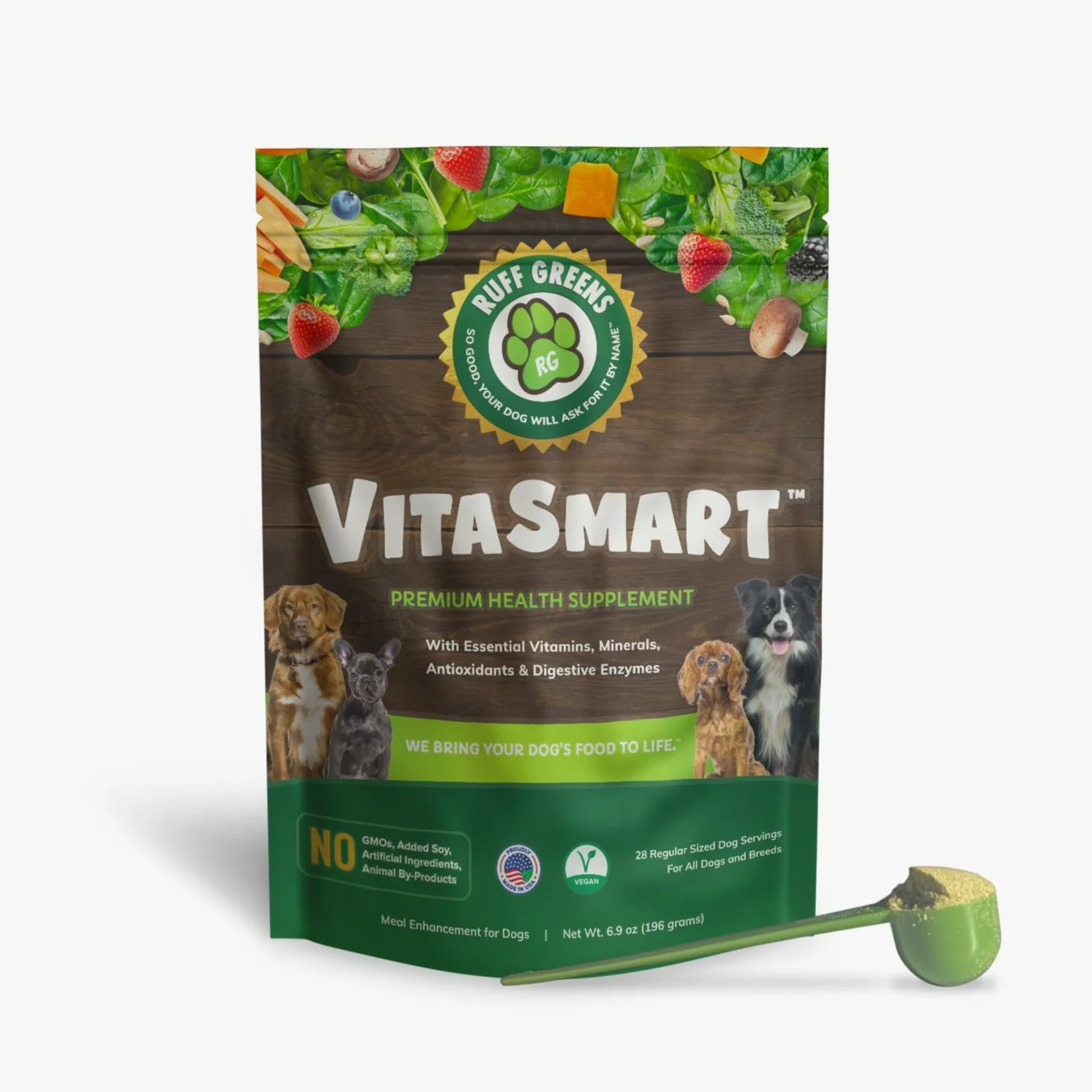
Struggling with your dog's dull coat or picky appetite? Ruff Greens is a vet-formulated superfood supplement supporting digestion, skin, and coat health in one daily scoop.
🐾 Try Ruff Greens TodayCan't get a same-week vet appointment? Dutch connects you with licensed U.S. veterinarians online for fast diagnosis, prescriptions, and care plans — often within hours.
🩺 Talk to a Vet Online NowTired of inconsistent feeding schedules? Petlibro's smart automatic feeders and fountains keep meals and water on schedule, even when you're away.
🍽️ Shop Petlibro Smart FeedersWorried about catching cancer too late? Oncotect is an at-home early cancer screening kit for dogs, with lab results in days instead of invasive vet testing.
🔬 Get Your Oncotect Screening KitCurious what's really in your dog's DNA? Basepaws' breed and health DNA test reveals ancestry, breed traits, and potential genetic health risks.
🧬 Get Your Basepaws DNA KitIs your dog anxious during storms, car rides, or vet visits? Bailey's CBD offers vet-formulated, third-party-tested calming chews and oils made for dogs' natural stress response.
🌿 Calm Your Dog with Bailey's CBDWant more breed-specific care guides? Explore our full Dog Breeds Hub →