Home › Dog Breeds Hub › Rottweiler Temperament 2026
Rottweiler Temperament 2026: 9 Truths About Personality, Bite Force, Growth & Vet Care

Licensed Veterinary Practitioner (PVMC License Code: 9472, Active through Dec 2030). Verified on LinkedIn. Every temperament analysis, growth benchmark, bite-force metric, and joint protocol is audited against clinical veterinary standards.
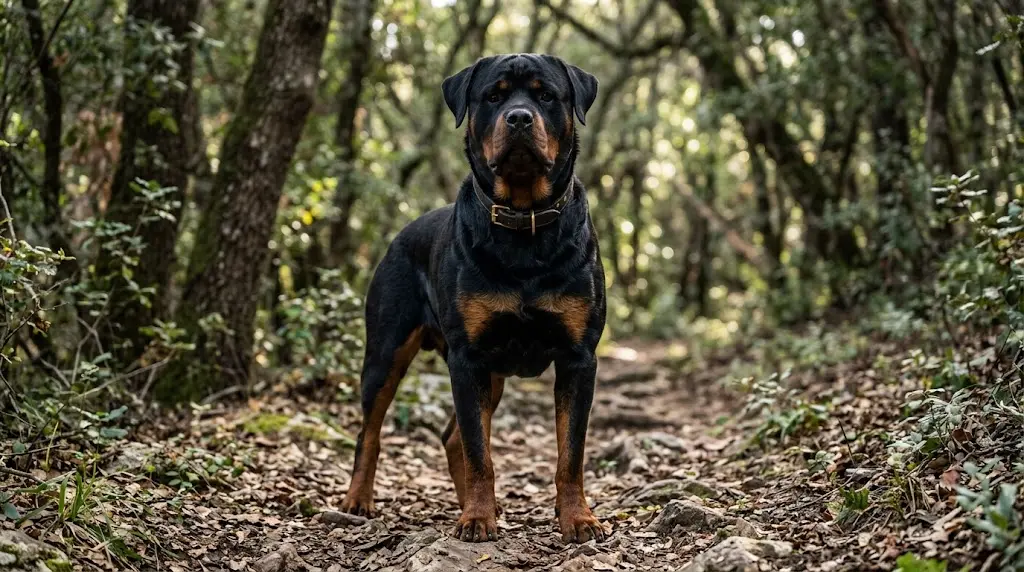
According to American Kennel Club (AKC) standards and veterinary behavioral data, a well-bred Rottweiler is calm, confident, courageous, obedient, and intensely loyal. They are “velcro dogs” with their human families and aloof (but non-aggressive) toward strangers. They possess a 328 PSI bite force and powerful working instincts, requiring early socialization (3–14 weeks), consistent positive reinforcement training, and 60–90 minutes of daily exercise to thrive.
Managing a large working breed requires proactive health planning. Explore our vet-reviewed care guides:
- 27 Best Dog Breeds Directory 2026 — Compare Rottweilers against German Shepherds, Dobermans, and Cane Corsos.
- Pet Medication Alternatives Guide 2026 — Compare cheaper, safer options for large breed joints and allergies.
- Librela for Dogs: Joint Injection Reviews & Side Effects — What Rottweiler owners need to know about hip pain.
- Simparica Trio Rebate Guide — Save $35 on monthly large breed flea, tick, and heartworm protection.
1. The 9 Truths About Rottweiler Temperament & Personality
The Rottweiler temperament is one of the most misunderstood in canine history. Feared by those who only know exaggerated media portrayals, they are deeply cherished by families who understand their true nature. Originating as cattle-droving and estate-guarding dogs in Rottweil, Germany, their behavioral profile is built on steady courage rather than chaotic reactivity.
Truth #1: Calm Watchdog — Not an Unpredictable Aggressor
An authentic, well-bred Rottweiler does not bark frantically at fence lines or lunges at passersby. They observe calmly, evaluate environmental changes, and wait for their owner’s cue. Aggression in Rottweilers is almost universally linked to poor backyard breeding (nervous temperaments), severe puppyhood isolation, or physical pain (such as undiagnosed hip dysplasia).
Truth #2: Bite Force (328 PSI) Requires Early Bite Inhibition
Scientific studies measure the Rottweiler’s bite force at 328 pounds per square inch (PSI)—surpassing German Shepherds (~238 PSI) and Pit Bulls (~235 PSI). Because of this immense jaw strength, teaching soft-mouth bite inhibition during puppyhood (before 16 weeks) is an absolute veterinary necessity.
Truth #3: “Velcro” Family Loyalty vs. Aloof Reserve with Strangers
In the home, a Rottweiler acts like a 100-pound lap dog. They lean against your legs, rest their massive heads in your lap, and follow family members from room to room. Around unfamiliar guests, they maintain an “aloof reserve”—polite, observant, but withholding affection until they confirm the visitor is trusted.
Truth #4: High Working Intelligence (Ranked #9 Smartest Dog Breed)
In Dr. Stanley Coren’s intelligence studies, Rottweilers rank as the 9th smartest dog breed, understanding new commands in fewer than 5 repetitions. They excel in AKC obedience, tracking, Schutzhund/IGP, search-and-rescue, and therapy work.
Truth #5: Male vs. Female Rottweiler Temperament Differences
Choosing between a male and female Rottweiler depends heavily on your household experience level and multi-dog setup:
| Personality Trait | Male Rottweiler ♂️ | Female Rottweiler ♀️ |
|---|---|---|
| Adult Weight & Height | 95 – 135 lbs | 24 – 27 inches | 80 – 100 lbs | 22 – 25 inches |
| Dominance & Territoriality | Higher territorial drive; tests boundaries longer | More subtle, discerning, and quicker to mature |
| Same-Sex Aggression Risk | Higher risk with other male dogs | Moderate risk with other female dogs |
| Affection Style | Playful, goofy, “big baby” demeanor | Deeply devoted, calm, observant guardian |
| Best For | Experienced owners comfortable handling 100+ lbs | Families wanting a slightly smaller, focused guardian |
Truth #6: German vs. American vs. Roman Rottweilers
- German Rottweilers (ADRK Standard): Bred under strict German ADRK working standards. Must pass working titles, temperament tests, and X-ray joint clearances. Stockier, broader head, shorter muzzle, and intense drive.
- American Rottweilers (AKC Standard): Bred under AKC companion/show standards. Taller, leaner bone structure, with a slightly softer, highly adaptable family temperament.
- “Roman” or “King” Rottweilers: A commercial gimmick! Oversized (150+ lbs) dogs bred for sheer size. They suffer from severe premature joint failure, heart failure, and shortened lifespans. Avoid uncertified oversized lines.
Truth #7: Energy Curve — When Do Rottweilers Calm Down?
Rottweilers reach physical size by 18–24 months, but emotional maturity takes 3 to 4 years. Young Rottweilers (6–24 months) go through an energetic, testing “adolescent phase” requiring 60–90 minutes of daily exercise.
Truth #8: Children & Multi-Pet Family Fit Rules
Rottweilers are wonderful with children when raised together. However, their sheer mass means accidental knocks happen. Never leave a 100 lb Rottweiler unsupervised with toddlers, and ensure visiting children understand not to play rough-housing games that trigger guarding instincts.
Truth #9: Health Problems Directly Cause Sudden Behavioral Shifts
If a previously gentle Rottweiler begins growling, refusing stairs, or guarding their bed, rule out physical pain first. Orthopedic pain (hip dysplasia, CCL tears) or thyroid imbalances are the #1 cause of sudden irritability in mature Rottweilers.
2. US Rottweiler Growth & Weight Benchmarks by Age
Because rapid growth strains developing growth plates, monitoring your Rottweiler puppy’s weight curve is vital for preventing lifetime hip dysplasia:
| Age Stage | Male Weight Range ♂️ | Female Weight Range ♀️ | Daily Exercise Limit |
|---|---|---|---|
| 8 Weeks (2 Months) | 12 – 18 lbs | 10 – 15 lbs | 10 mins short gentle walks |
| 4 Months | 35 – 48 lbs | 30 – 40 lbs | 20 mins low-impact play |
| 6 Months | 60 – 75 lbs | 50 – 62 lbs | 30 mins leash walking |
| 12 Months (1 Year) | 85 – 115 lbs | 70 – 90 lbs | 45–60 mins controlled exercise |
| 24 Months (2 Years – Full) | 95 – 135 lbs | 80 – 100 lbs | 60–90 mins active work/hiking |
Never overfeed a Rottweiler puppy to make them “huge.” Excess calories cause rapid bone growth before cartilage can support the weight, triggering severe hip dysplasia and elbow fragmentation. Keep puppies lean until 18 months!
3. Rottweiler Health Risks That Impact Behavior (YMYL Veterinary Alerts)
1. Canine Hip & Elbow Dysplasia
Malformation of the hip socket causes painful osteoarthritis. Symptoms include stiffness after naps, bunny-hopping, or refusal to climb stairs.
Vet Solutions: Early screening via OFA/PennHIP, daily high-potency Omega-3s, and prescription joint management like Librela joint injections or Bailey’s Organic Joint CBD Chews.
2. Bloat / Gastric Dilatation-Volvulus (GDV)
As a deep-chested breed, Rottweilers are at high risk for GDV—where the stomach fills with gas and twists, cutting off blood flow. This is a fatal emergency within 2 hours if untreated.
Prevention Protocol: Use a slow-feeder bowl, prohibit vigorous running for 1 hour after meals, and discuss a preventive gastropexy (stomach tacking) during neuter/spay surgery.
3. Hypothyroidism & Osteosarcoma
Hypothyroidism (underactive thyroid) causes unexplained weight gain, lethargy, and sudden irritability or aggression. Bone cancer (osteosarcoma) is also common in large working breeds. Annual blood panels and early lameness checks are mandatory.
4. US Rottweiler Ownership Cost Breakdown 2026
Budgeting for a Rottweiler goes far beyond the initial puppy price ($1,500–$3,500 from an OFA-certified breeder):
| Expense Category | Monthly Cost (US Estimate) | Annual Total |
|---|---|---|
| High-Protein Food (30–40 lbs/mo) | $80 – $130 / month | $960 – $1,560 |
| Flea, Tick & Heartworm Prevention | $25 – $35 / month | $300 – $420 (Use Simparica $35 Rebate) |
| Joint & Nutritional Supplements | $30 – $60 / month | $360 – $720 |
| Routine Vet Care & Telehealth | $20 – $40 / month | $240 – $480 (Dutch Pet $5/mo Triage) |
| Large Dog Toys & Heavy-Duty Gear | $15 – $25 / month | $180 – $300 |
| ESTIMATED US TOTAL | $170 – $290 / month | $2,040 – $3,480 / year |
5. Vet-Approved Wellness Products for Rottweilers
Our veterinary team recommends these high-potency, large-breed products to protect your Rottweiler’s joints, gut, and calm behavior:
Bailey’s Organic Hip & Joint CBD
USDA organic full-spectrum hemp CBD chews with glucosamine and MSM. Keeps heavy joints lubricated and comfortable.
🦴 View Bailey’s Joint Chews →Ruff Greens VitaSmart Topper
Cold-processed powder with 25 whole-food vitamins, 15 probiotics, and 20+ enzymes to enhance dry kibble nutrition.
🥬 Claim $9.95 Free Trial →Dutch Pet Online Vet Triage
Consult a licensed US vet online in 15 minutes for prescription reviews, arthritis evaluations, and skin triage for $5/mo.
🩺 Consult Virtual Vet ($5) →6. Frequently Asked Questions (Rottweiler Temperament)
Are Rottweilers good family dogs for households with children?
What is the bite force of a Rottweiler?
What is the difference between German and American Rottweilers?
When do Rottweilers calm down?
How much does a adult Rottweiler weigh?
Are Rottweilers prone to hip dysplasia and bloat (GDV)?
Do Rottweilers suffer from separation anxiety?
How much does it cost to own a Rottweiler in the US per year?
Affiliate Disclosure: One Health Globe is reader-supported. When you purchase through links on this page, we may earn a small affiliate commission at no extra cost to you. Product picks are independently evaluated by our veterinary team. This guide is for educational purposes and does not replace individual veterinary diagnosis or care.
Vet-Approved Products Every Dog Owner Should Know About
Whether your dog is battling shedding season, digestive issues, or just needs better everyday care, these are the vet-recommended brands trusted by thousands of U.S. dog owners in 2026.
Struggling with your dog's dull coat or picky appetite? Ruff Greens is a vet-formulated superfood supplement supporting digestion, skin, and coat health in one daily scoop.
🐾 Try Ruff Greens TodayCan't get a same-week vet appointment? Dutch connects you with licensed U.S. veterinarians online for fast diagnosis, prescriptions, and care plans — often within hours.
🩺 Talk to a Vet Online NowTired of inconsistent feeding schedules? Petlibro's smart automatic feeders and fountains keep meals and water on schedule, even when you're away.
🍽️ Shop Petlibro Smart FeedersWorried about catching cancer too late? Oncotect is an at-home early cancer screening kit for dogs, with lab results in days instead of invasive vet testing.
🔬 Get Your Oncotect Screening KitCurious what's really in your dog's DNA? Basepaws' breed and health DNA test reveals ancestry, breed traits, and potential genetic health risks.
🧬 Get Your Basepaws DNA KitIs your dog anxious during storms, car rides, or vet visits? Bailey's CBD offers vet-formulated, third-party-tested calming chews and oils made for dogs' natural stress response.
🌿 Calm Your Dog with Bailey's CBDWant more breed-specific care guides? Explore our full Dog Breeds Hub →