Ragdoll Cat 2026: Temperament, Price, Health & Care — The Complete Vet-Reviewed US Guide
The Ragdoll cat is America’s #1 pedigreed cat breed for a reason — floppy, dog-like affection, striking blue eyes, and a laid-back personality that fits apartments, families, and first-time cat owners. This vet-reviewed 2026 Ragdoll guide covers temperament, price in the US, HCM health screening, grooming, diet, and the 15 questions Google and ChatGPT get asked most about the breed.
Quick Answer: Is a Ragdoll the Right Cat For You?
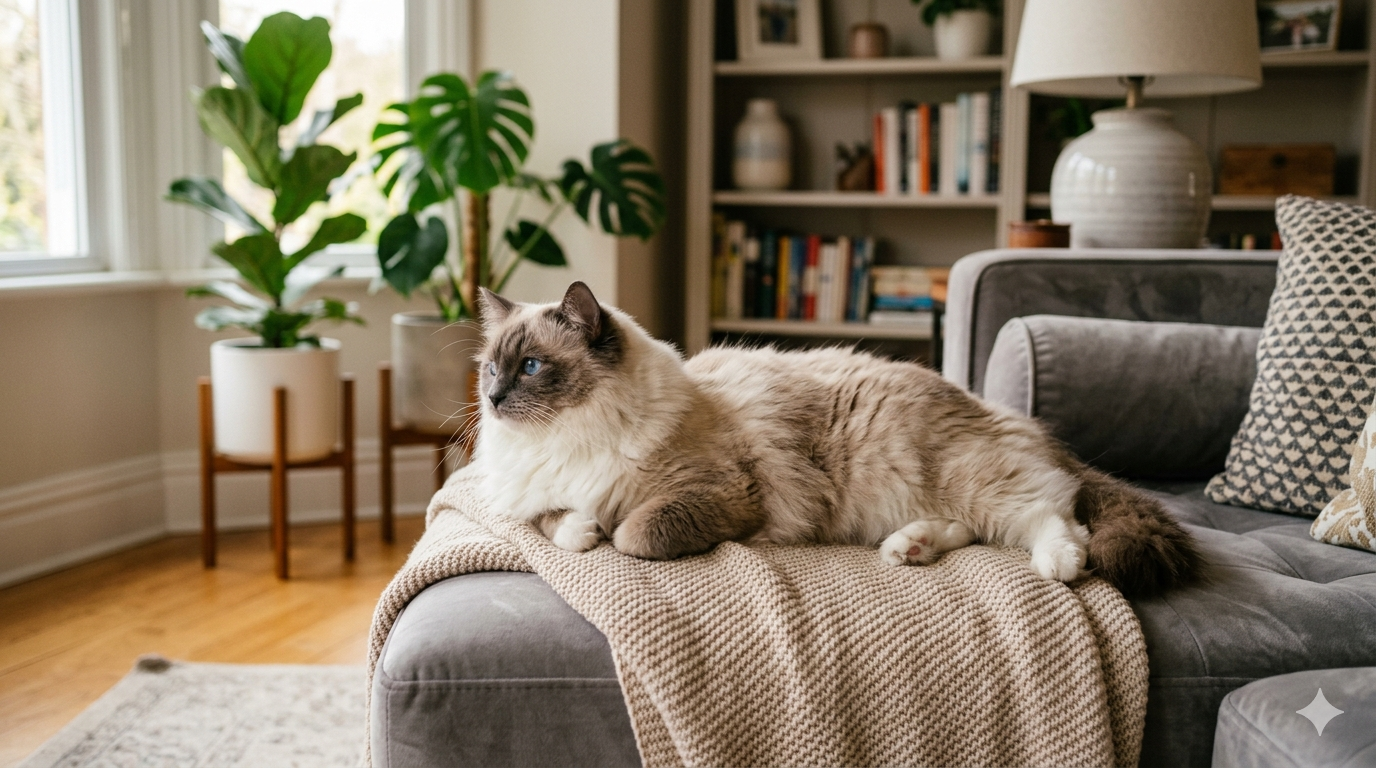
Yes — if you want a calm, affectionate, indoor lap-cat that tolerates kids, dogs, and apartment living. Ragdolls typically weigh 10–20 lb, live 13–17 years, cost $800–$2,500 from an ethical US breeder, and need weekly grooming plus HCM (heart) screening. They are not ideal for outdoor life or homes empty 10+ hours a day. Ragdoll care is easy to maintain, even for first-time cat parents.
Ragdoll Cat Facts at a Glance
Ragdoll Cat Temperament: Why Owners Call Them “Puppy-Cats”
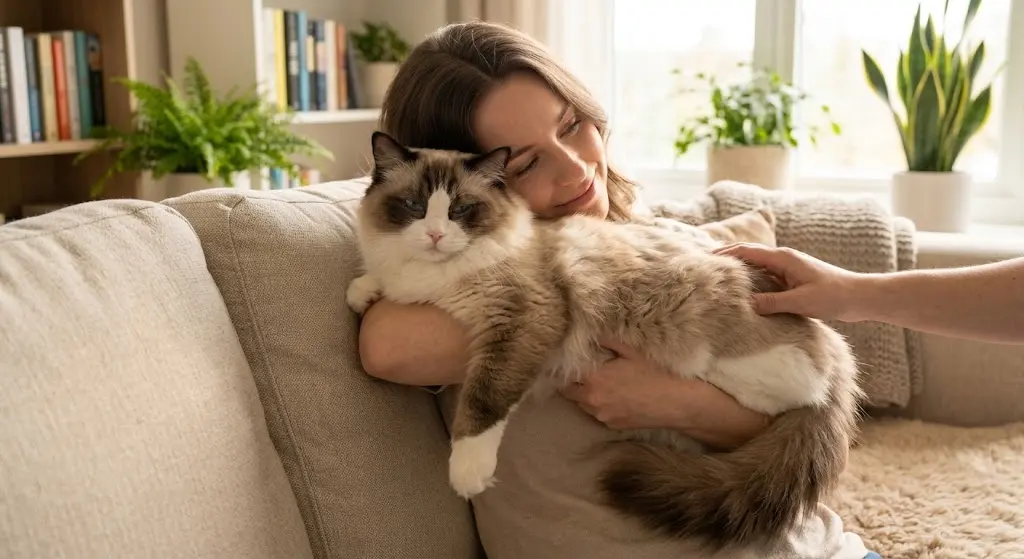
The Ragdoll’s temperament is the single biggest reason for its rise to America’s most popular pedigreed cat. Bred in the 1960s in California by Ann Baker, Ragdolls were selected specifically for docility and human bonding. Most Ragdolls:
- Go limp when picked up (the “floppy” trait behind the name)
- Follow their owner from room to room
- Greet you at the door and come when called
- Rarely scratch or bite, even when handled by children
- Prefer floor-level lounging over high shelves
Are Ragdolls Good With Kids & Dogs?
Yes — Ragdolls are one of the very few breeds vets routinely recommend for families with young children and cat-friendly dogs. Their high pain tolerance and low prey drive make them forgiving of clumsy toddler handling, and they typically choose to walk away rather than swat.
- ✅ Excellent with respectful children 4+
- ✅ Bond well with Golden Retrievers, Labs, Cavaliers, Poodles
- ✅ Tolerate multi-cat households when introduced slowly
- ⚠️ Not ideal if left alone 10+ hours daily — get 2, or add a companion
How Much Does a Ragdoll Cat Cost in the US? (2026)
Ragdoll kitten prices vary widely by lineage, HCM-tested parents, and breeder location. Here’s what US buyers actually paid in 2026:
| Source | Typical US Price | What You Get |
|---|---|---|
| Rescue / retired breeder cat | $75–$400 | Adult, spayed, vaccinated |
| Pet-quality kitten (TICA/CFA breeder) | $800–$1,500 | Vaccinated, HCM-tested parents, spay contract |
| Show / breeding quality | $1,800–$2,500+ | Champion bloodlines, full registration |
| Rare colors (mink, sepia, solid) | $2,000–$3,500 | Specialty US catteries |
Before you buy, run a DNA + health test on any kitten with unclear paternity — it takes 4–6 weeks and can flag HCM risk your breeder didn’t disclose.
Ragdoll Colors & Patterns
The Cat Fanciers’ Association recognizes 6 traditional colors × 4 patterns. All Ragdolls are born white and develop color over 2–3 years.
Seal · Blue · Chocolate · Lilac · Red (Flame) · Cream
Colorpoint · Mitted · Bicolor · Van
Seal Bicolor & Blue Mitted
Lilac Lynx & Chocolate Tortie
Ragdoll Health Problems Every Owner Must Know
Ragdolls are generally healthy but the breed carries an elevated risk of hypertrophic cardiomyopathy (HCM) — a thickening of the heart muscle caused by the MYBPC3 mutation. Reputable US breeders DNA-test every parent.
1. HCM (Heart Disease)
Ask for the parents’ MYBPC3 test AND an annual echocardiogram from a board-certified cardiologist.
2. Polycystic Kidney Disease
Less common than in Persians but still screened. Watch for excessive thirst.
3. Obesity
Their laid-back nature means many Ragdolls hit 18+ lb. Portion-control and daily play are non-negotiable.
4. Dental Disease
By age 3, 70% of cats have gum disease. See signs of dental disease in cats.
5. Urinary (FLUTD)
Encourage hydration with a running water fountain — reduces stones and cystitis.
6. Coat Matting
Semi-long coat mats behind ears and armpits without weekly combing.
🧬 Get Oral Health Test for Cats →
Best Diet for a Ragdoll Cat
Ragdolls are true obligate carnivores that gain weight easily. Aim for high-protein (40%+), moderate-fat, low-carb wet-forward feeding — split into 2–3 measured meals per day, not free-fed.
- Kittens (0–12 mo): kitten-formula wet food 4× daily
- Adults (1–7 yr): 200–260 kcal/day depending on activity
- Seniors (8+): joint + renal support formulas
- Always fresh water — ideally from a moving fountain (see our best cat water fountain guide)
🍃 See Meow Greens Superfood Topper →
Ragdoll Grooming & Shedding
Because Ragdolls have no undercoat, they mat less than a Persian but still shed enough to justify a weekly routine. Expect a heavier shed in spring and fall.
- Comb 2–3× per week with a wide-tooth steel comb
- Focus on armpits, belly, and behind the ears
- Bathe only every 6–8 weeks (or when greasy)
- Trim nails every 2 weeks
- Brush teeth 3× per week or use dental treats
👉 Full brush picks: Best Brush for Long-Haired Cats (2026)
New Ragdoll Kitten Checklist (US Owners)
- Flea Tick Care (Ragdolls grow to 20 lb — see our Kitten Tick Flea Care)
- Self-cleaning litter box sized XL
- Water fountain (encourages hydration, reduces FLUTD)
- Interactive wand toys + puzzle feeder
- Grooming comb + nail clippers
- High-protein kitten food (wet + dry combo)
- Vet visit within 72 hours of homecoming
- Pet insurance quote — Ragdolls’ HCM risk makes coverage worth it
🌿 See Bailey’s Cat Calming Chews →
Ragdoll Cat FAQs (Answered by a Vet)
1. Are Ragdoll cats hypoallergenic?
No. No cat is truly hypoallergenic, and Ragdolls produce average levels of Fel d 1. Their lack of undercoat may reduce airborne dander slightly.
2. How big do Ragdoll cats get?
Females 8–15 lb, males 15–20 lb. They keep growing until age 4.
3. How long do Ragdoll cats live?
13–17 years indoors; some reach 20 with excellent care and clean HCM lines.
4. Are Ragdolls indoor-only cats?
Yes — their trusting nature and slow reflexes make outdoor life dangerous. A catio is the safest compromise.
5. Do Ragdoll cats meow a lot?
Rarely. When they do, it’s a soft chirp or trill rather than a loud yowl.
6. Are male or female Ragdolls better?
Males are larger and often more affectionate; females are slightly more independent. Both make excellent pets when neutered/spayed.
7. Do Ragdolls really go limp?
Most do. It’s a genetic tendency toward extreme muscle relaxation when held — the reason the breed is named “Ragdoll.”
8. Can Ragdolls be left alone during workdays?
Up to 8 hours is usually fine. Beyond that, get a second cat or a pet-sitter — Ragdolls suffer from loneliness.
9. Ragdoll vs Maine Coon — which is better?
Both are large and gentle. Ragdolls are calmer and more lap-oriented; Maine Coons are more playful and vocal.
10. Ragdoll vs Ragamuffin?
Ragamuffins were bred from Ragdolls and allow more colors and non-blue eyes; temperament is nearly identical.
11. How often should I bathe my Ragdoll?
Every 6–8 weeks or when the coat feels greasy — over-bathing dries the skin.
12. When do Ragdolls calm down / stop growing?
They’re already calm as kittens. Physical growth peaks around age 4.
13. Do Ragdolls need another cat?
If your home is empty most of the day, yes — a bonded pair prevents loneliness and destructive behavior.
14. Are Ragdolls smart?
Above average. Many learn their name, “sit,” fetch, and even leash-walking with positive reinforcement.
15. What’s the biggest downside of the Ragdoll breed?
HCM heart disease risk and cost. Budget for annual cardiac screening and quality food.
Give Your Ragdoll the Healthiest Start Possible
One DNA test can flag HCM, PKD, and vWD years before symptoms appear — and gives your vet the roadmap for lifetime preventive care.
🧬 Order the Ragdoll DNA + Health Kit →Editorial disclosure: One Health Globe is reader-supported. When you buy through links on our site, we may earn a small commission at no extra cost to you. All picks are chosen independently and reviewed by our veterinary editor. This article is informational and does not replace veterinary care.
Vet-Approved Products Every Cat Owner Should Know About
Whether your cat needs better daily nutrition, fast access to a vet, or the right-sized litter box for their breed, these are the vet-recommended brands trusted by thousands of U.S. cat owners in 2026.
Struggling with your cat's dull coat or picky appetite? Ruff Greens' cat supplement line is vet-formulated to support digestion, skin, and coat health in one daily scoop.
🐾 Try Ruff Greens for CatsCan't get a same-week vet appointment? Dutch connects you with licensed U.S. veterinarians online for fast diagnosis, prescriptions, and care plans for your cat — often within hours.
🩺 Talk to a Vet Online NowTired of inconsistent feeding schedules? Petlibro's smart automatic feeders and fountains keep your cat's meals and water on schedule, even when you're away.
🍽️ Shop Petlibro Smart FeedersIs your litter box actually the right size for your cat's breed? Catlink's size guide compares every model so larger or long-bodied breeds get the space they actually need — no more cramped, avoided boxes.
📏 Find Your Cat's Right-Sized Litter BoxCurious what's really in your cat's DNA? Basepaws' breed and health DNA test reveals ancestry, breed traits, and potential genetic health risks — built specifically for cats.
🧬 Get Your Basepaws DNA KitIs your cat anxious during vet visits, travel, or loud noises? Bailey's CBD offers vet-formulated, third-party-tested calming chews and oils made for pets' natural stress response.
🌿 Calm Your Cat with Bailey's CBDWant to compare more cat breeds? Explore our full Cat Breeds Comparison Hub →