
French Bulldog Temperament 2026: Personality, Health Risks, Family Fit, Best Food & Complete Care Guide
French Bulldog temperament is one of the biggest reasons this small companion breed ranks among the world’s most popular dogs. Affectionate, playful, people-focused, and blissfully apartment-friendly — Frenchies are deeply loveable. But they are also one of the highest-maintenance breeds for health, nutrition, and daily care. This complete guide covers everything: personality, family suitability, training, health risks, the best food for French Bulldogs, and the supplements that directly support their unique vulnerabilities.


Quick French Bulldog Facts at a Glance
Small · 20–28 lbs · 11–13″ tall
Moderate · Short bursts · No endurance
Moderate — learns well, can be stubborn
10–12 years · Nutrition extends this
HIGH · Breathing, spine, joints, digestion
Apartments · Indoor lifestyle · Companion owners
French Bulldog Personality — What Owners Really Experience
The French Bulldog personality is a unique combination of clown, cuddle partner, and sensitive soul. They are companion-first dogs — bred specifically to be near humans and deeply responsive to the emotional environment around them. A stressed household unsettles them. A calm, affectionate home brings out their best qualities.
Frenchies form intense bonds with their people. Many follow their owner from room to room and become visibly distressed during long separations.
They are naturally entertaining — zoomies, silly antics, expressive faces and sounds. Many Frenchie owners describe them as the most amusing dog they’ve owned.
Frenchies read tone and body language acutely. Harsh correction or tense households can shut them down. Positive, reward-based interaction works best.
Most Frenchies express themselves through snorts, grunts, yodels, and dramatic sighs rather than excessive barking — a big advantage in apartments.
Are French Bulldogs Good Family Dogs?
Yes — for the right family. French Bulldogs are typically gentle, patient, and affectionate with children. Their smaller size, low-intensity exercise needs, and indoor nature make them one of the most popular choices for apartment-living families. The key requirement is that their health needs are taken seriously, not treated as an afterthought.
- 👨👩👧 With children: Typically patient, gentle, and playful. Supervision is still important given their small size and sensitivity.
- 🏡 Apartment friendly: Arguably the best large breed for apartment living — quiet, low exercise intensity, low odour.
- 🐾 With other pets: Generally sociable when well-introduced. Some males can be same-sex dog selective.
- 💛 With seniors: Their gentle, calm companionship makes them excellent for older owners who want an affectionate indoor dog.
For safer family pet routines, visit our Pet Safety Hub and review our Free Pet Care FAQ Resource.
Common French Bulldog Behavior Problems — Causes & Solutions
French Bulldog behavior problems are almost always rooted in one of three causes: emotional dependency, physical discomfort (often digestive or respiratory), or inconsistent routine. Understanding the source changes everything about the solution.
Cause: Breed-level over-attachment. Solution: Build independence early — practice short departures from 8 weeks, reward calm alone behaviour, avoid dramatic goodbye routines. A camera + treat dispenser helps monitor and reward calm behaviour remotely.
Cause: Inadvertent reinforcement of whining or pawing. Solution: Only reward calm behaviour. Never respond to demanding behaviour. Consistent ignoring then rewarding when quiet reshapes the pattern within 2–3 weeks.
Cause: Low motivation for standard rewards or confusing commands. Solution: Use ultra-high-value treats (small pieces of real meat). Keep sessions to 3–5 minutes maximum. End on a success always. Frenchies work hardest when they see a clear, immediate reward.
Often overlooked: Frenchies have notoriously sensitive digestive systems. A dog with ongoing gut discomfort becomes restless, irritable, and hard to settle. Probiotics and digestive enzymes often resolve “behavioral” issues that are actually digestive ones. This is one of the most underrated aspects of French Bulldog ownership.
French Bulldog Health Risks — What Every Owner Must Know
French Bulldogs are one of the highest-health-risk breeds in the world as a direct result of their brachycephalic (flat-faced) conformation and intensive selective breeding. Understanding these risks before buying the dog — and proactively managing them through diet and supplementation — determines quality and length of life.
Narrowed nostrils, elongated soft palate, and tracheal narrowing restrict airflow. Affects up to 50% of the breed. Worsened by obesity and heat. Weight management is the single biggest preventable factor.
Cannot pant efficiently to cool down. Can reach dangerous body temperatures within minutes in warm conditions. This is a genuine medical emergency risk — not just inconvenience. Never leave in a warm car.
Their compact spine is prone to disc problems — particularly in dogs who jump from heights or become overweight. Spinal supplements and weight control from puppyhood are the most evidence-based prevention tools.
Frenchies have structurally different digestive tracts. Flatulence, loose stools, food allergies, and IBD are all above-average risks. Probiotic supplementation with 15+ strains dramatically improves gut stability.
Facial folds trap moisture, creating bacterial and yeast overgrowth. Daily fold cleaning is mandatory. Omega-3 supplementation strengthens the skin barrier from the inside, reducing recurrence significantly.
French Bulldogs cannot swim. Their heavy head-to-body ratio causes them to tip forward immediately in water. Never leave unattended near pools, ponds, or baths. A life vest is required for any water proximity.
Best Food for French Bulldogs — What Their Unique Body Needs
French Bulldog nutrition is more complex than for most small breeds. Their brachycephalic structure, digestive sensitivity, skin issues, and spinal vulnerability all have nutritional components. The right food and supplements don’t just feed a Frenchie — they actively manage their most serious health risks.
What Every French Bulldog Diet Must Contain
- High-quality protein 22–28% DM from named sources — supports muscle mass that protects the spine and joints
- Limited and named ingredients — Frenchies have more food allergies than almost any other breed; fewer ingredients = easier to identify triggers
- Omega-3 EPA + DHA from fish oil — reduces skin inflammation, strengthens the skin barrier (reducing fold dermatitis), and supports joint health
- Probiotics (15+ strains) — the most impactful single addition for a breed with notoriously poor gut stability
- Digestive enzymes — improve nutrient absorption and reduce the gas and bloating that makes French Bulldog flatulence a known breed trait
- Controlled calories — obesity is the #1 preventable factor worsening BOAS. Every extra pound of weight measurably worsens breathing
- Glucosamine and chondroitin — for spinal disc and joint support, beginning from puppyhood


Do French Bulldogs Need Supplements?
Yes — more urgently than most breeds. Given the structural and digestive vulnerabilities French Bulldogs carry, relying on standard kibble alone leaves significant nutritional gaps that directly worsen their most common problems. Here is what research supports:
- Probiotics (15+ strains): The single most impactful supplement for Frenchies. Their digestive systems are structurally compromised — probiotics stabilise gut flora, reduce gas and bloating, improve stool consistency, and strengthen immune response. Most owners see a marked difference within 2 weeks.
- Digestive Enzymes: French Bulldogs often lack sufficient enzyme production. Supplemental enzymes dramatically improve nutrient absorption and reduce the digestive distress that affects their mood and behaviour.
- Omega-3 (EPA + DHA) from Fish Oil: Reduces systemic inflammation — directly improving skin fold dermatitis, respiratory inflammation, and joint health. The three biggest French Bulldog problems all have an inflammatory component.
- Glucosamine + Chondroitin: Spinal disc protection for a breed prone to IVDD. Begin from puppyhood — disc degeneration begins well before symptoms appear.
- Complete Multivitamin: 25 vitamins & minerals including antioxidants (Vitamins C and E) that help counter the oxidative stress French Bulldogs experience from chronic respiratory effort.
Training & Exercise — What Works for Frenchies
French Bulldog training works best when it is short, positive, reward-rich, and consistent. Their moderate intelligence means they learn well — but their stubborn streak means they will absolutely skip a session they find unrewarding. The key is making every training session feel like a game they want to play.
- 🎓 3–5 minute training sessions, 2–3× daily: Short bursts work better than long frustrated sessions. End every session on a success.
- 🚶 20–30 minute daily walks: Sufficient for most adult Frenchies. Avoid midday heat. Morning and evening only in summer.
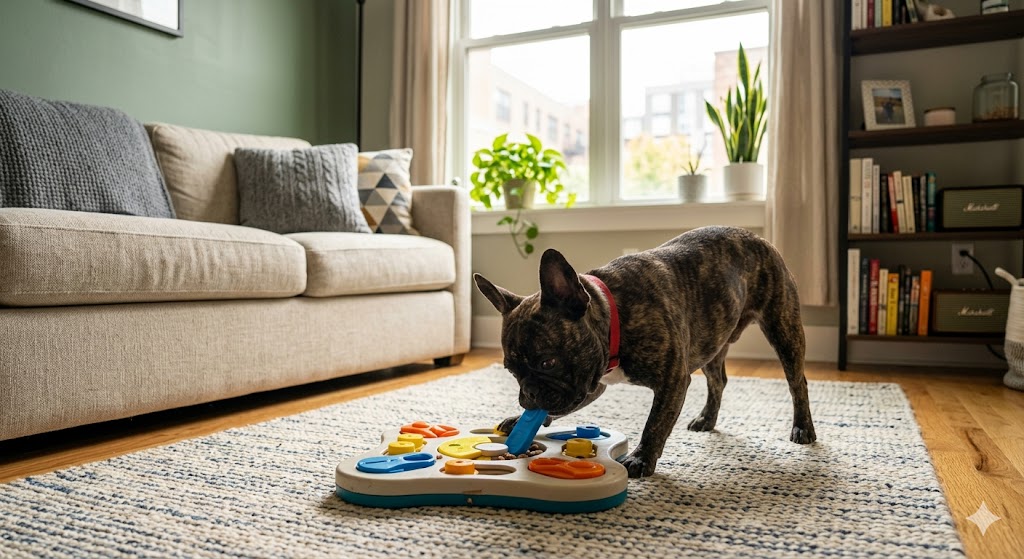
- 🧩 Mental stimulation is as important as physical: Puzzle feeders, scent games, and short obedience sessions prevent boredom-related behaviour.
- 🌡️ Never exercise in heat above 22°C (72°F): Heat + exercise is a genuine emergency risk for brachycephalic breeds.
- 🐶 Socialise from 8 weeks: Expose to different people, environments, handling, and sounds during the critical window. This shapes adult confidence permanently.
Explore useful training and care products through our Products page and get feeding help at our Pet Food Queries page.
Grooming & Daily Care — The French Bulldog Routine
- 🧼 Skin fold cleaning — daily: Wipe facial and body folds with a gentle damp cloth or unscented dog wipe. Dry thoroughly. Moisture in folds = yeast and bacteria. This is mandatory, not optional.
- 🪮 Weekly brushing: Short double coat benefits from a rubber grooming mitt to remove dead hair and stimulate skin circulation.
- 🦷 Dental care — 3× weekly minimum: Compact jaw creates crowded teeth. Dental disease is significantly above average in this breed. Daily brushing is ideal.
- 👂 Weekly ear checks: Bat ears are less prone to infection than floppy ears but still need regular checking and gentle cleaning.
- ✨ Coat quality from the inside out: Omega-3 supplementation noticeably improves coat shine and reduces skin flakiness — often more effectively than topical products alone.
For a better care routine, explore our Dog Hygiene & Grooming Guide and our Pet Home Safety Guide.
Is a French Bulldog Right for Beginners?
French Bulldogs can suit some first-time owners — particularly those who want an indoor companion dog and are willing to take health management seriously. The breed is not suitable for owners who expect a low-maintenance, low-cost pet. Vet bills, quality nutrition, and daily fold care are ongoing commitments, not occasional ones.
- ✅ Good for indoor companion-focused beginners who are prepared for the health and care reality
- ⚠️ Not suitable for owners expecting low cost or low effort — this is one of the most expensive breeds to maintain properly
- 📘 Education before purchase is essential — BOAS, IVDD, heat risk, and digestive sensitivity should all be understood before committing
- 💛 Deeply rewarding for the right owner — a well-cared-for Frenchie delivers extraordinary affection and companionship
To strengthen your routine, visit our Pet Safety Hub, review our Free Pet Care FAQ Resource, and browse our Products page.
Frequently Asked Questions — French Bulldog
Final Takeaway
French Bulldog temperament is best described as affectionate, playful, emotionally sensitive, and deeply companion-driven. This breed thrives in calm households with owners who take their health needs seriously — particularly their digestive fragility, heat vulnerability, breathing limitations, and nutritional requirements. For owners who are genuinely prepared, the French Bulldog offers extraordinary companionship in a compact, endlessly entertaining package.
Quick Takeaway: French Bulldogs are affectionate, high-health-awareness indoor dogs that thrive with human closeness, gentle training, heat safety management, and proactive nutrition — especially probiotics, digestive enzymes, and Omega-3 supplementation. Free USA-made trial available →
Explore More Dog Breeds & Free Tools
Browse our full dog breeds hub or try our free tools — 🔬 Dog Paw Scanner, 🐾 Dog Age Calculator, and our new 💅 Free Cat Nail Scanner.
Vet-Approved Products Every Dog Owner Should Know About
Whether your dog is battling shedding season, digestive issues, or just needs better everyday care, these are the vet-recommended brands trusted by thousands of U.S. dog owners in 2026.
Struggling with your dog's dull coat or picky appetite? Ruff Greens is a vet-formulated superfood supplement supporting digestion, skin, and coat health in one daily scoop.
🐾 Try Ruff Greens TodayCan't get a same-week vet appointment? Dutch connects you with licensed U.S. veterinarians online for fast diagnosis, prescriptions, and care plans — often within hours.
🩺 Talk to a Vet Online NowTired of inconsistent feeding schedules? Petlibro's smart automatic feeders and fountains keep meals and water on schedule, even when you're away.
🍽️ Shop Petlibro Smart FeedersWorried about catching cancer too late? Oncotect is an at-home early cancer screening kit for dogs, with lab results in days instead of invasive vet testing.
🔬 Get Your Oncotect Screening KitCurious what's really in your dog's DNA? Basepaws' breed and health DNA test reveals ancestry, breed traits, and potential genetic health risks.
🧬 Get Your Basepaws DNA KitIs your dog anxious during storms, car rides, or vet visits? Bailey's CBD offers vet-formulated, third-party-tested calming chews and oils made for dogs' natural stress response.
🌿 Calm Your Dog with Bailey's CBDWant more breed-specific care guides? Explore our full Dog Breeds Hub →