🐾
Breeding dogs need healthy paws β€” get your free AI paw health check
πŸ”¬ Scan Free β†’
Senior Dog Health Guide: Complete Care for Aging Dogs (2026) | One Health Globe

Senior Dog Health Guide: Complete Vet-Approved Care for Aging Dogs (2026)

More than half of US dog-owning households now have a senior dog. Dogs are living longer than ever β€” but longer lives bring new health challenges that require a fundamentally different care approach. Here is the complete 2026 guide.

🐾 52% of US dog households: senior dogs
πŸ”¬ 26.5M senior dog households in the US
πŸ“… Bi-annual vet visits recommended
πŸ“’ Affiliate Disclosure: This article contains affiliate links. If you purchase through our links, we may earn a commission at no extra cost to you. Our reviews are vet-reviewed and editorially independent. We only recommend products we genuinely believe in. Full disclosure policy β†’
⚠️ Veterinary Disclaimer: This guide is for educational purposes only. Senior dogs require more frequent professional veterinary care than younger dogs β€” not less. If your senior dog shows any sudden behavioral, appetite, or mobility changes, seek veterinary evaluation promptly. A Dutch Pet licensed vet can assess your senior dog tonight β€” no waiting room required β†’

The dog population in the United States is aging β€” and the care demands that come with senior dogs are unlike anything owners experienced when those dogs were young. MRI-Simmons data confirms that 52% of US dog-owning households β€” representing 26.5 million households β€” now have at least one dog aged 7 or older. This is a long-term trend that has been building for a decade, driven by advances in veterinary medicine, improved nutrition, and the deepening human-animal bond that makes owners more willing to invest in their dog’s longevity.

Morris Animal Foundation, publishing February 2026, affirms that dogs are living longer than ever before β€” but notes that longer lives bring increased risks for cancer, cognitive decline, and chronic disease. “Understanding how to keep our pets healthy as they age is a primary concern for many pet parents and their veterinarians,” the Foundation states. This guide answers that question comprehensively.

Before exploring this guide, use our Free Dog Paw Scanner to baseline your senior dog’s gait and paw health β€” one of the earliest indicators of arthritis-related mobility changes. And bookmark our Pet Vaccine Tracker to log your senior dog’s bi-annual wellness visits and blood work dates.

52%
of US dog-owning households now have a senior dog (7+ years) β€” Packaged Facts
26.5M
US households with senior dogs β€” the fastest-growing segment of pet ownership
80%
of senior dogs have arthritis β€” PetMD; often silently managed by the dog for years
2Γ—
Recommended vet visit frequency for seniors: bi-annual instead of annual

At a Glance: Best Products for Senior Dog Health (2026)

ProductBest ForRatingTypeLink
Dutch Pet Online Vet ConsultπŸ† #1 Senior RxArthritis pain Rx, CDS assessment, senior blood work⭐ 4.9/5Licensed Vet 24/7Talk to Vet β†’
Ruff Greens VitaSmartOmega-3s + probiotics + vitamins β€” senior daily foundation⭐ 4.5/5Daily SupplementFree Trial β†’
Dutch Pet Joint SupplementGlucosamine + chondroitin + MSM for senior joints⭐ 4.7/5Joint SupplementShop β†’
Bailey’s CBD Hip & Joint ChewsArthritis pain relief + anti-inflammatory⭐ 4.8/5CBD SupplementShop β†’
Bailey’s CBD Calming OilCDS anxiety, nighttime restlessness, senior stress⭐ 4.8/5CBD Calming OilShop β†’

When Is a Dog Considered a Senior? Age by Size & Breed

The question “is my dog a senior?” has a nuanced answer that most owners don’t know: dogs become seniors at vastly different ages depending on their size. Larger dogs age faster physiologically, entering their senior years much earlier than small breeds who may remain active and healthy well into their teens. According to aging research, dogs are generally considered senior when they reach the last 25% of their expected lifespan.

Small Breed
10–12
Years: Senior Status
Under 20 lbs
Chihuahua, Dachshund, Shih Tzu, Maltese, Toy Poodle
Lifespan: 14–18 yrs
Medium Breed
8–10
Years: Senior Status
20–50 lbs
Beagle, Cocker Spaniel, Border Collie, Australian Shepherd
Lifespan: 12–15 yrs
Large Breed
7–8
Years: Senior Status
50–90 lbs
Labrador, Golden Retriever, German Shepherd, Husky
Lifespan: 10–13 yrs
Giant Breed
5–6
Years: Senior Status
90+ lbs
Great Dane, Mastiff, Saint Bernard, Irish Wolfhound
Lifespan: 7–10 yrs
🐾 The Accelerated Aging Reality: A 7-year-old Great Dane is physiologically equivalent to a 65+ year-old human. The same-aged Chihuahua is roughly equivalent to a 44-year-old human. Giant breeds can develop age-related conditions like arthritis, cancer, and cognitive changes years before most owners expect them. If you have a large or giant breed dog, begin senior-level monitoring at age 5–6 β€” not 8 or 9 when problems may already be advanced.

The 8 Most Common Senior Dog Health Conditions

Senior dogs are more susceptible to illness and disease than younger dogs across all major organ systems. The following eight conditions account for the vast majority of veterinary visits and health challenges in dogs aged 7 and above. Understanding each is the first step toward proactive management.

🦴
Osteoarthritis & Joint Disease
Affects: Up to 80% of senior dogs (PetMD)
The most common senior dog condition. Progressive cartilage breakdown in weight-bearing joints causes chronic pain and mobility loss. Large breeds, overweight dogs, and those with prior joint injuries are at highest risk. No cure β€” but pain, progression, and quality of life are all manageable with the right protocol.
πŸ”¬
Cancer
Affects: ~50% of dogs over age 10 (AKC)
Cancer is the leading cause of death in dogs over 10. Common types include osteosarcoma (bone), lymphoma, mast cell tumors, and hemangiosarcoma. Early detection through bi-annual physical exams and annual blood panels significantly improves outcomes. Morris Animal Foundation is actively funding new early detection research.
🫘
Chronic Kidney Disease (CKD)
Affects: 1 in 10 senior dogs
Gradual loss of kidney filtration function. Often silent until 75% of kidney function is lost. Signs include increased thirst, increased urination, weight loss, and lethargy. Caught early by blood and urine testing, CKD can be managed with prescription kidney diets and supportive care to maintain quality of life for years.
❀️
Heart Disease
Affects: ~75% of senior dogs develop some form (Honeycare)
Most commonly valve disease or dilated cardiomyopathy (DCM). Causes coughing, breathing difficulties, and reduced exercise tolerance. Cavalier King Charles Spaniels and Boxers are at highest genetic risk. Managed with prescription cardiac medications and dietary sodium restriction. Regular chest X-rays and echocardiograms recommended bi-annually.
🧠
Canine Cognitive Dysfunction (CDS)
Affects: 28% at age 11–12; 68% at age 15–16
The canine equivalent of Alzheimer’s β€” beta-amyloid plaques accumulate in the aging brain causing progressive cognitive decline. Frequently mistaken for “normal aging.” Signs include disorientation in familiar spaces, nighttime restlessness, house soiling, and personality changes. Anipryl (selegiline) is the only FDA-approved treatment for CDS in dogs.
🩸
Diabetes Mellitus
Most common in middle-aged to senior dogs, 7–10 years
Insulin-deficient diabetes is the most common form in dogs. Causes abnormal blood chemistry that damages the heart, nerves, blood vessels, eyes, and kidneys. Signs include increased appetite, excessive thirst, frequent urination, and weight loss. Managed with daily insulin injections, diet, and exercise. Requires strict owner commitment and regular vet monitoring.
🦷
Dental & Periodontal Disease
Affects: Over 80% of dogs by age 3 β€” nearly universal in seniors
Periodontal disease is essentially universal in unmanaged senior dogs. Untreated, bacteria enter the bloodstream and damage the heart, kidneys, and liver. Professional dental cleanings under anesthesia are more complex in senior dogs due to anesthetic risk β€” which is why prevention through regular at-home dental care is even more critical in this age group.
βš–οΈ
Obesity
Affects: Over 50% of senior dogs are overweight
Senior dogs face the highest obesity risk of any life stage because metabolic rate decreases by up to 25% with age β€” yet feeding amounts rarely decrease proportionally. Obesity accelerates every other aging condition: it worsens arthritis, increases cancer risk, strains the heart and kidneys, and contributes to diabetes. Weight management is the highest-leverage intervention in senior dog health.

Warning Signs Every Senior Dog Owner Must Know

The most dangerous characteristic of senior dog disease is how gradually and silently conditions develop. Dogs adapt their behavior to mask pain and weakness β€” a survival instinct that becomes a health hazard in domesticated senior dogs whose owners interpret the slow changes as “just getting older.” Age is not a diagnosis. These changes warrant veterinary evaluation:

Physical Warning Signs

!
Stiffness after rest that improves once the dog warms up β€” hallmark of early arthritis
!
Reluctance to climb stairs, jump on furniture, or enter vehicles
!
Excessive thirst and urination β€” primary sign of kidney disease and diabetes
!
Unexplained weight loss despite normal or increased appetite β€” cancer, diabetes, kidney disease
!
Persistent coughing or labored breathing β€” heart disease, lung disease, or cancer
!
Lumps or bumps appearing anywhere on the body β€” require prompt veterinary evaluation
!
Bad breath worsening beyond normal β€” advanced periodontal disease with systemic risk
!
Changes in coat quality β€” dull, dry, or thinning coat signals nutritional or endocrine issues

Behavioral & Cognitive Warning Signs

!
Disorientation in familiar spaces β€” getting “stuck” in corners, staring at walls (CDS)
!
Nighttime restlessness β€” pacing, vocalizing after dark (CDS sleep-wake disruption)
!
Forgetting trained behaviors or house-training failures in a previously reliable dog
!
Reduced social engagement β€” less interested in family, play, or greeting visitors
!
Increased anxiety or clinginess β€” new separation distress in a previously independent dog
!
Personality changes β€” irritability, aggression, or flat affect in a previously gentle dog
!
Reduced activity β€” sleeping significantly more, reluctance to engage in previously enjoyed activities
!
Aimless wandering or circling without apparent purpose
πŸ’‘ The 48-Hour Rule for Senior Dogs: Any change in appetite, mobility, behavior, or elimination habits in a senior dog that persists for more than 48 hours warrants a veterinary call β€” not a “wait and see.” Conditions that present subtly in young dogs can progress rapidly in senior dogs. Early intervention dramatically improves outcomes for every major aging condition. A Dutch Pet licensed vet can assess your senior dog tonight via video, 24/7.

The Senior Dog Bi-Annual Wellness Checklist

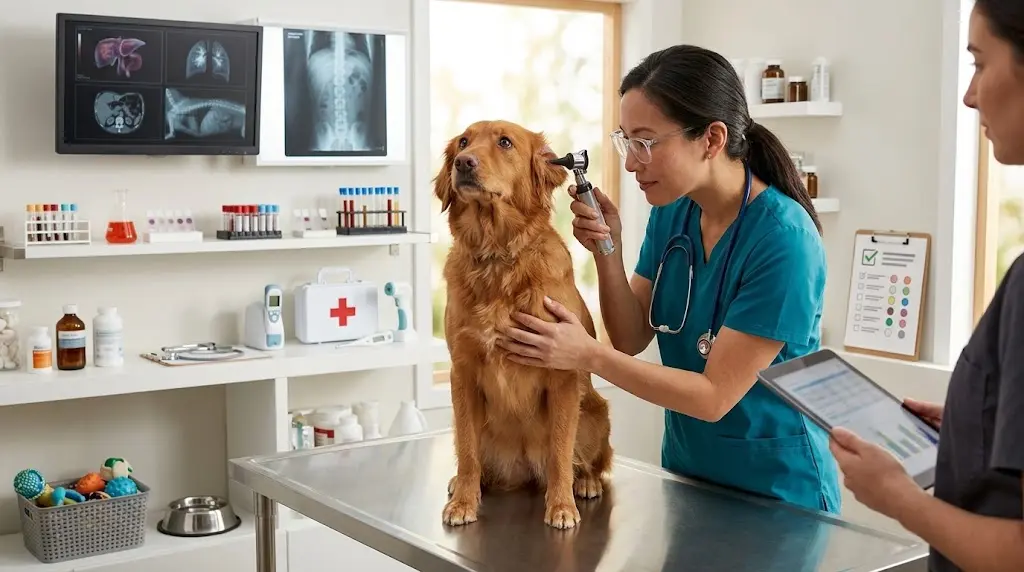
The single most impactful change you can make for a senior dog’s health is switching from annual to bi-annual (every 6 months) veterinary wellness visits. The American Animal Hospital Association (AAHA), AVMA, and every major veterinary organization recommend this frequency for dogs over age 7. Here is what should happen at every senior wellness visit:

🩺
Every Bi-Annual Senior Wellness Visit β€” What Should Be Done
If your vet is not performing all of these at every visit, ask why
β–‘
Full physical examination β€” eyes, ears, teeth, lymph nodes, abdomen, skin, joints
β–‘
Complete Blood Count (CBC) β€” screens for anemia, infection, immune disorders
β–‘
Blood chemistry panel β€” kidney function, liver enzymes, blood glucose, thyroid (TSH)
β–‘
Urinalysis β€” early kidney disease detection, diabetes markers, infection
β–‘
Blood pressure measurement β€” hypertension is common and silent in senior dogs
β–‘
Weight recording β€” track trend over time, not just current number
β–‘
Cognitive function assessment (DISHAA scale) β€” CDS screening for dogs 8+
β–‘
Pain assessment β€” standardized mobility and pain scoring
β–‘
Dental examination β€” assess periodontal disease stage, recommend cleaning if needed
β–‘
Heartworm test (annual) and fecal exam β€” parasite monitoring maintained
β–‘
Joint mobility assessment β€” range of motion, pain on palpation, muscle mass comparison
β–‘
Lump & bump inventory β€” document all masses with size, location, and character
πŸ’‘ Telemedicine Between Visits: Between physical wellness exams, Dutch Pet licensed vets can evaluate any concern your senior dog develops via video β€” ordering blood work at a local lab, prescribing pain management, adjusting medication doses, and assessing CDS symptoms β€” without requiring your senior dog to make a stressful clinic trip for every concern. Start a consultation tonight β†’
1

Dutch Pet Online Vet Consult β€” Best for Senior Dog Health Monitoring & Rx Access

⭐⭐⭐⭐⭐ 4.9/5 · Licensed US Vets · 24/7 · All Senior Rx Available · Lab Test Ordering
πŸ† Best For: Senior dogs β€” pain management Rx, CDS assessment, kidney/heart monitoring, lab ordering

Senior dogs require more veterinary contact than any other life stage β€” and the stress of repeated clinic visits itself affects health. Dutch Pet solves this by connecting you with a licensed US vet via video in minutes, 24/7. For senior dog owners, the critical capabilities are: the ability to order blood panels and urinalysis at a local lab between in-person visits, prescribe NSAIDs or Librela for arthritis pain, evaluate CDS signs and prescribe Anipryl (selegiline) if appropriate, prescribe gabapentin for chronic pain management, and discuss kidney diet transitions or cardiac medication adjustments.

For a senior dog that needs a pain medication adjustment at 11 PM, a cognitive assessment after suddenly getting “lost” in the kitchen, or blood work review without driving to the clinic β€” Dutch Pet is the most valuable ongoing resource a senior dog owner can have.

βœ… PROS
  • 24/7, no appointment β€” critical for senior emergencies
  • Full senior Rx: NSAIDs, Librela, Anipryl, gabapentin, cardiac meds
  • Can order blood panels + urinalysis at local lab
  • CDS assessment and Anipryl prescription available
  • No transport stress for arthritic or anxious senior dogs
  • Ongoing relationship β€” tracks your dog’s history across consultations
❌ CONS
  • Physical examination for X-rays and echocardiogram still needs in-person vet
  • Consultation fee applies β€” check current pricing on Dutch website

Senior Dog Nutrition: What Changes With Age

Nutrition is one of the most powerful levers you can pull for a senior dog’s health β€” and the requirements change significantly from adult maintenance. The metabolic rate decreases by up to 25% as dogs age due to lean muscle mass loss, according to senior dog diet research. Yet most owners continue feeding the same amount as when their dog was a young adult. Here are the key nutritional principles for senior dogs:

πŸ₯©
High-Quality Protein
Senior dogs need more protein per calorie than young adults β€” not less. High protein preserves lean muscle mass as metabolic rate declines. Look for a named meat as the first ingredient (chicken, salmon, turkey). Protein restriction is only appropriate for dogs with diagnosed advanced kidney disease β€” not healthy seniors.
πŸ”₯
Reduced Caloric Density
Metabolic rate drops up to 25% with age. Most senior dogs need 20–30% fewer calories than their adult maintenance amount. Senior-formulated foods account for this. If feeding adult food, reduce portions proportionally and monitor body weight monthly using the BCS method.
🐟
Omega-3 Fatty Acids
EPA and DHA reduce the systemic inflammation that drives arthritis progression, cognitive decline, and organ disease in senior dogs. The single most universally beneficial nutritional addition for any aging dog. Look for fish oil or salmon-based ingredients, or supplement with a dedicated Omega-3 source.
🫫
Antioxidants
Vitamins E and C, beta-carotene, and selenium neutralize the oxidative stress that accumulates with aging and accelerates cellular damage. Antioxidant-enriched senior diets support immune function, cognitive health, and cancer resistance. Look for foods listing these specifically, not just generic vitamin premixes.
πŸ’§
Hydration Support
Senior dogs are more prone to dehydration β€” kidney function declines, thirst sensation diminishes, and mobility issues make reaching the water bowl harder. Adding wet food to the diet (even 25% wet/75% dry) significantly increases daily water intake and supports kidney health. Always provide multiple fresh water stations.
🌾
Digestive Fiber
Gastrointestinal motility slows with age, causing constipation and reduced nutrient absorption. Moderate dietary fiber supports regular elimination and feeds the beneficial gut bacteria that modulate immune function. Probiotics alongside fiber create a powerful digestive support system for aging dogs.
🚨 Condition-Specific Nutrition Rules: Dogs with kidney disease need reduced phosphorus and may need protein modification β€” do NOT reduce protein without vet guidance; inappropriate protein restriction causes muscle wasting. Dogs with heart disease may need sodium restriction. Dogs with diabetes need consistent, carefully measured meals on a strict schedule. Always get vet-specific diet guidance for any senior dog with a diagnosed condition before changing their food.

Best Supplements for Senior Dogs: Evidence-Based Picks

2

Ruff Greens VitaSmart β€” Best Daily Nutritional Foundation for Senior Dogs

⭐⭐⭐⭐½ 4.5/5 · Free Trial · Omega-3s + 25 Vitamins + 15 Probiotics · 200,000+ Dogs
🌿 Best For: Senior daily nutritional baseline β€” Omega-3s, antioxidants, probiotics, B vitamins

Senior dogs have the highest unmet nutritional needs of any life stage, and commercial senior dog foods β€” even good ones β€” rarely achieve optimal nutrient density for aging-specific requirements. Ruff Greens VitaSmart fills those gaps with 25 vitamins (including Vitamin E, C, and B complex), 15 probiotics, and Omega-3 oils in a single daily food topper. The Omega-3s reduce the inflammatory cascade driving arthritis and organ disease progression. The B vitamins support the neurotransmitter synthesis that cognitive function depends on. The probiotics address the gut microbiome changes that accumulate with age and affect immune function, nutrient absorption, and even mood regulation through the gut-brain axis.

For senior dogs that are already showing signs of stiffness, cognitive changes, or digestive irregularity β€” starting Ruff Greens immediately addresses three of the most common nutritional deficiencies simultaneously. The free trial bag makes this a zero-risk first step.

βœ… PROS
  • Free trial β€” just $9.95 shipping, zero financial risk
  • Omega-3s β€” the #1 anti-inflammatory for aging dogs
  • B vitamins support cognitive function and neurotransmitter health
  • 15 probiotics support age-related gut microbiome decline
  • Antioxidant vitamins reduce oxidative cellular aging
  • 200,000+ dogs using daily β€” many senior owners report visible improvement
❌ CONS
  • Nutritional support β€” not a treatment for diagnosed conditions
  • Works best as foundational layer alongside condition-specific Rx from vet
🌿 Give Your Senior Dog the Nutritional Foundation They Deserve

Senior dogs have the highest nutritional needs and the most gaps in standard diets. Ruff Greens fills those gaps with Omega-3s, antioxidants, B vitamins, and 15 probiotics β€” in a free trial bag. Just pay $9.95 shipping.

Claim Your Free Trial Bag β†’
3

Bailey’s CBD Hip & Joint Chews β€” Best for Senior Arthritis Pain & Inflammation

⭐⭐⭐⭐⭐ 4.8/5 · Full-Spectrum CBD · Glucosamine + Boswellia · Cornell Study
🌿 Best For: Chronic arthritis pain, joint stiffness, morning immobility, inflammation

The 2018 Cornell University College of Veterinary Medicine landmark study confirmed 80% of arthritic dogs showed significant pain improvement on CBD oil β€” with no reported life-threatening side effects unlike NSAIDs, which carry kidney, liver, and GI risks with long-term use. Bailey’s CBD Hip & Joint Chews combine full-spectrum CBD with glucosamine, chondroitin, and Boswellia serrata β€” addressing arthritis pain from three distinct mechanisms simultaneously. For senior dogs who cannot safely take long-term NSAIDs due to kidney or liver considerations, Bailey’s CBD represents the most evidence-backed non-pharmaceutical alternative available.

βœ… PROS
  • Full-spectrum CBD β€” Cornell study: 80% arthritis improvement
  • No kidney, liver, or GI risk unlike long-term NSAIDs
  • Glucosamine + chondroitin support cartilage structure
  • Boswellia β€” peer-reviewed 5-LOX joint inflammation inhibition
  • Certified organic US hemp β€” third-party lab tested
  • Palatable chew β€” most senior dogs accept readily
❌ CONS
  • Wellness supplement β€” not FDA-approved drug. Severe pain may still need NSAIDs or Librela Rx
  • Full effect takes 2–4 weeks of consistent daily use

Home Comfort Care: Making Life Better for Your Senior Dog Every Day

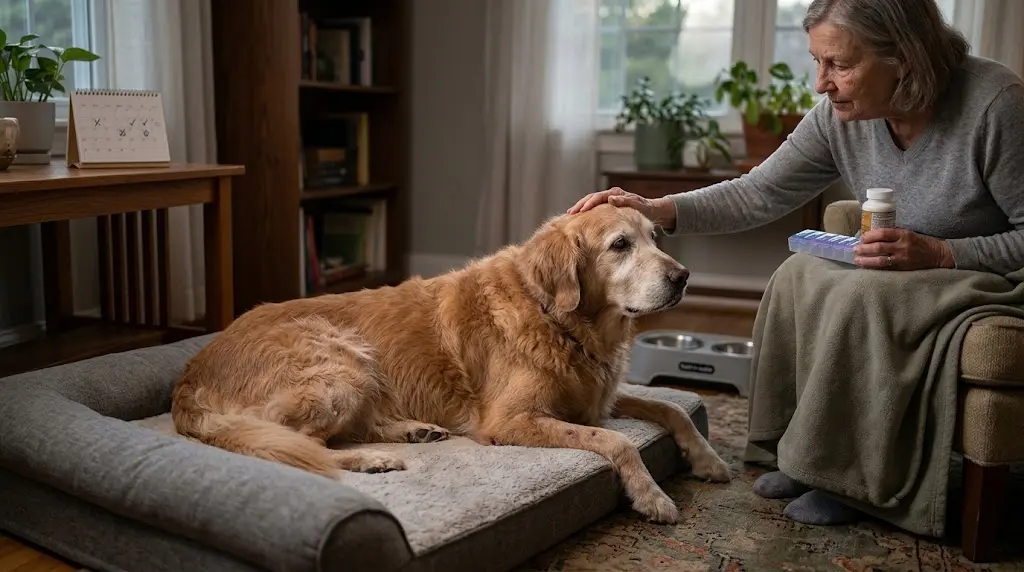
Beyond veterinary care and supplements, the daily home environment profoundly affects a senior dog’s quality of life. These modifications are low-cost, immediately impactful, and evidence-based for aging dogs:

Sleep & Rest
πŸ›οΈ Orthopedic Memory Foam Bed β€” Non-Negotiable for Arthritic Dogs
Hard floors force arthritic senior dogs to tense muscles against pressure points all night, waking with significantly more pain and stiffness. Memory foam distributes weight evenly and eliminates pressure point pain. Position on non-slip surfaces only β€” senior dogs on slippery floors after rising from a bed can injure themselves severely. Provide beds in multiple rooms so your senior doesn’t have to travel far to rest.
Mobility Access
πŸͺœ Ramps, Steps & Non-Slip Surfaces
Jumping down from furniture or out of vehicles generates explosive compressive impact on arthritic joints that causes both immediate pain and accelerated cartilage damage. Ramps and steps eliminate this entirely. Apply non-slip grip tape or yoga mat runners on hardwood and tile flooring throughout the home β€” senior dogs attempting to rise on slippery floors frequently injure themselves from failed attempts.
Feeding
πŸ₯£ Elevated Bowls & Multiple Water Stations
Bending to floor-level bowls strains the cervical spine and front joints β€” especially painful for dogs with neck or shoulder arthritis. Elevated bowls at elbow height remove this strain entirely. Multiple water stations prevent dehydration in dogs whose mobility makes reaching a single bowl difficult. Senior dogs with CDS may forget where their water bowl is β€” multiple stations mitigate this.
Exercise
🚢 Short, Frequent Walks β€” Not Long Pavement Marches
Complete inactivity accelerates joint stiffening and muscle loss in senior dogs β€” but long, high-impact walks on hard pavement overload compromised joints. Replace one daily walk with three or four 10-minute sniff walks. Sniff walks on grass or soft surfaces provide mental stimulation and physical movement without joint impact. Swimming or hydrotherapy is the gold standard for senior dogs with significant arthritis.
Cognitive Enrichment
🧩 Daily Mental Stimulation β€” Critical for CDS Prevention and Management
Research confirms that cognitive enrichment β€” puzzle feeders, scent work, gentle training sessions, novel environments β€” slows CDS progression and improves quality of life in cognitively declining dogs. Keeping the brain engaged through new challenges maintains neural plasticity. Use snuffle mats, Kong enrichment, and gentle nose work appropriate to your dog’s energy level daily. Pair with a consistent routine β€” senior dogs with CDS are deeply disrupted by schedule changes.
Temperature
🌑️ Warmth Management β€” Especially in Cold Months
Arthritic joints are dramatically more painful in cold, damp conditions β€” the same phenomenon humans with arthritis experience. Senior dogs should not be left on cold floors or in drafty areas. Dog coats during outdoor exercise in cold months are not optional for senior arthritic dogs. Warm-water heat packs applied to stiff joints for 10–15 minutes before morning exercise significantly reduce the painful “warming up” period.

When Your Senior Dog’s Condition Requires Immediate Veterinary Action

Senior dogs can decline rapidly from conditions that would be more gradual in younger dogs. These situations require same-day or emergency veterinary evaluation β€” not watchful waiting:

  • Sudden inability to rise or stand β€” possible acute spinal event, aortic thromboembolism, or severe acute pain
  • Rapid unexplained weight loss over 2–4 weeks β€” cancer, kidney failure, or severe metabolic dysfunction
  • Sudden blindness or pupillary changes β€” hypertensive retinopathy from uncontrolled blood pressure (a vet emergency)
  • Labored breathing at rest β€” acute heart failure, pleural effusion, or lung disease requiring emergency treatment
  • Collapse or sudden extreme weakness β€” internal bleeding, cardiac arrhythmia, or severe anemia
  • Sudden severe disorientation β€” stroke, seizure disorder, or acute brain event
  • Vomiting or diarrhea for more than 24 hours β€” dehydration occurs faster and is more dangerous in senior dogs
  • Any sudden aggression in a previously gentle dog β€” pain crisis, neurological event, or medical emergency

Frequently Asked Questions: Senior Dog Health

When is a dog considered a senior?
Dogs are generally considered seniors when they reach the last 25% of their expected lifespan β€” and this varies significantly by size. Small dogs (under 20 lbs) become seniors around age 10–12. Medium dogs (20–50 lbs) around age 8–10. Large dogs (50–90 lbs) around age 7–8. Giant breeds (90+ lbs) as early as age 5–6. The AVMA confirms that at least 28% of the nation’s dogs are at least 8 years old, and Packaged Facts data shows more than half of US dog-owning households now have a senior dog.
How often should a senior dog see the vet?
Senior dogs should visit the vet every 6 months β€” twice yearly instead of the annual schedule appropriate for younger adults. This frequency is recommended by AAHA, AVMA, and all major veterinary organizations because conditions like kidney disease, heart disease, diabetes, and cancer progress significantly faster in senior dogs. Each bi-annual visit should include a full physical exam, CBC, blood chemistry panel, urinalysis, blood pressure check, cognitive assessment, and dental evaluation. Between visits, Dutch Pet telemedicine provides rapid access to licensed vets for any concerns that arise.
What is the best food for a senior dog?
Senior dogs benefit from: high-quality protein (preserves muscle mass as metabolic rate declines by up to 25% with age), reduced caloric density (to prevent obesity), increased Omega-3 fatty acids (reduce inflammation), and added antioxidants. Dogs with kidney disease need reduced phosphorus β€” but do NOT restrict protein in healthy seniors, as this accelerates muscle wasting. Always consult your vet before changing a senior dog’s diet, especially if they have a diagnosed condition. Supplementing with Ruff Greens VitaSmart provides Omega-3s, antioxidant vitamins, and probiotics that most senior diets are insufficient in.
What are the signs of pain in a senior dog?
Senior dogs mask pain very effectively. Most common signs: difficulty rising from rest, stiffness after sleep that improves with movement, reluctance to climb stairs or jump, reduced activity or play drive, changes in appetite, unusual posture, excessive licking of a specific joint, panting without heat or exercise, irritability when touched, and behavioral withdrawal. If any of these signs persist for more than 48 hours, schedule a veterinary evaluation β€” pain in senior dogs is almost always treatable. A Dutch Pet vet can assess your dog tonight via video.
What supplements are best for senior dogs?
The most evidence-backed senior supplements are: Omega-3 fatty acids (EPA/DHA) for inflammation; glucosamine and chondroitin for joint cartilage; antioxidants (Vitamin E, C, beta-carotene) for oxidative stress; probiotics for gut-brain health; B vitamins for cognitive support; and SAMe for liver and cognitive health. Ruff Greens VitaSmart provides Omega-3s, B vitamins, antioxidant vitamins, and 15 probiotics in one daily food topper. Bailey’s CBD Hip & Joint Chews address arthritis pain via CBD (80% improvement in Cornell study) and Boswellia. Dutch Pet Joint Supplement provides glucosamine, chondroitin, and MSM.

Your Senior Dog Has Given You Their Best Years β€” Give Them Yours

The complete senior health plan: switch to bi-annual vet visits β†’ start Ruff Greens VitaSmart for nutritional foundation β†’ add Bailey’s CBD Hip & Joint for arthritis pain β†’ get a Dutch Pet vet consult for Rx pain management or CDS evaluation β†’ implement home comfort modifications β†’ track everything in the OHG Pet Vaccine Tracker. Every month of proactive care is a month of quality life protected.

βš•οΈ Medical Disclaimer: This guide is for educational purposes only and does not constitute veterinary advice, diagnosis, or treatment. Senior dogs require professional veterinary care β€” not a reduction in vet visits. If your senior dog shows sudden behavioral, appetite, or mobility changes, contact a licensed veterinarian immediately. Product recommendations are independent editorial decisions not influenced by affiliate relationships.
About the Author & Review Process: Written by the One Health Globe editorial team and reviewed by our veterinary advisory panel. Sources include MRI-Simmons/Packaged Facts senior pet ownership data, Morris Animal Foundation February 2026 canine aging research, AAHA Senior Pet Care Guidelines, AVMA, AKC, VCA Animal Hospitals, Cornell University College of Veterinary Medicine, PetMD, and peer-reviewed research in the Journal of the American Veterinary Medical Association. Affiliate relationships do not influence our editorial recommendations. Learn about our review process β†’
πŸ‡ΊπŸ‡Έ USA Supplements + US Warehouse Tech Β· May 2026

Your Pet Deserves the Best Products

Shop USA-made Ruff Greens supplements + top-rated Meowant smart pet tech. Free trial bag available β€” just pay shipping!

Ruff Greens Free Trial
JumpStart Trial Bag
FREE 🎁
VitaSmart Multivitamin
VitaSmart Vitamins
$59.95
Self-Cleaning Litter Box
Self-Clean Litter Box
$209
Treat Dispenser Camera
Treat Dispenser 2K Cam
$79.99
πŸ• All Dog ProductsGrooming Β· Feeders Β· Cameras 🐈 All Cat ProductsLitter Boxes Β· Fountains Β· Toys πŸ›’ All Pet Deals35,000+ products Β· Free shipping
πŸ‡ΊπŸ‡Έ USA Made Supplements βœ“ FDA Registered Facility βœ“ US Warehouse Tech βœ“ 30-Day Returns