If your cat — especially a male cat — is straining in the litter box and producing NO urine, this is a veterinary emergency. A urethral obstruction can cause death within 24–48 hours from kidney failure and cardiac arrest from elevated potassium. Do not wait until morning.
- Straining repeatedly with little or no urine produced → Emergency vet NOW
- Crying out while trying to urinate → Emergency vet NOW
- Lethargy + vomiting + straining together → Emergency vet NOW
Or talk to a licensed vet in minutes: Dutch Pet — 24/7 cat vet consultation →
Feline lower urinary tract disease — FLUTD — is one of the most common and most mismanaged conditions in domestic cats. According to the AVMA, FLUTD affects approximately 1–3% of cats seen in veterinary practice every year, making it one of the top reasons cat owners seek veterinary care. The Merck Veterinary Manual confirms that hematuria, pollakiuria, stranguria, and periuria are the characteristic clinical signs — but the critical challenge is that identical symptoms can indicate anything from a self-limiting stress response to a fatal urethral obstruction requiring emergency surgery.
The stakes could not be higher. VCA Animal Hospitals is unequivocal: with a urinary tract obstruction, it is essential to seek immediate veterinary care because it can be a life-threatening complication if untreated — and is very painful for the cat. Understanding FLUTD, its causes, and the specific situations that demand emergency care is the most important knowledge any cat owner can have.
This complete 2026 guide covers every FLUTD cause, the blocked cat emergency, feline idiopathic cystitis, prevention strategies, and diet. For ongoing cat health tracking, use our Pet Vaccine Tracker and our Cat Grooming Guide to stay ahead of all aspects of your cat’s wellbeing.
What is FLUTD? Understanding the Umbrella Term
FLUTD — Feline Lower Urinary Tract Disease — is not a single diagnosis. It is an umbrella term describing a group of conditions that share the same clinical signs but have different underlying causes. PetMD defines it clearly: FLUTD is a group of conditions affecting a cat’s bladder and urethra, often causing pain, frequent urination, or urinating outside the litter box — with stress, urinary tract infections, bladder stones, and idiopathic cystitis as common causes, and male cats more prone to dangerous urethral blockages.
This umbrella nature is what makes FLUTD both common and complicated. The same symptom — straining in the litter box — can have five completely different underlying causes, each requiring a different treatment. Giving the wrong treatment (such as antibiotics for a non-bacterial FIC case) not only fails to help but delays proper care and can make the situation worse.
Warning Signs of Cat Urinary Problems
International Cat Care and VCA Animal Hospitals identify the following as the primary signs of FLUTD. Know these before you need them:
Signs Requiring Prompt Vet Care (Within 24 Hours)
🚨 Emergency Signs — Go to Vet Immediately (Do Not Wait)
The 5 Causes of FLUTD: What’s Actually Happening Inside
Identifying the specific cause of your cat’s FLUTD is essential because the treatment differs completely depending on the diagnosis. These are the five primary underlying conditions, with their approximate percentage contribution to all FLUTD cases according to Merck and published veterinary literature:
The Blocked Cat: Everything You Need to Know About Urethral Obstruction
Urethral obstruction is the most dangerous consequence of FLUTD — and it is almost exclusively a male cat problem. Understanding why, how to recognize it, and what happens during treatment is essential knowledge for every cat owner, whether you have a male cat or not.
Why Male Cats Get Blocked (Anatomy Matters)
Male cats have a urethra that is significantly longer and narrower than a female cat’s. This anatomy makes it far easier for mucus plugs, crystals, or inflammatory debris to create a complete blockage. Female cats rarely experience complete urethral obstruction due to their shorter, wider urethra — even when they have crystals or FIC, the blockage rarely becomes complete.
What Happens Physiologically During an Obstruction
When the urethra is completely blocked, urine cannot leave the bladder. Within hours:
- Bladder distension. The bladder fills with backed-up urine and becomes painfully enlarged. This is the “straining with nothing coming out” behavior owners notice.
- Kidney failure begins. With nowhere to go, urine backs up through the ureters into the kidneys. Within 12–24 hours, kidney function begins to deteriorate from the pressure.
- Potassium accumulates in the blood. Normally filtered by the kidneys, potassium builds to dangerous levels. Hyperkalemia (high blood potassium) disrupts cardiac electrical signaling.
- Cardiac arrest risk. Severe hyperkalemia causes fatal heart arrhythmias. This is the mechanism of death in blocked cats — not the obstruction itself, but the potassium-induced cardiac event that follows.
Emergency Treatment for a Blocked Cat
Treatment of a urethral obstruction requires veterinary intervention and cannot be performed at home. The vet will:
- Stabilize the cat with IV fluids and medications to correct the potassium imbalance and support heart function
- Sedate or anesthetize the cat and pass a urinary catheter to relieve the obstruction
- Flush the bladder with saline to remove debris and reduce inflammation
- Leave the catheter in place for 24–48 hours to allow the urethra to recover
- Monitor with blood panels to ensure kidney function recovers
Cost of treatment: Typically $800–$2,500+ depending on severity, geographic location, and how long the obstruction was present before treatment. Re-obstruction occurs in approximately 25–35% of cats within a year — identifying and managing the underlying cause (diet, stress, crystals) after unblocking is critical to prevention.
Dutch Pet Online Vet Consult — Best for Cat Urinary Symptom Triage & Rx Access
For cats showing urinary symptoms that do not suggest a complete blockage — frequent trips to the litter box, small amounts of blood-tinged urine, urinating outside the box — a Dutch Pet licensed vet can evaluate your cat via video, guide you through an at-home assessment, and prescribe appropriate medication. This includes pain management (buprenorphine), anti-spasmodic medication (prazosin) for cats prone to obstruction, urinary diet prescriptions, and anti-anxiety medication for FIC-driven cases.
Important: If your cat is producing NO urine or is showing collapse and vomiting, this is beyond telemedicine — go to an emergency veterinary clinic immediately. Dutch Pet’s role in cat urinary health is for assessment, Rx access, and follow-up care — not for replacing emergency surgery.
- 24/7 — immediate triage guidance for urinary symptoms
- Pain management Rx: buprenorphine, meloxicam
- Prazosin Rx for cats prone to obstruction (relaxes urethra)
- Urinary prescription diet referral and guidance
- Anti-anxiety Rx for stress-driven FIC (fluoxetine, buspirone)
- Post-obstruction follow-up and prevention planning
- Complete urethral obstruction requires in-person emergency vet — cannot be treated via telemedicine
- Urinalysis and imaging still require in-person diagnostics for accurate diagnosis
Is your cat straining or showing blood in urine? A Dutch Pet licensed vet can assess the urgency of your cat’s symptoms via video — 24/7, no appointment — and prescribe pain management or refer you to emergency care if needed. Don’t guess alone at midnight.
Talk to a Dutch Vet Right Now →Feline Idiopathic Cystitis: The Stress-Disease Connection
FIC is the most common form of FLUTD — accounting for more than half of all cases — and the one most mismanaged by owners who assume their cat has a bacterial infection and needs antibiotics. It has neither. FIC is a stress disease. The International Cat Care organization describes it clearly: FIC is a disease without any obvious underlying cause — known as feline idiopathic cystitis — which can be difficult to manage.
The mechanism is physiological: chronic stress causes dysregulation of the neuro-hormonal pathways that control bladder sensation and inflammation, leading to spontaneous painful bladder wall inflammation without infection, crystals, or any identifiable pathology. The bladder essentially inflames itself in response to stress signals from the nervous system.
Stress Triggers for FIC — What Cat Owners Most Commonly Miss
MEMO: Multimodal Environmental Modification
The gold standard treatment for recurrent FIC is MEMO — a structured approach to cat stress reduction endorsed by the International Cat Care organization and veterinary internists worldwide. MEMO addresses the environmental root causes of FIC rather than just treating symptoms. Key components include:
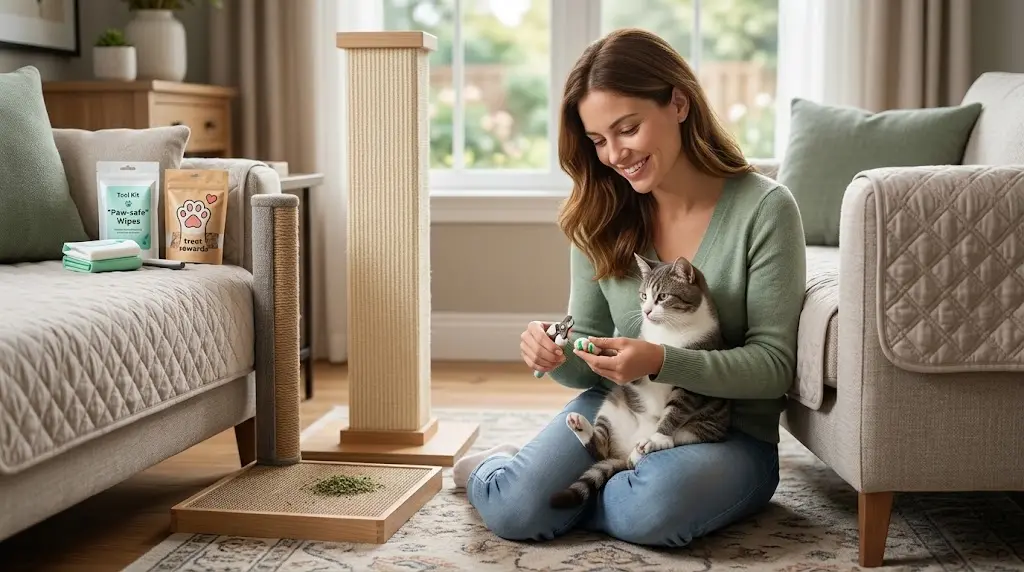
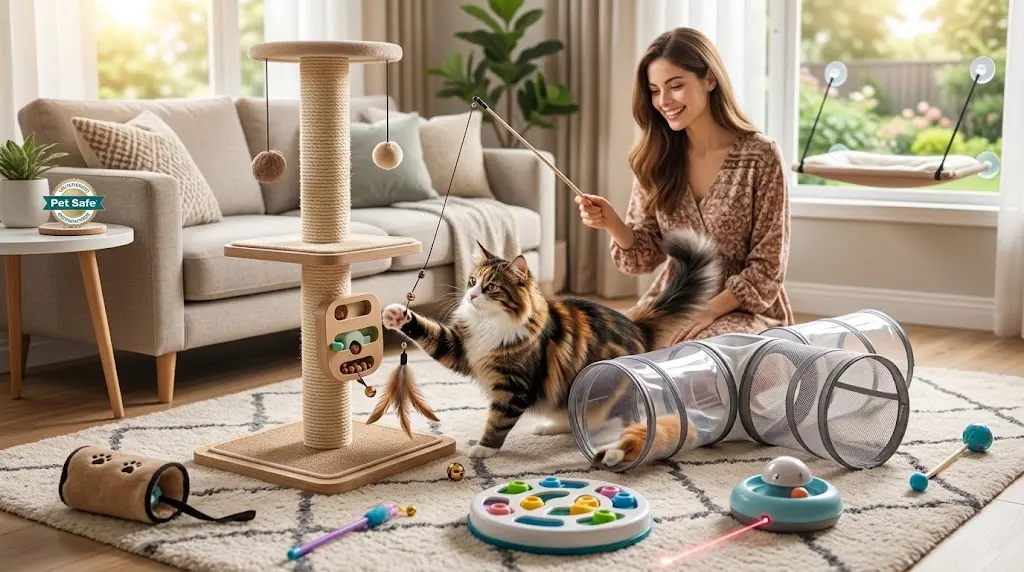
- Increase vertical space — cat trees, shelving, high perches give cats a sense of safety and control over their environment
- Provide hiding spots — covered beds, boxes with openings — places to retreat that no other pet can access
- Separate resource areas in multi-cat households — each cat needs their own food bowl, water bowl, and litter box in separate locations
- Daily interactive play — 10–15 minutes of wand toy play channels predatory drive and reduces anxiety
- Feliway diffusers — synthetic feline facial pheromone that signals safety and reduces territorial anxiety. Plug-in diffusers in key areas have clinical evidence for FIC reduction
- Window management — block the view of outdoor cats if stray cat sightings are stressing your indoor cat
Who Gets FLUTD? Risk Factors That Increase Vulnerability
VCA Animal Hospitals identifies the typical FLUTD patient profile: most frequently seen in middle-aged, overweight, neutered male cats who take little exercise, use an indoor litter box, have restricted outdoor access, and typically live in multi-animal households eating a dry diet. Here are the key risk factors in detail:
- Male sex — primarily for obstruction risk due to urethral anatomy. Both males and females develop FIC and crystals, but only males face life-threatening blockage.
- Indoor-only lifestyle — reduced activity, less water intake, more sedentary behavior, and more territorial stress from confinement.
- Overweight or obese — obesity is consistently identified as a FLUTD risk factor across all published studies. Weight management is a urinary health intervention.
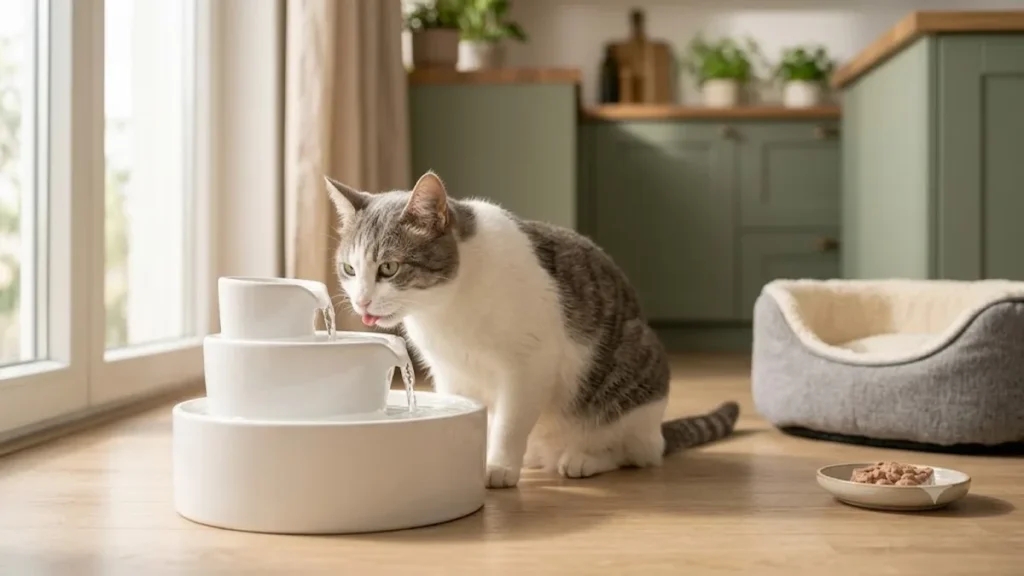
- Dry food-only diet — cats eating exclusively dry kibble consume significantly less water than those eating wet food, producing more concentrated urine that favors crystal formation and irritates the bladder wall.
- Middle age (2–7 years) — peak FLUTD incidence. VCA confirms the average age of onset is four years old.
- Multi-cat household stress — resource competition and inter-cat tension are major FIC drivers.
How Vets Diagnose FLUTD: What to Expect at the Appointment
The AVMA outlines the standard diagnostic workup for FLUTD: your veterinarian will ask questions about your cat and their environment, perform a thorough physical examination, and likely test a urine sample for pH, concentration, crystals, blood, and indicators of inflammation and infection. Here is what each test tells the vet:
- Urinalysis — the essential first step. Reveals blood, crystals, bacteria, inflammatory cells, pH, and specific gravity (urine concentration). Performed on a fresh sample collected by the vet via cystocentesis (needle directly into the bladder) for best results.
- Urine culture and sensitivity — if bacteria are found on urinalysis, culture identifies the exact species and which antibiotics will treat it. Never give antibiotics without culture confirmation in a cat.
- Abdominal radiograph (X-ray) — reveals bladder stones (radio-opaque stones are visible; struvite and calcium oxalate both show on X-ray). Also assesses kidney size.
- Abdominal ultrasound — more sensitive than X-ray for crystal aggregations, wall thickening (FIC sign), masses, and kidney changes. Preferred for comprehensive urinary evaluation.
- Blood panel — critical for blocked cats to assess kidney function, potassium levels, and overall metabolic status before and after treatment.
The 6 Most Effective FLUTD Prevention Strategies
FLUTD is one of the most preventable common cat conditions — particularly FIC and crystal-related disease. The majority of FLUTD cases in indoor cats can be significantly reduced with these six evidence-based interventions:
Ruff Greens VitaSmart — Best Daily Nutritional Support for Cat Urinary Health
The connection between gut health, immune function, and the stress response is well-established in veterinary medicine — and FIC is fundamentally a stress-mediated immune dysregulation condition. Ruff Greens VitaSmart provides Omega-3 fatty acids (EPA/DHA) that reduce the systemic inflammation driving FIC bladder wall changes, combined with 15 probiotics that support the gut-immune-stress axis. B vitamins support nervous system regulation, which directly influences the neuro-hormonal pathway through which stress triggers FIC episodes.
Adding Ruff Greens to your cat’s wet food daily addresses the nutritional deficiencies that exacerbate stress response severity — making MEMO-based environmental management more effective.
- Free trial — just $9.95 shipping, zero risk
- Omega-3s reduce systemic inflammation including bladder wall FIC changes
- Probiotics support gut-immune-stress axis
- B vitamins support nervous system stress regulation
- Food topper format — easy to add to wet cat food daily
- 200,000+ pets using daily
- Nutritional support — not a treatment for an active FLUTD episode or obstruction
- Some cats may take 1–2 weeks to accept a new topper
Bailey’s CBD Calming Oil — Best for Stress-Driven FIC in Anxious Cats
For cats with recurrent FIC clearly driven by stress triggers — household changes, multi-cat tension, anxiety — addressing the physiological stress response directly is one of the most effective long-term management strategies. Bailey’s CBD Calming Oil modulates the endocannabinoid system in cats, reducing cortisol levels and the neuro-inflammatory response that turns stress into bladder inflammation in FIC-susceptible cats. Research in veterinary CBD confirms that CBD at appropriate doses significantly reduces stress vocalization and cortisol elevation in cats.
- Reduces cortisol — the primary stress hormone driving FIC episodes
- Full-spectrum CBD — maximum endocannabinoid system modulation
- Certified organic US hemp — no pesticides or additives
- Non-sedating — cat remains alert and engaged normally
- Third-party lab tested for potency and purity
- Wellness supplement — not FDA-approved as a drug for cats
- Works best as part of a complete stress-reduction plan alongside MEMO
- For severe anxiety-driven FIC, a Dutch Pet vet can prescribe stronger anxiolytic medication
Emergency Vet vs. Regular Vet vs. Telemedicine: Which Does Your Cat Need?
| Situation | Action Required | Urgency |
|---|---|---|
| Male cat straining — no urine produced | Emergency vet clinic — NOW | Minutes matter |
| Cat vocalizing + straining + vomiting | Emergency vet clinic — NOW | Minutes matter |
| Cat collapsed, cold, unresponsive | Emergency vet clinic — NOW | Critical |
| Blood in urine — cat still producing urine | Dutch Pet vet tonight OR vet clinic within 24 hrs | Urgent same day |
| Frequent litter box trips, small amounts | Dutch Pet vet assessment tonight | Within 24 hrs |
| Urinating outside litter box — no other symptoms | Dutch Pet consult OR vet appointment this week | Within 2–3 days |
| Post-obstruction follow-up care | Dutch Pet vet for Rx refills and monitoring between clinic visits | Ongoing |
Frequently Asked Questions: Cat Urinary Tract Problems & FLUTD
Protect Your Cat’s Urinary Health — Starting Tonight
The complete urinary health plan: get a Dutch Pet vet assessment for any urinary symptoms → add wet food to increase water intake → implement MEMO stress-reduction strategies → try Bailey’s CBD for stress-driven FIC → support daily with Ruff Greens VitaSmart → keep the litter box impeccably clean. And if your male cat is straining with no urine — emergency vet now, no exceptions.