How Hot Is Too Hot
to Walk Your Dog?
The 2026 Heat Wave Survival Guide
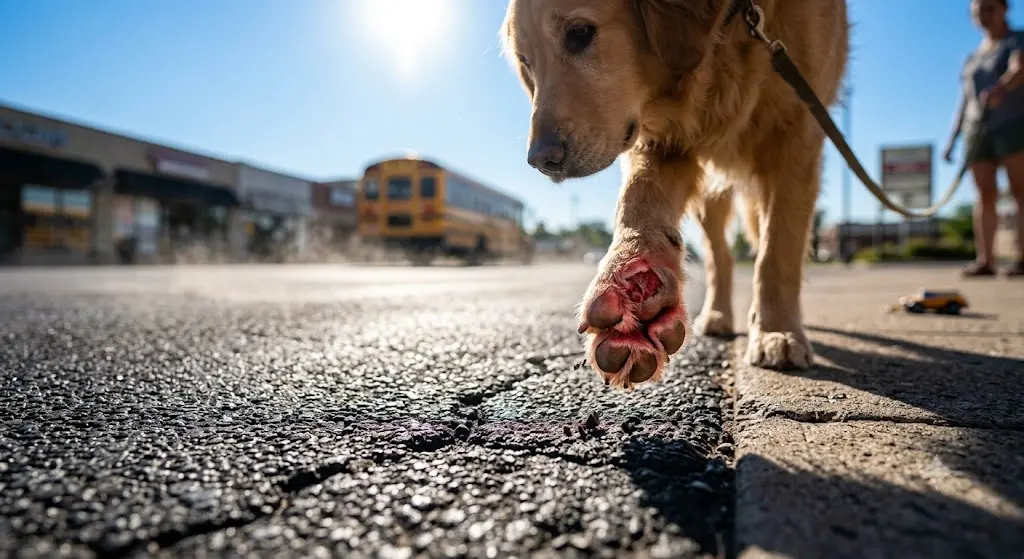
At 86°F air temperature, asphalt reaches 135°F — hot enough to burn your dog’s paws in 60 seconds. Here is everything you need to know: the 7-second pavement test, the heatstroke warning signs most owners miss, and the DIY cooling tricks that actually work.
If Your Dog Is Showing Heatstroke Symptoms Right Now
Move your dog immediately to shade or air conditioning. Apply cool (not ice cold) wet cloths to the neck, armpits and groin. Offer cool water to drink. Call your veterinarian or emergency animal hospital immediately. Heatstroke is a life-threatening emergency — do not wait for symptoms to improve on their own. Every minute of delay increases organ damage risk.
☀️ What This Guide Covers
The 7-Second Pavement Test — Your #1 Tool
Before every summer walk, this 7-second test takes less time than putting on your dog’s leash — and it could save your dog from severe paw burns.
The 7-Second Rule — Endorsed by the AKC
According to the American Kennel Club Chief Veterinary Officer Dr. Jerry Klein and The Kennel Club UK, this is the most reliable field test for pavement safety.
This test works on all surface types — asphalt, concrete, sand, metal and artificial grass. According to data from the Journal of the American Medical Association, when the air temperature is 86°F, asphalt registers 135°F. Your dog’s paw pads are made of the same skin material as the bottom of your feet — they burn just as fast.
Air Temperature vs Pavement Temperature — Safety Guide
| Air Temp (°F) | Pavement Temp (°F) | Risk Level | Recommendation |
|---|---|---|---|
| Under 75°F | Under 100°F | ✓ SAFE | Normal walk duration — monitor for signs of heat |
| 75°F – 84°F | 100°F – 125°F | ⚠️ CAUTION | Do the 7-second test. Prefer grass. Bring water. Shorten walk. |
| 85°F – 90°F | 125°F – 140°F | 🔥 DANGER | Walk only on grass or in shade. Paw boots recommended. 10 min max. |
| Above 90°F | Above 140°F | 🚨 EXTREME | No pavement walking. Bathroom break only. Stay in A/C. |
Source: Journal of the American Medical Association pavement temperature data. AKC guidelines from Chief Veterinary Officer Dr. Jerry Klein. Data confirmed by Total.vet heat-related pet safety research.
Best Times to Walk Your Dog in Summer
Cornell University College of Veterinary Medicine recommends planning walks in the early morning or evening hours during hot weather. The hottest time of day is typically between 3-5pm — not noon as many owners assume, because pavement continues to absorb and retain heat throughout the afternoon.
Best time. Pavement cool from overnight. Full walk duration safe for most dogs.
Peak danger hours. Pavement reaches maximum temperature. Bathroom breaks only if necessary.
Good option. Always check pavement with 7-second test first — surfaces can hold heat into evening.
Heatstroke Warning Signs — What Most Owners Miss
Heatstroke can develop in minutes. The early signs are subtle and easy to dismiss as tiredness. By the time emergency signs appear, organ damage may already be occurring. Know the full spectrum.
Faster or louder panting than normal during activity. Dogs cool themselves by panting — when it becomes rapid and seems labored, heat stress is beginning.
Dog pulls toward shade, lies down on the walk, or becomes reluctant to continue. This is a clear behavioral signal that your dog is overheating — act immediately.
Excessive salivation significantly beyond normal. The drool may become thick and sticky rather than watery — this is a heat stress sign most owners attribute to excitement.
Dogs only sweat through their paw pads. Wet paw prints on dry surfaces during hot weather indicate the body is trying to cool itself — begin cooling measures immediately.
A distant, unfocused or glazed expression is one of the most missed heatstroke signs. The dog may look “out of it” or disoriented. This is a neurological warning — seek shade and cool water immediately.
Healthy dog gums are pink. Dark red, purple or blue-tinged gums indicate severe oxygen deprivation and circulatory failure. This is a veterinary emergency — call immediately.
Gastrointestinal symptoms during heat exposure — particularly bloody diarrhea — indicate the heat is affecting internal organs. Do not walk the dog. Apply cooling measures and call your vet.
Stumbling, inability to stand, seizure activity or complete collapse = life-threatening heatstroke. Body temperature above 106°F causes organ failure. Call emergency vet NOW while beginning cooling.
Cornell University College of Veterinary Medicine — Clinical Note
Heatstroke is a medical emergency that requires intensive critical care. Body temperatures above 105°F damage every organ in the body. Heatstroke commonly leads to acute kidney injury, blood clotting issues and shock. If elevated body temperatures are prolonged, the damage is irreversible. Do not wait to see if your dog recovers on their own — the window for intervention is very short. Call your veterinarian immediately if your dog’s rectal temperature exceeds 104°F. A normal dog temperature is 101°F to 102.5°F.
Hot pavement is only half the summer danger. Even on cooler walks, dogs lose water fast through panting. Learn the daily water targets, dehydration warning signs, and the simple routine that keeps your dog hydrated from June through September.
Dog Hydration Tips: Keep Your Pup Safe This Summer →Which Dogs Are Most at Risk — And Why
Not all dogs handle heat equally. These groups need extra protection when temperatures climb above 75°F.
Brachycephalic (Flat-Faced) Breeds — Highest Risk
Brachycephalic breeds cannot pant efficiently — their shortened airways mean they cannot move air through their respiratory tract fast enough to cool themselves effectively. In hot weather, they reach dangerous body temperatures much faster than other breeds.
English Bulldogs, French Bulldogs, Pugs, Boston Terriers, Boxers, Shih Tzus, Pekingese — any breed with a shortened muzzle. Walk only in early morning or evening. Never on hot pavement.
Overweight dogs generate more body heat during movement. Senior dogs (7+ years) have reduced circulatory efficiency. Both groups require shorter walks and shade at all times above 75°F.
Huskies, Malamutes, Newfoundlands, Saint Bernards, Samoyeds and similar double-coated breeds retain body heat much longer. Limit outdoor activity to early morning. Never shave — their coat insulates both ways.
Dogs With Underlying Health Conditions
Dogs with heart disease, respiratory conditions or obesity are significantly higher risk for heat-related illness. If your dog is on cardiac medications or has been diagnosed with any respiratory condition, consult your veterinarian before summer walks and establish a heat safety protocol specific to your dog’s needs.
Heatstroke First Aid — Do This, Not That
If your dog shows warning signs of heatstroke, begin cooling immediately while calling your vet. These first-aid steps can mean the difference between survival and organ failure.
Move to shade or air conditioning immediately. Remove the dog from the heat source first — every second in the sun increases body temperature further.
Apply cool (not cold) wet cloths to the neck, armpits, groin and between the toes. These are areas where blood vessels are close to the surface — cooling them lowers core body temperature fastest.
Offer cool water to drink — small amounts frequently. Do not force water into an unconscious or semi-conscious dog. Conscious dogs should drink voluntarily in small sips.
Use a fan to increase airflow over the wet body. Moving air significantly accelerates evaporative cooling. A car’s air conditioning with windows slightly open works well in an emergency.
Call your veterinarian or emergency animal hospital immediately. Even if your dog appears to be recovering, internal organ damage may be occurring. Veterinary assessment is always required after a heatstroke episode.
Do not use ice or ice-cold water. Extreme cold causes blood vessels near the skin surface to constrict, trapping heat in the core organs where it does the most damage. This counterintuitively makes heatstroke worse.
Do not leave your dog in a parked car while getting help. Even on a 70°F day with windows cracked, a car interior can reach 104°F within 30 minutes. This is how most canine heatstroke deaths occur.
Do not wait for symptoms to resolve on their own. Heatstroke that appears to improve can rapidly deteriorate due to delayed organ damage. Always seek veterinary care regardless of apparent recovery.
DIY Hydration & Cooling Tricks That Actually Work
Prevention is always better than emergency response. These veterinarian-approved cooling strategies keep your dog safe through summer heat waves.
Pour low-sodium bone broth or goat’s milk into an ice cube tray and freeze overnight. These “pup-sicles” hydrate, cool and entertain simultaneously. Dogs will lick and chew them for 15-20 minutes. Goat’s milk is naturally easier to digest than cow’s milk. Avoid broths with onion, garlic or high sodium content — these are toxic to dogs.
Dogs lose electrolytes through panting and sweating from their paws. Add a small amount of dog-safe electrolyte powder to their water bowl during hot days. Do not use human sports drinks — the sodium and sugar content is dangerous for dogs. Fresh water should be refreshed every 2-3 hours in hot weather.
A shallow paddling pool or large bowl of cool water for paw soaking provides rapid relief — since dogs sweat through their paws, cooling the paws directly lowers overall body temperature quickly. Change the water frequently to maintain coolness. Add ice cubes to extend the cooling effect.
Cooling mats filled with pressure-activated gel provide a consistently cool surface for your dog to lie on during peak heat hours. Place them in the coolest room of the house — typically an interior room away from windows. Combine with a fan positioned to blow over the mat for maximum cooling effect.
Freeze dog-safe fruits and vegetables as cooling treats — cucumber slices, blueberries, watermelon chunks (seedless, no rind) and banana pieces all freeze well and are safe for most dogs. Avoid grapes, raisins, avocado and any fruit with seeds. Frozen carrots are particularly good for teething puppies during hot weather.
Soak a large towel in cool water, wring it out slightly and drape it over your dog’s body, focusing on the neck and back. This provides immediate cooling through evaporation. Re-wet every 10-15 minutes. This is the most effective rapid-cooling technique when you’re away from home and air conditioning is not available.
Hydration Rules for Hot Days
Dogs need significantly more water during hot weather. A general guideline is 1 ounce of water per pound of body weight per day — this doubles in hot weather or during exercise. A 50-pound dog needs at least 50 ounces (about 6 cups) of fresh water daily in normal conditions, and up to 100 ounces on a hot day with activity.
Always carry water during any outdoor activity above 75°F. A collapsible silicone bowl weighs almost nothing and allows you to offer water to your dog anywhere. The portable pet water bottle with built-in bowl on our products page is perfect for summer walks — leak-proof, BPA-free and clips to any bag.
🐾 Free Dog Paw Health Scan
Check your dog’s paw health before summer walks. Our free AI paw scanner detects pad burns, cracks and nail issues in 30 seconds — no vet visit needed.
Complete Summer Walk Safety Protocol
Before Every Walk
1. Check the air temperature. If it is 85°F or above, plan for a grass-only route or postpone until evening. Use a weather app to also check the heat index — humidity makes heat far more dangerous for dogs because it reduces panting effectiveness. If Temperature + Humidity exceeds 150, keep your walk to bathroom breaks only.
2. Do the 7-second pavement test. Every time, on the specific route you plan to walk. A shaded path may be safe while a sunny pavement 50 yards away is dangerous.
3. Bring adequate water. At minimum, 8 ounces of cool water per 30 minutes of walking in moderate heat. More for brachycephalic breeds, senior dogs and overweight dogs.
During the Walk
Choose shaded routes whenever possible. Grass, dirt and shaded paths can be 20-40°F cooler than asphalt in direct sun. Keep walks under 20 minutes when temperatures are above 80°F. Watch your dog continuously — they will show behavioral signs of overheating before physical symptoms become severe.
Offer water every 10-15 minutes during warm weather walks. Do not let your dog drink excessively fast — pace hydration to avoid bloat, especially in large deep-chested breeds like German Shepherds, Great Danes and Labrador Retrievers.
After the Walk
Check paw pads for redness, blistering or limping after every summer walk. Burns may not be immediately obvious — damage from hot pavement can continue developing for 24-48 hours. If you notice any paw pad irritation, apply a pet-safe paw balm and consult your veterinarian if the dog is limping or the pads look blistered.
Allow 15-20 minutes of cooling time in shade or air conditioning before offering a full water bowl — gulping large amounts of water immediately after intense activity increases bloat risk in susceptible breeds.
Complete Pet Safety Guides
Check for paw pad burns, cracks and nail issues after summer walks. Free 10-point clinical scan in 30 seconds.
Every pet home needs a first aid kit. Our vet-reviewed checklist covers heatstroke, burns and summer emergencies.
Complete safety guides for all seasons — heat, cold, toxic plants, household hazards and emergency preparedness.
Heat tolerance varies dramatically by breed. Find your breed’s specific summer safety recommendations.
Heatstroke is just one of several life-threatening conditions every dog owner needs to recognize immediately.
Portable water bottles, paw protective shoes, cooling beds and more — vet-reviewed summer essentials.
Frequently Asked Questions
How hot is too hot to walk a dog?
What are the early signs of heatstroke in dogs?
What is the 7-second pavement test for dogs?
What is the best time to walk a dog in summer?
How do you cool down an overheating dog?
Which dog breeds are most at risk for heatstroke?
🐾 Keep Your Dog Safe All Summer Long
Free paw scanner, first aid checklist, pet safety hub and summer-safe products — everything you need for a safe summer with your dog.
🛡️ Transparency Disclosure: Some links on this page are affiliate links. OneHealthGlobe may earn a small commission at no extra cost to you. All safety information is sourced from the American Kennel Club, Cornell University College of Veterinary Medicine, the AVMA and peer-reviewed veterinary research. This guide does not replace professional veterinary advice.