The Best At Home Dog Cancer Test Kit in 2026: Oncotect Evaluation
Pair a cancer risk screen with a genetic health panel so you know both the risk today and the risk written in the DNA.
See the Dog Breed + Health DNA Test Ask a Vet Online Today
Here is the uncomfortable number that pushes most owners to this page. Close to one in four dogs will develop cancer at some point, and for dogs over the age of ten it becomes the single most common cause of death. The harder part is timing. By the time you can feel a lump, watch weight fall off, or notice your dog slowing down on the same walk he loved last spring, the disease has usually been quietly present for months.
That gap between silent biology and visible symptoms is exactly the space an at home dog cancer test kit is built for. It will not diagnose cancer, and any brand that promises a diagnosis is selling you something it cannot deliver. What a good kit does is tell you whether your dog currently carries the cellular signature of increased cancer risk, so you can walk into your vet clinic with a reason to look closer rather than a vague worry.
What an At Home Dog Cancer Test Kit Actually Does
The category is newer than most pet owners realise. Until recently, cancer screening meant bloodwork, imaging and a bill that started around four hundred dollars before anyone touched a needle. Home kits changed the entry point. You buy a box, collect a sample in your own yard, drop it in the mail, and a laboratory runs the analysis for you.
There are two mainstream approaches on the US market right now.
Urine biomarker screening. This is what Oncotect uses. Cancer cells are metabolically greedy and they leak distinctive molecular waste products into urine long before a tumour becomes big enough to see or feel. The lab measures those biomarkers and returns a risk band rather than a yes or no answer. No needles, no fasting, no stress for an anxious dog.
Blood based liquid biopsy. These tests hunt for fragments of tumour DNA circulating in the bloodstream. Clinically powerful, but they need a real blood draw, which means a clinic visit, which means the test is no longer truly at home and the total cost usually runs three to five times higher.
Oncotect Review: How the Urine Test Works Step by Step
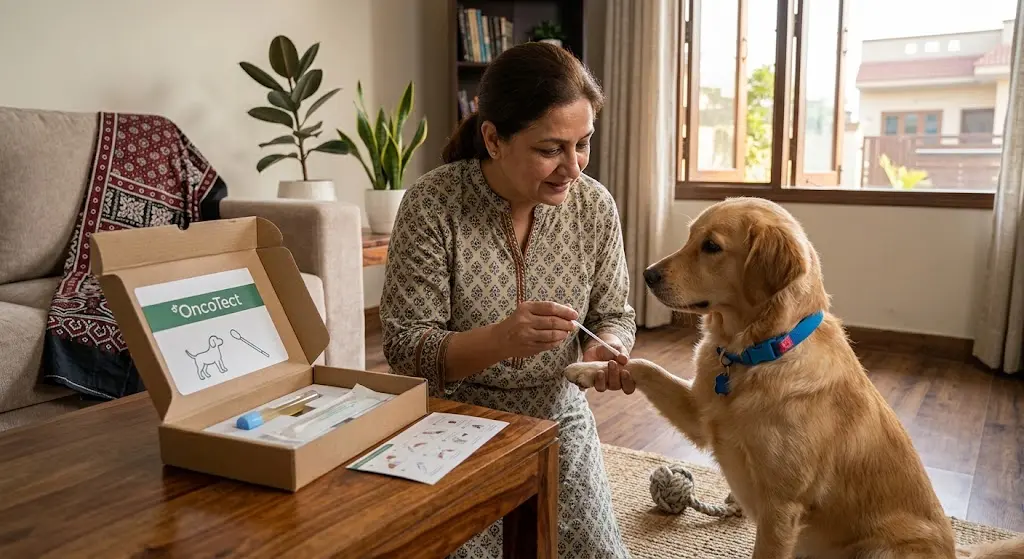
Oncotect is the brand most owners land on when they search for a non invasive dog cancer screening option, and for good reason. It is the most genuinely at home product in the category. Here is the process from checkout to result.
- Order the kit online. It ships to your door in a plain box with everything included, along with prepaid return shipping. No clinic appointment is required to start.
- Collect a urine sample. Most owners use the collection cup on a first morning walk. It takes one attempt and about twenty seconds. Dogs who hate the vet never notice anything happened.
- Mail it back the same day. Sample freshness matters, so drop it at the post office rather than leaving it in a warm car.
- Wait roughly five to seven business days. The lab screens for the biomarker signature linked to the four most common canine cancers, including lymphoma, melanoma, mast cell tumours and soft tissue sarcoma.
- Read your risk band. You receive a plain language report showing low, moderate or high risk, written for owners rather than clinicians, with a recommendation for what to discuss with your vet.
What we like
- Truly non invasive. Nothing is drawn, clipped, sedated or swabbed inside the mouth.
- Priced as a screening tool, not as a diagnostic. Most owners can afford to repeat it annually.
- The report is readable. That matters more than it sounds, because a confusing report gets ignored.
- Turnaround is fast enough that anxiety does not stretch into a month of waiting.
Where it has limits
- It screens for the most common cancer types, not every cancer that exists.
- A low risk result is reassuring but it is not a clean bill of health, and it does not replace an annual exam.
- A high risk result still requires imaging or biopsy at a clinic to confirm anything.
See Vet Grade Health Test Kits
Price and Feature Comparison of Home Screening Options
| Option | Sample | Clinic visit needed | Typical turnaround | Best for |
|---|---|---|---|---|
| Oncotect urine screen | Urine at home | No | 5 to 7 business days | Yearly screening for senior and high risk dogs |
| Blood liquid biopsy | Blood draw | Yes | 2 to 3 weeks | Owners already in a diagnostic workup |
| Genetic health panel | Cheek swab | No | 3 to 6 weeks | Knowing inherited disease risk for life planning |
| Full clinic cancer workup | Blood, imaging, biopsy | Yes | Same week | Dogs showing real symptoms |
Notice that the genetic panel sits in a different lane. A DNA test tells you what your dog was born predisposed to. A urine screen tells you what is happening in the body this month. Owners who buy both get the full picture, and it is still cheaper than a single imaging session.
Best At Home Pick Dog Cancer Test Kit
Who Should Buy an At Home Dog Cancer Test Kit
Not every dog needs one this year. Spend the money where the odds actually justify it.
Buy it now if your dog is in one of these groups
- Seven years or older. Cancer risk climbs steeply after middle age in every breed size.
- A high risk breed. Golden Retrievers, Boxers, Bernese Mountain Dogs, Rottweilers, Flat Coated Retrievers and Scottish Terriers all carry elevated lifetime rates.
- A large or giant breed over five. Big dogs age faster and reach their risk window sooner.
- A dog with a cancer history in the litter or line.
- A dog who panics at the clinic. A home sample avoids the stress that makes vet screening unrealistic for reactive dogs.
Wait if this is your dog
- Under three years old with no family history. Baseline risk is very low.
- Already scheduled for a full senior blood panel this month, which will cover more ground.
- Currently under treatment for a diagnosed condition, where your oncologist is already monitoring markers.
Choosing the Safest At Home Dog Cancer Test Kit for Peace of Mind
Safety in this category is not about the collection cup. It is about whether the company handles your result responsibly. Four questions separate a real screening product from a novelty.
One. Does it report a risk band instead of a diagnosis? Any kit that tells you your dog has cancer, without a biopsy, is overstating what laboratory science can do from a mailed sample. Honest brands report probability and tell you to see your vet.
Two. Is the laboratory named and accredited? You want to be able to see where the sample is processed. Anonymous labs are a red flag for any health test, human or canine.
Three. Is there veterinary support attached to the result? A number on a page with no next step creates panic instead of action. The best kits either include vet guidance or clearly direct you to one.
Four. Is the pricing transparent? Look for one flat price with return shipping included. Watch for subscription traps that quietly rebill you every quarter.
Grab a Fur & Body Brush for Monthly Checks
What To Do the Day Your Results Arrive
If the result is low risk
Breathe out, then diarise the next one. Low risk means no biomarker signature was detected in this sample, which is genuinely good news, but it is a snapshot of one moment. Repeat annually, or every six months once your dog passes ten. Keep the report in the same folder as vaccination records so your vet can compare year on year.
If the result is moderate risk
Do not panic and do not ignore it. Book a routine appointment within two to four weeks, bring the report, and ask your vet for a physical exam plus baseline bloodwork. Moderate often reflects inflammation or another benign process, but it deserves a second look while it is still cheap to look.
If the result is high risk
Call your clinic the same day and ask for the earliest slot. Expect imaging, likely bloodwork, and possibly a fine needle aspirate. This is the outcome the test exists to catch, and dogs found at this stage frequently have treatment options that simply do not exist three months later.
Whichever band you get, the follow up conversation matters more than the number. If your regular clinic is booked out for weeks, a same day online vet consult is the fastest way to get a professional read on your report and decide how urgently you need to be seen in person.
Explore Senior Dog Wellness Support
Supporting a Senior Dog While You Wait
Nothing you buy prevents cancer. Be suspicious of any product that claims otherwise. What you can influence is the baseline your dog carries into his senior years, and three things have real evidence behind them.
Keep him lean. Body fat is metabolically active tissue that drives chronic inflammation. Lean dogs live meaningfully longer than overweight littermates, and it is the single most powerful lever you control.
Protect mobility. A dog who keeps moving keeps muscle, and muscle mass in old age is strongly linked to surviving illness of any kind. Joint support matters for more than comfort.
Feed real food quality. Whole food nutrition and omega fatty acids support immune function and reduce the inflammatory load your dog carries every day.
See Mobility Chews for Senior Dogs Try the Whole Food Topper Trial
Buyer Questions Answered
How much does an at home dog cancer test kit cost?
Urine based screening kits such as Oncotect typically sit in the low to mid hundreds with prepaid return shipping included. Blood based liquid biopsy runs several times higher and requires a clinic visit for the draw. A full diagnostic workup after a positive finding is a separate and larger expense.
Is Oncotect accurate?
It is accurate at what it claims to do, which is detect a biomarker signature associated with elevated cancer risk. It is a screening test, not a diagnostic one. High risk results need clinic confirmation, and low risk results reduce but never eliminate the possibility of disease.
Can a home test detect cancer before symptoms appear?
That is the entire purpose. Urine biomarkers can shift while your dog still looks and behaves completely normal, which is months before most owners notice anything is wrong.
How often should I test my dog?
Once a year from age seven for most dogs, and every six months for high risk breeds or dogs over ten. Testing more often than that rarely changes what your vet would do.
Is a DNA test the same as a cancer test?
No. A DNA panel reports inherited predisposition your dog was born with. A cancer screen reports what is happening in the body right now. They answer different questions and many owners buy both.
Do I need my vet’s permission to order one?
No. These kits are sold directly to owners. Telling your vet you ordered one is still worth doing, because the result belongs in the medical record either way.
The line worth remembering. No test kit saves a dog. Acting on the result does. The owners who get the best outcomes are not the ones who bought the most expensive screen. They are the ones who opened the report, picked up the phone, and asked a professional one simple question: what would you do next if this were your dog?
Editorial disclosure: One Health Globe is reader supported. Some links on this page are affiliate links and we may earn a small commission at no extra cost to you. Product selections are made independently and reviewed by our veterinary editor. This article is educational and does not replace veterinary diagnosis or care.