Home ›Cat Litter Box Precautions
Cat Litter Box Precautions: 15 Safety Tips Every Cat Owner Should Know
Reviewed by Dr. Sarah Chen, DVM, for accuracy against CDC and Cornell Feline Health Center guidance · Updated: 2026 · Reading time: 14 min · ★★★★★
📌 The 60 second answer
- Scoop every single day. Toxoplasma shed in cat feces is not infectious for roughly one to five days, so daily removal is the single strongest precaution you can take.
- Gloves on, hands washed after. Every time, even for a quick scoop.
- Never use phenol based disinfectants (the ones that turn milky in water) near a litter box. Phenols are highly toxic to cats.
- Boxes go far away from food and water, in a quiet, easy to reach spot with an escape route.
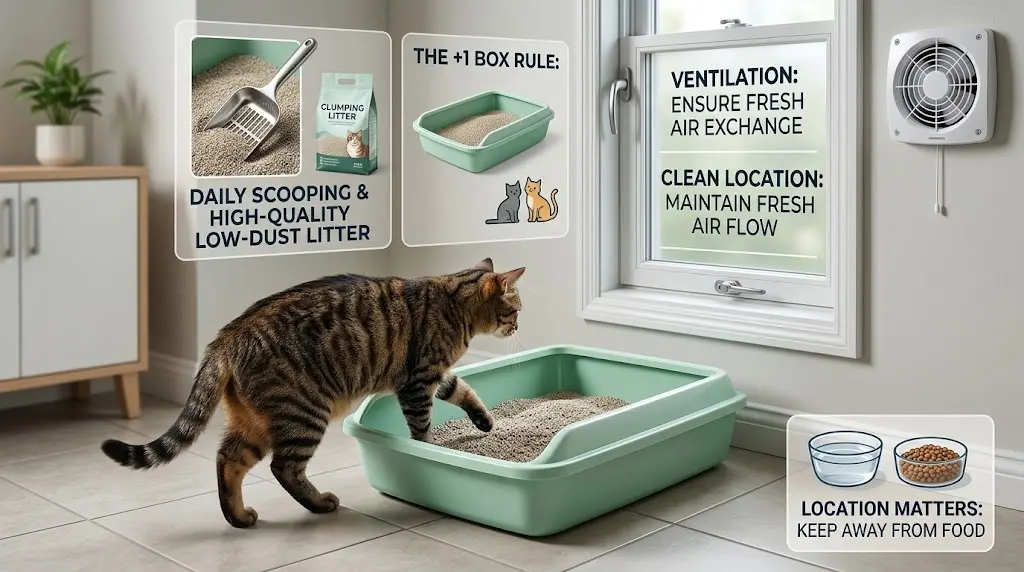
- One box per cat, plus one. Two cats need three boxes in different locations.
- Pregnant or immunocompromised? Hand the job to someone else if at all possible.
Table of Contents
- What are cat litter box precautions?
- 15 cat litter box precautions to follow
- How to clean a cat litter box safely
- How often should you clean a litter box?
- Litter box precautions during pregnancy
- Is cat litter dangerous to humans?
- Are litter boxes safe for cats?
- How to choose a safe cat litter box
- Best cat litter for a safe, clean box
- Where should you put a litter box?
- Common litter box mistakes
- Cat litter box safety checklist
- When to call a veterinarian
- FAQ
What Are Cat Litter Box Precautions?
Cat litter box precautions are the everyday hygiene, placement and handling habits that keep both your household and your cat safe from what lives in a litter tray. They cover four things: how often you scoop, how you protect your own skin and lungs while you do it, what you clean the box with, and where the box sits in your home.
Why litter box safety matters for cats and people
A litter box is the only place in your house that collects concentrated urine and feces every day. For people, that means a small but real exposure route to parasites and bacteria. For your cat, a poorly maintained or badly placed box is one of the most common triggers of litter box avoidance, and avoidance is how urinary problems go unnoticed until they become emergencies. Good litter box hygiene protects health at both ends of the leash.
Can a cat litter box make you sick?
It can, though the risk is low for a healthy adult who scoops daily and washes their hands. The realistic concerns are toxoplasmosis, intestinal parasites such as roundworm and hookworm, and ordinary enteric bacteria. Respiratory irritation from litter dust and fragrance is far more common than infection, and it is almost entirely preventable.
The biggest litter box safety risks
| Risk | Who it affects | Main precaution |
|---|---|---|
| Cat feces and intestinal parasites | People, especially children | Daily scooping, gloves, handwashing |
| Toxoplasmosis | Pregnant and immunocompromised people | Someone else scoops, or gloves plus daily removal |
| Bacteria and germs on surfaces | Whole household | Dedicated tools, no box near food prep |
| Litter dust | People and cats with asthma | Low dust litter, pour slowly, ventilate |
| Chemical exposure | Cats above all | No phenols, no bleach and ammonia mixing |
| Strong fragrances | Cats | Unscented litter and cleaners |
| Poor ventilation | People and cats | Airflow, never a sealed closet |
| Dirty boxes | Cats | Daily scoop, routine full wash |
| Unsafe placement | Cats | Quiet, accessible, two exits |
| Stress and box avoidance | Cats | Enough boxes, no ambush spots |
15 Cat Litter Box Precautions to Follow
1. Scoop the litter box every day
Daily scooping is the precaution everything else depends on. Toxoplasma oocysts passed in cat feces need roughly one to five days in the environment before they become infectious, so removing stool within 24 hours breaks the chain before it starts. Daily scooping also removes the ammonia smell that pushes cats to urinate elsewhere, and it lets you spot changes in urine clump size or stool consistency while they are still small problems.
2. Wash your hands after cleaning the litter box
Soap and warm water for at least 20 seconds, every time, even if you wore gloves. Hand sanitiser is not a substitute here, because it performs poorly against parasite oocysts. Wash before you touch food, a phone or a face.
3. Wear disposable gloves when handling cat litter
Gloves matter most if you have cuts on your hands, bite your nails, are pregnant, or are living with a weakened immune system. Use them once and bin them. Reusable rubber gloves are fine if they stay dedicated to the litter box and never migrate to the kitchen sink.
4. Keep the litter box away from food preparation areas
Never in the kitchen, never next to the counter where you chop, and never beside your cat’s own food and water bowls. Litter granules travel on paws, and stray litter on a food surface is the most avoidable contamination route in the whole house. A litter mat under the box catches most of the tracking.
5. Keep children away from the litter box
Toddlers explore with their hands and mouths, and a litter tray at floor level is irresistible. Use a baby gate, a cat door in a closed room, or a top entry box. Teach older children that the box is off limits and that hands get washed after touching the cat.
6. Pregnant women should take extra litter box precautions
The CDC advice is direct: if you are pregnant, someone else should clean the litter box. If nobody else can do it, wear disposable gloves, scoop daily, and wash your hands thoroughly afterwards. This does not mean rehoming your cat, and it never has. Indoor cats fed commercial food are unlikely to be shedding Toxoplasma at all, and the greater real world exposure route for most people is undercooked meat and unwashed produce. There is a fuller section on this further down the page.
7. Clean the litter box in a well ventilated area
Open a window or run an extractor fan while you empty and wash the box. Pour fresh litter slowly and close to the tray floor rather than dropping it from height, which is what sends a cloud of dust into the air you and your cat share.
8. Avoid heavily scented litter and cleaning products
Cornell’s feline behaviour guidance is consistent on this point: most cats prefer fine textured, unscented litter, and strong odours can drive them away from the box entirely. A cat’s nose is vastly more sensitive than yours. Perfume does not remove waste, it layers on top of it, and to a cat that combination smells worse than the waste alone.
9. Never mix household cleaning chemicals
Bleach plus ammonia produces chloramine gas, and cat urine is itself an ammonia source. That means bleaching a urine soaked tray in a small unventilated bathroom is a genuine hazard. Rinse the box thoroughly with plain water first, use one product at a time, and never combine.
10. Never use phenol containing disinfectants around cats
This is the precaution most generic articles miss. Phenols are highly toxic to cats, which lack the liver enzyme pathway needed to clear them efficiently. The tell is a cleaner that turns cloudy or milky when added to water. Skip pine oil and coal tar disinfectants around litter boxes, bowls and bedding. Hot water with mild unscented dish soap handles routine litter box washing perfectly well, and a dilute bleach solution rinsed off completely is the standard option when disinfection is genuinely needed.
11. Do not flush cat litter down the toilet
Even litter marketed as flushable is a poor idea. Clumping clay swells and blocks pipework, and municipal wastewater treatment is not designed to inactivate Toxoplasma oocysts, which is a documented route into waterways and marine mammals. Bag waste and put it in household rubbish.
12. Replace cracked or heavily scratched litter boxes
Plastic scratches from years of digging, and those grooves hold urine, bacteria and smell that no amount of scrubbing removes. If the box still smells after a full wash and dry, it has reached the end of its life. Most plastic boxes need replacing every one to two years. Stainless steel boxes do not develop this problem at all.
13. Keep the litter box accessible to your cat
Accessible means no stairs a stiff senior cat has to climb, no laundry room door that swings shut, no basement trip in the middle of the night. Kittens and arthritic cats need a low entry, ideally under three inches. If your cat has slowed down, read our guide to changes in senior cat behaviour before assuming a box refusal is stubbornness.
14. Provide enough litter boxes for multiple cats
The rule both the CDC and Cornell support is number of cats plus one, spread across different rooms so no cat can guard them all.
| Cats in the home | Litter boxes needed | Placement |
|---|---|---|
| 1 cat | 2 boxes | 2 separate rooms |
| 2 cats | 3 boxes | 3 rooms, ideally 2 floors |
| 3 cats | 4 boxes | Never all in one row |
Two boxes side by side count as one location to a cat. Separation is the point.
15. Watch for changes in litter box behavior
Litter box habits are your earliest health dashboard. A cat suddenly not using the litter box, peeing outside it, producing many tiny clumps, or straining is telling you something. Blocked male cats can die within 24 to 48 hours, so this is the one item on the list that is sometimes an emergency rather than a chore. See the veterinary warning signs section for the specifics.
👨⚕ Not sure whether a litter box change is behavioural or medical?
A licensed vet can review urination changes over video, usually the same day, and tell you whether you need an in person visit tonight or a litter box adjustment this week.
How to Clean a Cat Litter Box Safely
What you need to clean a litter box
- A sturdy litter scoop with slots sized for your litter type
- Disposable gloves
- Litter disposal bags, or a sealed disposal pail
- A litter mat to catch tracked granules
- A pet safe, unscented cleaner or plain mild dish soap
- A brush or sponge that is used for nothing else
- An unscented litter deodorizer if odour persists between full changes
Step 1: Put on gloves
Gloves first, before you touch the scoop. Open a window at the same time.
Step 2: Remove urine clumps and feces
Work through the whole tray, including the corners cats favour. Scrape the base gently so nothing cements to the plastic.
Step 3: Dispose of used litter safely
Tie the bag and place it in household waste. Do not flush it, and do not compost it for use on vegetable beds.
Step 4: Wash the litter box
Empty it completely, then wash with hot water and mild unscented soap. Treat the box as an item contaminated with urine and feces, which is exactly how the CDC frames pet items of this kind. No phenols, no mixing products.
Step 5: Rinse away all cleaner residue
Rinse longer than feels necessary. Residue is both a chemical exposure for paws and a smell that puts cats off the box.
Step 6: Dry the box completely
Damp trays cause litter to cake to the base and turn the next week’s cleaning into a scraping job.
Step 7: Add fresh litter
Two to three inches for most cats, up to four for enthusiastic diggers. Pour low and slow to limit dust.
Step 8: Return the box to a safe location
Same place as before. Cats dislike relocated boxes, and a surprise move is a classic cause of accidents.
How Often Should You Clean a Cat Litter Box?
Short answer: scoop at least once a day, top up litter as needed, wash the box fully every one to four weeks depending on litter type, and replace a plastic box every one to two years.
How often should you scoop cat litter?
Once daily is the floor. Twice daily is better in multi cat homes and is what most behaviourists recommend for any cat with a history of box avoidance.
How often should you completely change cat litter?
Clumping clay that is scooped diligently can go two to four weeks between full changes. Non clumping litter needs a complete change roughly weekly, because urine sits in the substrate rather than clumping out of it.
How often should you wash the litter box?
Whenever you do a full litter change. Monthly is a reasonable minimum even with excellent scooping.
When should you replace the litter box?
When it smells after washing, when the base is visibly scratched, or when it cracks. One to two years for plastic, far longer for stainless steel.
Does the number of cats change cleaning frequency?
Yes. Three cats sharing four boxes produce roughly three times the waste, so scoop each box daily and expect full changes about twice as often as a single cat household.
Cat Litter Box Precautions During Pregnancy
Why is cat litter a concern during pregnancy?
Because a first time Toxoplasma gondii infection acquired during pregnancy can pass to the fetus. This is a real but uncommon risk, and it applies only to a new infection, not to an infection acquired years earlier.
Can pregnant women clean cat litter?
The CDC recommends avoiding it if someone else can do the job. That is a precaution, not a prohibition, and it is not a reason to give up a cat.
What should you do if nobody else can clean the litter box?
Wear disposable gloves, scoop daily so anything shed has no time to become infectious, wash hands thoroughly with soap and water afterwards, and keep the area ventilated. Ask your obstetrician about a Toxoplasma antibody test if you would like to know your own status.
How often should cat litter be changed during pregnancy?
Daily, without exception. Frequency does more for safety here than any other single measure.
Does indoor only status reduce the risk?
Substantially. Cats acquire Toxoplasma by eating infected prey or raw meat. An indoor cat eating commercial food has very little opportunity to become infected, and cats that do become infected typically shed oocysts only for a short window once in their lives.
What about toxoplasmosis and cat litter?
The key detail the CDC emphasises is timing. Oocysts passed in feces are not immediately infectious, and need roughly one to five days to sporulate. Daily scooping removes them inside that window. Keep the cat indoors, avoid feeding raw meat, cover outdoor sandpits, wear gloves when gardening, and wash produce, because soil and undercooked meat are the routes most people actually get infected through.
Is Cat Litter Dangerous to Humans?
Can cat litter cause toxoplasmosis?
Litter itself cannot. Feces from a currently shedding cat, left in the tray long enough to sporulate, can. Daily removal is the countermeasure.
Can you get sick from cleaning a litter box?
Healthy adults who use gloves and wash their hands rarely do. Ignoring both, over months, raises the odds of picking up an intestinal parasite or enteric bacteria.
Can cat litter dust affect people?
Yes, and this is the most common real complaint. Fine clay dust irritates airways, and people with asthma notice it first. Low dust or plant based litter and slow pouring resolve most cases.
Can litter box germs spread around the house?
Tracked granules carry both dust and residue onto floors. A large litter mat, a box away from living and cooking areas, and a weekly vacuum of the surrounding floor contain almost all of it.
Who should take extra precautions?
- Pregnant people
- People with weakened immune systems, including chemotherapy patients and transplant recipients
- Young children
- Older adults
- Anyone handling cat feces routinely, including fosterers and rescue volunteers
Are Cat Litter Boxes Safe for Cats?
Can a dirty litter box make a cat sick?
Indirectly, and seriously. Cats that avoid a soiled box hold their urine, and retention is a contributing factor in feline lower urinary tract disease. A filthy tray also raises the chance of ascending urinary infection and of urine scald on paws and fur.
Can scented litter bother cats?
Frequently. Cornell notes most cats prefer unscented litter, and fragrance is a common trigger for sudden box refusal.
Is a covered litter box safe?
It is safe, but it traps odour and ammonia inside, and it removes the escape route timid cats want. If you use a hood, scoop twice a day and make sure a second uncovered box exists somewhere else.
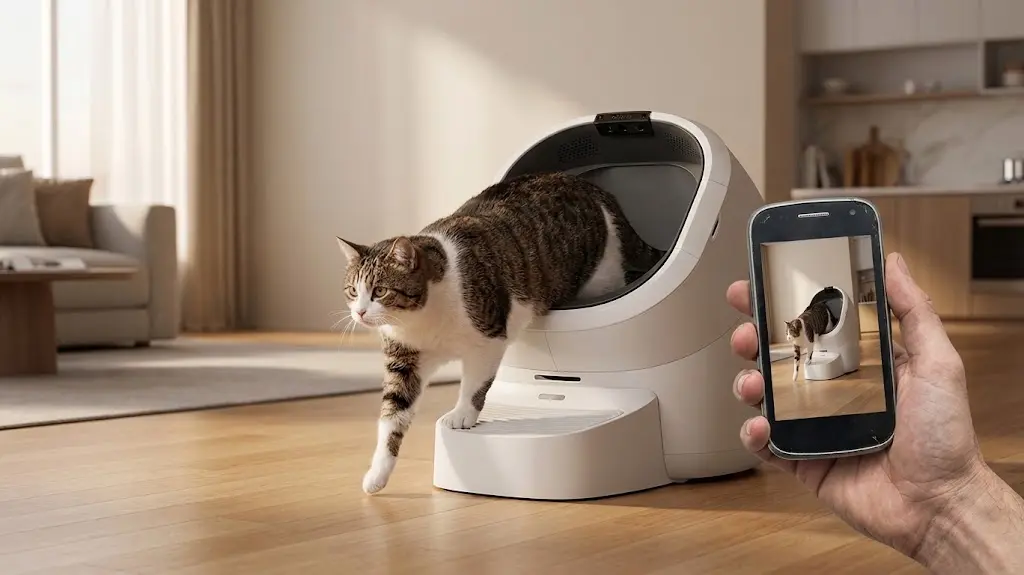
Is an automatic litter box safe?
Modern units with weight sensors, re entry detection and a delayed cycle are safe for adult cats. They are not appropriate for kittens under about six months, very small cats, or cats recovering from surgery. Always keep one manual box available as a backup.
Is clay litter safe for cats?
Yes for the vast majority of cats. The main drawback is dust rather than toxicity.
Is silica cat litter safe?
Silica crystal litter is safe for adult cats and excellent at odour and moisture control. Watch kittens who might chew the crystals.
Is clumping litter safe?
Yes for adult cats, and clumping is what makes daily removal practical. Very young kittens who eat litter do better on a non clumping or paper option until that phase passes.
What type of litter is safest for cats?
Fine textured, unscented, low dust, clumping litter suits the largest number of cats. That is not marketing, it is simply what cats select when given a choice in preference testing.
How to Choose a Safe Cat Litter Box
Choose the right litter box size
The box should be at least one and a half times your cat’s length from nose to tail base. If the tail touches the wall while your cat turns, it is too small, and small boxes are one of the top causes of urinating over the edge.
Open vs covered litter boxes
Open boxes ventilate better and suit nervous or multi cat households. Covered boxes contain scatter and suit tidy corners, provided you scoop twice daily.
Low entry litter boxes for kittens and senior cats
Aim for an entry under three inches for kittens, seniors and arthritic cats. A high sided box with a cut down entrance is often the perfect compromise.
Large litter boxes for big cats
Maine Coons, Ragdolls, Bengals and any cat over 15 lbs need a genuinely oversized basin and a wide entry. Our full breakdown of heavy duty options lives in the best automatic cat litter box guide.
Stainless steel vs plastic litter boxes
Stainless steel does not scratch, does not absorb odour and effectively never needs replacing. Plastic is cheaper and lighter but has a service life of one to two years.
Automatic vs traditional litter boxes
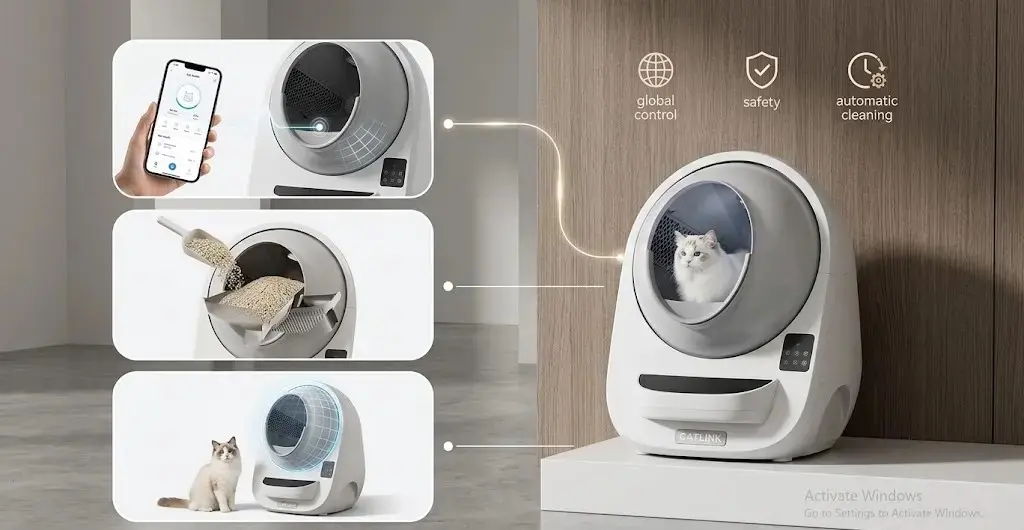
Automatic boxes remove waste minutes after use, which is a genuine hygiene upgrade if your schedule makes reliable daily scooping unrealistic. Traditional boxes cost nothing to run and let you inspect output closely every day. Many households do best with one of each.
What safety features should an automatic litter box have?
- Weight and infrared sensors that halt the cycle if a cat re enters
- A delay of several minutes after the cat leaves, not seconds
- A stated weight limit that comfortably exceeds your cat’s weight
- A manual override and easy access if power fails
- A quiet motor, because noise alone causes avoidance
- Sealed waste drawer for odour, and app alerts that log each visit
💩 Check the PETLIBRO Luma Smart Litter Box →
Sensor pause on re entry, sealed waste drawer, and visit logging that flags urination changes before you would notice them.
Best Cat Litter for a Safe and Clean Litter Box
| Litter type | Dust | Odour control | Best for |
|---|---|---|---|
| Clumping clay | Medium to high | Very good | Most adult cats, daily scooping |
| Non clumping clay | Medium | Fair | Kittens who mouth litter |
| Silica crystal | Low | Excellent | Odour sensitive homes, automatic boxes |
| Plant based (corn, wheat, tofu) | Low | Good | Asthmatic households, lighter bags |
| Paper pellet | Very low | Fair | Post surgical cats, kittens |
Unscented vs scented cat litter
Choose unscented. If odour is the problem, scoop more often rather than perfuming the tray.
Clumping vs non clumping litter
Clumping wins for adult cats because it makes complete daily removal realistic. Non clumping is a kitten and recovery option.
Clay litter
Cheap, effective, widely accepted by cats, and dustier than the alternatives. Look for a low dust label.
Silica crystal litter
Absorbs moisture and controls odour extremely well with very little dust. Some cats dislike the texture underfoot, so transition gradually.
Plant based cat litter
Corn, wheat, walnut and tofu litters are light, low dust and biodegradable. Still bag the waste rather than flushing it.
Low dust cat litter
The right choice for anyone with asthma, for kittens, and for cats with a history of respiratory disease.
What litter should you avoid?
Heavily perfumed litter, deodorising crystals with strong fragrance, cedar and pine shavings that release aromatic oils, and anything you would not want your cat to inhale for hours a week.
🍃 Shop Unscented Litter Care Essentials →
Where Should You Put a Cat Litter Box?
Best places for a litter box
Cornell’s guidance is a quiet, private and easily accessible spot, separated from feeding areas, with more than one box in more than one location. A spare room corner, a wide hallway nook or a low traffic bathroom all work.
Places to avoid
Beside the washing machine, next to a boiler, behind a door that closes, in a cupboard with a single exit, or anywhere a dog can corner the cat.
Should a litter box be near food and water?
No. Cats instinctively separate eating and toileting areas, and boxes next to bowls are a frequent cause of refusal. Different rooms if possible.
Should the litter box be in a bathroom?
It is a good option in small homes because of the hard floor and ventilation, so long as the door stays permanently propped open.
Can you put a litter box in a bedroom?
You can, but the CDC advises keeping boxes out of areas where people sleep and eat where possible. A hallway or spare room is a better default.
Can a litter box be placed in a small apartment?
Yes. Use a large mat, a low dust litter, and either a top entry box or a sealed automatic unit to control scatter and odour in tight space.
Should cats have access to more than one litter box?
Always, even for a single cat. A second box covers the day a door closes, a delivery frightens them, or one tray is soiled.
Common Cat Litter Box Mistakes to Avoid
Using only one litter box for multiple cats
Shared boxes create competition and guarding, and the least confident cat starts going elsewhere.
Waiting until the litter box smells before cleaning it
If you can smell it, your cat has been tolerating it for a while already.
Using strong fragrances to hide litter box odour
Masking odour makes the box less acceptable to the cat, not more.
Putting the box next to food
Bad for hygiene and against feline instinct at the same time.
Using harsh cleaning chemicals
Phenols in particular, plus any bleach and ammonia combination.
Changing litter suddenly
Switch over seven to ten days, mixing increasing amounts of the new litter into the old.
Choosing a box that is too small
The most common physical cause of urinating over the rim.
Hiding the box somewhere inaccessible
Basements and utility rooms are convenient for you and hostile to an arthritic cat.
Ignoring changes in bathroom behavior
The costliest mistake of them all, because urinary blockage is time critical.
Cat Litter Box Safety Checklist
Daily
- Scoop feces
- Remove urine clumps
- Top up litter to two or three inches
- Check for unusual urine volume, blood or stool changes
- Wash hands
Weekly and routine cleaning
- Empty and wash the box as your litter type requires
- Rinse thoroughly
- Dry completely
- Add fresh litter
- Vacuum and wipe the surrounding floor and mat
Monthly inspection
- Check for cracks
- Check for deep scratches
- Smell test after washing
- Check hood, filters or sensors on automatic units
- Reassess location and accessibility, especially for senior cats
When Should You Call a Veterinarian?
Your cat suddenly stops using the litter box
Rule out medical causes before assuming behaviour, particularly if nothing in the environment changed.
Your cat repeatedly urinates outside the box
Repeated accidents in sinks, baths or soft furnishings often point to urinary discomfort.
Your cat strains to urinate
Straining with little or no urine in a male cat is an emergency. Go now, not tomorrow.
You notice blood in urine or stool
Pink tinged clumps or dark tarry stool both warrant a same week appointment.
Your cat cries while using the litter box
Vocalising in the tray is pain until proven otherwise.
Your cat suddenly changes bathroom habits
Large increases in urine volume can signal kidney disease, diabetes or hyperthyroidism, and are easy to spot if you scoop daily.
🩺 Get a Same Day Online Vet Opinion →
Frequently Asked Questions About Cat Litter Box Precautions
How often should you clean a cat litter box?
Scoop daily and wash the box fully every one to four weeks, depending on litter type and number of cats.
How often should you scoop cat litter?
At least once a day, twice in multi cat homes.
Is it safe to clean a cat litter box every day?
Yes, and it is the safest schedule for both you and your cat as long as you use gloves and wash your hands.
Can pregnant women clean cat litter?
The CDC recommends someone else does it. If that is impossible, use disposable gloves, scoop daily and wash hands thoroughly.
Can cat litter make humans sick?
Rarely with good hygiene. The realistic risks are toxoplasmosis, intestinal parasites and dust irritation.
Can you get toxoplasmosis from cleaning a litter box?
Only from feces left long enough to become infectious, which takes roughly one to five days. Daily scooping removes that window.
Should you wear gloves when cleaning cat litter?
Yes. Disposable gloves are cheap insurance, and essential during pregnancy or immune suppression.
Is scented cat litter safe for cats?
It is not toxic, but most cats dislike it and fragrance is a common cause of box avoidance. Choose unscented.
Is a covered litter box safe?
Safe but odour trapping. Scoop twice daily and always offer at least one open box elsewhere.
How many litter boxes should I have for two cats?
Three, placed in three separate locations.
Where is the safest place to put a cat litter box?
A quiet, ventilated, easily reached spot away from food, water and sleeping areas, with an escape route.
Can you flush cat litter down the toilet?
No. It risks plumbing blockages and sends Toxoplasma oocysts into wastewater that is not designed to inactivate them.
What is the safest cat litter?
Fine textured, unscented, low dust clumping litter for most adult cats, with paper or non clumping options for kittens.
Are automatic litter boxes safe?
Yes for adult cats, when the unit has weight and infrared sensors, a delayed cycle, a suitable weight limit and manual access.
When should you replace a cat litter box?
Every one to two years for plastic, or sooner if it smells after washing or shows deep scratches or cracks.
Keep Reading: The Litter Box Cluster
Sources
- CDC, Toxoplasmosis prevention and cat owners
- Cornell Feline Health Center, house soiling and litter box preferences
About the Author
The One Health Globe editorial team writes practical, evidence checked care guides for indoor cat owners in the United States. Every health claim on this page is cross checked against CDC and Cornell Feline Health Center guidance. This article is educational and does not replace veterinary diagnosis.
Affiliate Disclosure: One Health Globe participates in affiliate programs. If you buy through links on this page we may earn a commission at no extra cost to you. We only recommend products we would use for our own cats.