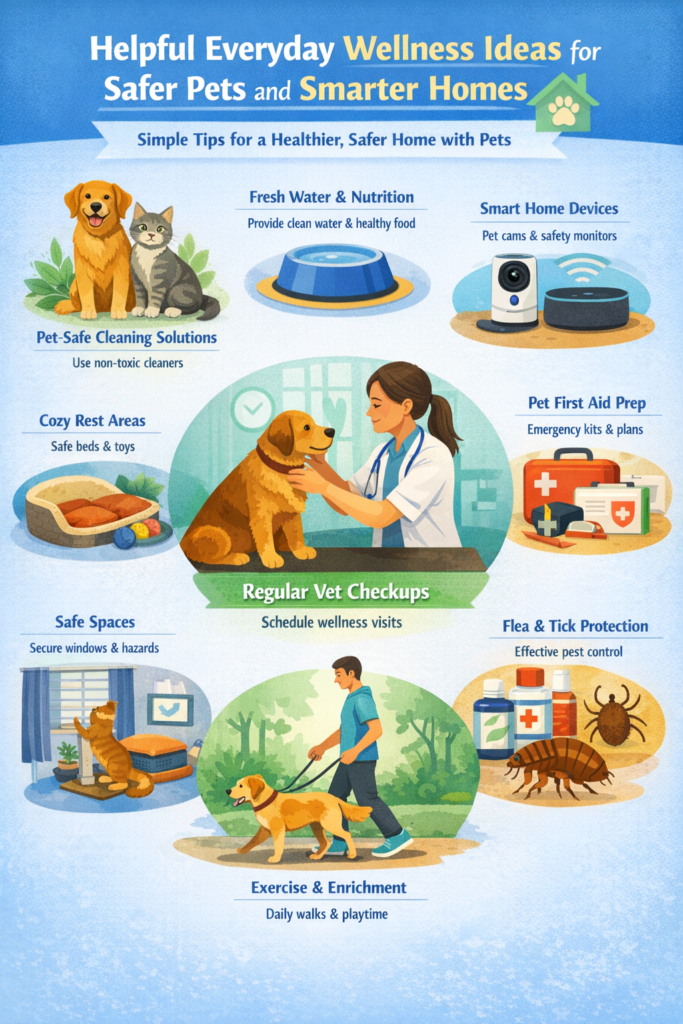
Safer Pets and Smarter Homes: Helpful Everyday Wellness Ideas for Families
Safer pets and smarter homes start with simple daily habits. A pet-friendly routine at home can lower common risks, improve comfort, and help families notice problems early. Trusted pet-care guidance consistently highlights home hazard control, regular grooming, safe storage, exercise, and routine veterinary care as core parts of everyday pet wellness.
If you want more practical pet care ideas, visit our pet care blog section and explore more resources on One Health Globe.
Why safer pets and smarter homes matter
A home can look clean and comfortable to people but still contain hazards for dogs and cats. The American Veterinary Medical Association warns that common household items such as soaps, toothpaste, sunscreen, medications, cleaners, and toxic foods can be dangerous to pets if swallowed or misused. The American Kennel Club also advises pet owners to keep electrical cords out of reach, secure cabinets, and control access to unsafe spaces. :contentReference[oaicite:0]{index=0}
That is why everyday prevention matters. A smarter home for pets is not about buying everything at once. It is about building safer habits, room by room, and making your environment easier to manage for both animals and family members. This kind of setup also supports a calmer daily routine. :contentReference[oaicite:1]{index=1}
Create a safer home with better storage and fewer hazards
One of the most useful wellness ideas is reducing access to harmful items. Keep medicines, detergents, sprays, batteries, and small objects in closed cabinets. Secure trash lids, manage loose wires, and check windows and screens. AKC guidance specifically recommends moving electrical cords out of reach or through concealers, while AVMA emphasizes careful storage of household products that can upset or poison pets. :contentReference[oaicite:2]{index=2}
Families can also create pet-safe zones with gates or dedicated rooms. Gates help keep puppies and dogs away from dangerous areas, visitors, or household work zones, while protected resting spaces give pets a calmer place to relax. :contentReference[oaicite:3]{index=3}
Support everyday pet wellness with grooming and cleanliness
Regular grooming does more than improve appearance. ASPCA notes that frequent brushing can help reduce shedding, keep dogs cleaner, and support checks for fleas and ticks. Their dog grooming advice also recommends brushing before bathing and using dog-safe shampoo carefully. :contentReference[oaicite:4]{index=4}
If you are improving your pet care setup at home, you can naturally explore useful products such as pet hygiene and grooming items, family comfort and sensory support tools, and home cleaning accessories to help keep daily routines organized.
Build wellness through hydration, nutrition, and exercise
Fresh water, consistent meals, and daily movement are basic but powerful wellness supports. Recent veterinary blog guidance commonly emphasizes clean water access, regular exercise, and predictable daily routines because they support digestion, weight control, behavior, and mental stimulation. This aligns with broader pet wellness advice from veterinary sources and pet-care organizations. :contentReference[oaicite:5]{index=5}
Daily walks, short play sessions, and enrichment activities can make a big difference for dogs and cats living indoors. Exercise also helps reduce boredom, which can lower destructive behavior around the home. For added support, some families also browse hydration-focused wellness tools, home fitness inspiration, or eco-friendly home essentials when building healthier daily routines.
Do not ignore emergency readiness and seasonal protection
A smarter pet-friendly home should also include emergency planning. AVMA advises pet owners to keep first-aid knowledge accessible and prepare for disasters by bringing pets indoors early and maintaining supplies for evacuation if needed. AKC also recommends keeping pets near entrances and ready for rescue in fire emergencies. :contentReference[oaicite:6]{index=6}
Seasonal care matters too. ASPCA warns that unscreened windows can be dangerous, and seasonal conditions can affect skin, paws, and comfort. AKC’s recent yard safety guidance also stresses tick prevention and checking dogs after outdoor time. :contentReference[oaicite:7]{index=7}
Helpful everyday wellness ideas for safer pets and smarter homes
- Store medicines, cleaners, and small objects in closed cabinets.
- Keep electrical cords, blind cords, and trash out of reach.
- Brush pets regularly and check skin, ears, paws, and nails.
- Refresh water daily and keep feeding spaces clean.
- Use secure screens, gates, and safe rest areas indoors.
- Schedule routine vet checkups and keep pet ID updated.
- Prepare a pet first-aid kit and emergency plan for the home.
Final thoughts
Safer pets and smarter homes come from steady habits, not perfection. When families combine safe storage, simple grooming, hydration, exercise, routine checkups, and emergency readiness, they create a healthier living space for both pets and people. Small changes made today can prevent bigger problems tomorrow. :contentReference[oaicite:8]{index=8}
For more practical guidance, keep visiting One Health Globe and read more helpful articles in our latest blog collection.