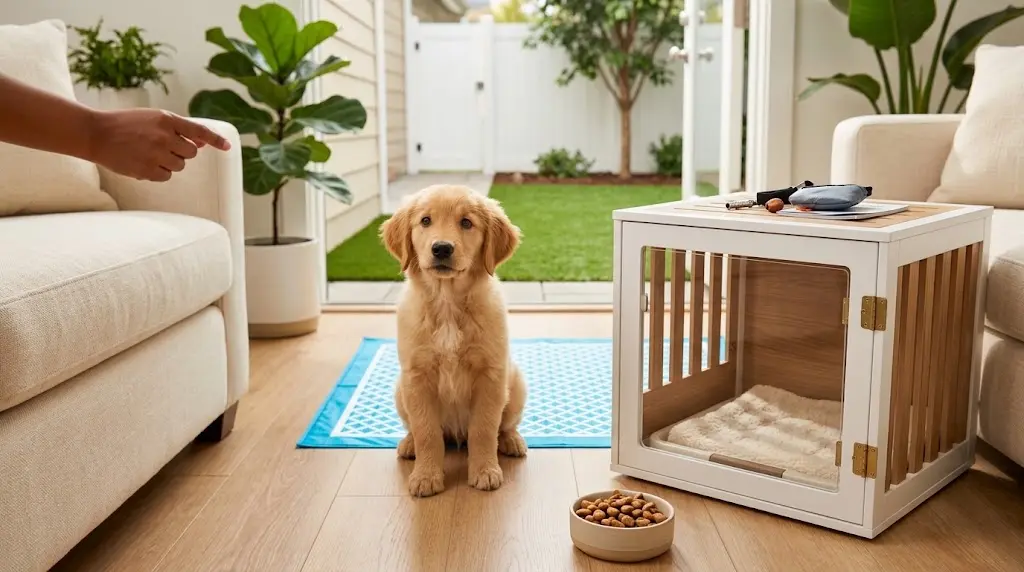
How to Potty Train a Puppy Fast: Proven Methods That Work in 2026
Expert-backed strategies to achieve house training success quickly and effectively
| Training Method | Timeframe | Success Rate |
|---|---|---|
| Crate Training Method | 1-2 weeks | 90%+ |
| Scheduled Routine | 2-3 weeks | 85% |
| Paper Training | 3-4 weeks | 75% |
| Bell Training | 1-2 weeks | 80% |
Understanding the Fundamentals of Puppy Potty Training
Learning how to potty train a puppy fast requires understanding your puppy’s natural instincts and biological capabilities. Puppies typically gain full bladder control between 4-6 months of age, but successful house training can begin as early as 8 weeks. Veterinarians recommend starting training immediately when you bring your new puppy home, as early consistency establishes lifelong habits.
The key to rapid potty training success lies in recognizing that puppies have small bladders and limited control. Young puppies need to eliminate approximately every 1-2 hours when awake, immediately after waking, after playing, and within 15 minutes of eating or drinking. By understanding these biological patterns, you can create a puppy potty training schedule that prevents accidents before they happen rather than simply reacting to them.
Modern vet-reviewed approaches emphasize positive reinforcement over punishment. When your puppy eliminates in the correct location, immediate praise and small treats create powerful positive associations. This method has proven significantly more effective than outdated punishment-based techniques, which can create fear and anxiety that actually slow the training process. Tracking your puppy’s progress with tools like our pet vaccine tracker helps you monitor overall health milestones alongside training achievements.
The One-Week Intensive Potty Training Schedule
House training puppy in one week is ambitious but achievable with total commitment and the right approach. This accelerated method requires taking at least one week off work to dedicate full attention to your puppy. The intensive schedule begins with taking your puppy outside every 30-60 minutes during waking hours, creating maximum opportunities for success and immediate positive reinforcement.
Days 1-3: Establishing the Foundation
The first three days focus on preventing all indoor accidents by maintaining constant supervision. Use a leash to keep your puppy within sight at all times, and immediately interrupt any signs of sniffing or circling by calmly taking them to the designated potty area. Wake up once during the night for a midnight bathroom break, as overnight control develops more slowly. Document every successful outdoor elimination and begin noticing your puppy’s individual patterns and pre-elimination signals.
Days 4-7: Building Independence
As patterns emerge, you can gradually extend the time between bathroom breaks by 15-minute increments. Introduce a verbal cue like “go potty” when your puppy begins eliminating outside, eventually allowing you to prompt elimination on command. By day seven, most puppies show clear improvement with fewer accidents and longer periods of bladder control. Some puppies may achieve nearly complete house training by this point, while others need an additional week of consistency to solidify the behavior.
Integrating technology can significantly enhance your training success. Our dog paw scanner helps you monitor your puppy’s overall health, as urinary tract infections or other medical issues can interfere with potty training progress. Any sudden regression or frequent urination warrants an immediate veterinary consultation to rule out underlying health concerns.
Crate Training: The Fastest Path to Potty Success
Crate training remains the most effective method veterinarians recommend for how to potty train a puppy fast. Dogs have a natural instinct to keep their sleeping area clean, making a properly-sized crate an invaluable training tool. The crate should be just large enough for your puppy to stand, turn around, and lie down comfortably—any larger and they may eliminate in one corner and sleep in another, defeating the training purpose.
Introduce the crate gradually with positive associations by feeding meals inside, offering special treats, and never using it as punishment. Young puppies can typically hold their bladder for one hour per month of age, plus one (so a three-month-old puppy can hold it for approximately four hours). However, this is the maximum, not the goal—taking puppies out more frequently accelerates training and prevents unpleasant accidents.
The crate training schedule involves confining your puppy when you cannot provide direct supervision, then immediately taking them to the potty area upon release. This creates a predictable pattern: crate time, potty break, supervised play time, another potty break, then back to the crate. Consistency with this cycle typically produces results within 7-14 days for most puppies. Always ensure your puppy has adequate exercise, mental stimulation, and social interaction outside the crate—it should be a safe den, not a prison.
Common Mistakes That Slow Potty Training Progress
Even well-intentioned puppy owners make critical errors that significantly extend the house training timeline. The most common mistake is inconsistent scheduling—expecting your puppy to “tell you” when they need to go out before establishing a reliable routine. Puppies lack the communication skills and bladder awareness for this approach initially, resulting in preventable accidents that reinforce indoor elimination.
Punishment for accidents represents another counterproductive approach that veterinarians strongly discourage. Scolding or rubbing a puppy’s nose in their mess creates fear and anxiety without teaching the desired behavior. Puppies cannot connect punishment with an action that occurred even minutes earlier, so delayed corrections are completely ineffective. Instead, calmly clean accidents with enzymatic cleaners that eliminate odor completely, preventing your puppy from returning to the same spot.
Inadequate supervision allows puppies to sneak away and eliminate indoors, creating bad habits. Free-roaming throughout the house is a privilege earned after consistent success, not an automatic right for untrained puppies. Using baby gates to limit access to one or two rooms makes supervision manageable and prevents accidents in distant areas of your home. Providing too much water before bedtime or leaving food available all day disrupts the predictable elimination schedule, making timing more difficult.
For comprehensive guidance on all aspects of puppy care and safety, explore our detailed resources at the pet safety hub, where you’ll find expert-reviewed information on creating a safe environment for successful training.
Advanced Techniques and Troubleshooting Solutions
Some puppies master basic potty training quickly but need additional techniques for complete reliability. Bell training teaches your puppy to ring a bell hung near the door when they need to go outside, providing clear communication and reducing guesswork. Hang bells at your puppy’s nose level and ring them yourself each time you take them out, then wait for them to accidentally bump the bells and immediately open the door with enthusiastic praise.
Submissive or excitement urination represents a separate issue from incomplete house training and requires different solutions. Puppies who urinate when greeting people or during play are not having potty training failures but rather displaying normal puppy behavior that they typically outgrow. Keep greetings calm and low-key, avoid looming over your puppy, and take them outside before exciting activities to minimize accidents.
Regression in previously trained puppies warrants careful evaluation. Stress from changes in routine, new family members, or moving to a new home can temporarily disrupt training. Medical issues including urinary tract infections, parasites, or gastrointestinal problems may manifest as house training failures. Schedule a veterinary examination if your previously reliable puppy suddenly begins having frequent accidents, especially if accompanied by other symptoms like excessive drinking, straining to urinate, or blood in the urine.
Multiple dog households present unique challenges as puppies may follow older dogs outside but not understand the purpose of the trip. Separate training sessions ensure your puppy receives individualized attention and clear feedback. Some puppies also develop preferences for certain surfaces or areas, requiring you to gradually transition them from acceptable locations like pee pads to the ultimate goal of outdoor elimination only.
Quick Reference: Puppy Potty Training Success
- Take puppies outside every 1-2 hours when awake, plus after meals, naps, and play
- Use a consistent verbal cue like “go potty” to eventually prompt elimination on command
- Reward successful outdoor elimination immediately with praise and small treats
- Supervise constantly indoors or confine to a properly-sized crate when supervision isn’t possible
- Clean all accidents with enzymatic cleaners to eliminate odor completely
- Expect full house training to take 4-6 months, with substantial improvement in the first 2-3 weeks
- Never punish accidents—focus exclusively on rewarding correct behavior
- Consult a veterinarian if training regresses or your puppy shows signs of medical issues
Frequently Asked Questions
How long does it realistically take to potty train a puppy completely?
Most puppies achieve reliable house training between 4-6 months of age, though some smaller breeds may take up to 8 months due to their tiny bladders and faster metabolisms. While you can see significant progress within the first 1-2 weeks of consistent training, complete reliability including overnight control and the ability to hold it for several hours typically requires several months of maturation. Factors affecting the timeline include your consistency with the training schedule, the puppy’s age when training begins, breed size, and individual temperament. Puppies under 12 weeks have very limited bladder control regardless of training quality, so patience during these early months is essential for long-term success.
What should I do if my puppy has an accident indoors?
If you catch your puppy in the act of eliminating indoors, calmly interrupt them with a gentle palm.