How to Walk Your Cat Safely: The 2026 Vet-Approved Harness Training Guide
By OHG Feline Care Team · Reviewed by a licensed veterinarian · Updated November 2026 · 9 min read
Learning how to walk your cat safely is one of the best enrichment upgrades you can give an indoor cat in 2026. Done right, harness walks add mental stimulation, gentle exercise, and confidence — done wrong, they cause escapes, injuries, and lifelong fear. This guide walks you through the exact 7-step training method our feline team uses, the best cat harness gear this year, and the calming products that make anxious cats far more likely to succeed.
⚡ In a hurry? Start here: Most first-time cat walkers fail because their cat is too anxious to focus. A calming chew given 30 minutes before harness training raises the success rate dramatically.
Can Cats Really Enjoy Walks? (Honest Answer)
Yes — but not every cat. According to the AAFP 2024 Indoor/Outdoor Lifestyle Statement, controlled outdoor access via harness or catio delivers more natural behavior expression than pure indoor life, while avoiding the risks of free-roaming. Confident, curious, and socialized cats adapt fastest. Older or timid cats can still learn, but need slower ramps and stronger positive reinforcement.
Cats most likely to enjoy leash walks
- Kittens socialized before 12 weeks
- Bengals, Abyssinians, Maine Coons, and Ragdolls (adventurous breeds)
- Cats already comfortable on a breed-appropriate enrichment routine
- Cats that willingly follow you around the house
Why Walking Your Cat Beats Free-Roaming
The ASPCA reports outdoor cats have an average lifespan of just 2–5 years vs. 13–17 years for indoor cats, largely due to traffic, predators, and disease. A harness walk delivers the enrichment your cat craves — sniffs, sights, sounds — without the mortality risk. It also lowers boredom-related issues like over-grooming, aggression, and litter box avoidance (see our full breakdown in the Pet Safety Hub).
The Best Cat Harness & Gear Checklist for 2026
1. An escape-proof H-style or vest harness (never a collar)
Humane World and every major feline vet body agree: never walk a cat on a collar. Cats can reverse out of collars in seconds. Use a snug vest-style harness that covers the shoulders and chest.
2. A lightweight 4–6 ft leash (skip retractable)
Retractables let a spooked cat gain dangerous speed before you can react. A short, light leash gives instant control.
3. High-value treats + a familiar carrier
Freeze-dried chicken, tuna flakes, or lickable treats. Always carry a soft carrier as a “safe base” for the first month of outdoor sessions.
4. A calming supplement for anxious cats
Feline stress is the #1 reason cat walks fail. A vet-formulated calming chew given 30–45 minutes before training smooths the learning curve. Two options with strong owner reviews:
🌿 Shop Bailey’s Cat CBD Chews →
💧 Get Dutch Pet Calming Pheromones →
The 7-Step Cat Harness Training Method (Vet-Approved)
Step 1 — Scent-Introduce the Harness (Days 1–2)
Leave the harness beside the food bowl. Let your cat sniff and rub against it. Do NOT put it on yet.
Step 2 — Drape & Reward (Days 3–4)
Lay the open harness across your cat’s back for 10 seconds, then treat. Repeat 3–5 times per session.
Step 3 — Fit & Freeze (Days 5–7)
Buckle the harness. Your cat may “pancake” or freeze — this is normal. Distract with treats or play. Two fingers should fit under any strap.
Step 4 — Indoor Wandering (Week 2)
Let your cat wear the harness (no leash) for 10–15 minutes at a time during meals or play.
Step 5 — Attach the Leash Indoors (Week 3)
Clip the leash on and follow your cat, keeping slack. Never pull.
Step 6 — Carrier to Quiet Yard (Week 4)
Carry your cat outside in a carrier. Open it in a quiet, enclosed area. Let them exit on their own timeline.
Step 7 — Short Guided Walks (Week 5+)
Follow your cat, don’t lead. Sessions of 10–20 minutes are ideal. End before your cat gets overwhelmed.
Cat Walking Safety: What Every Owner Must Know
| Do | Don’t |
|---|---|
| Microchip & keep registration current (AVMA-recommended) | Use a collar as your only walking restraint |
| Keep parasite prevention current — even for short outings | Walk near unleashed dogs or busy roads |
| Carry your cat in a carrier to and from the walk zone | Drag or force a frozen cat forward |
| Watch for tail flicks, flattened ears, dilated pupils | Walk in extreme heat, cold, or during storms |
If Your Cat Refuses to Walk: 3 Better Alternatives
Not every cat is a walker — and that’s okay. Great substitutes:
- Window catio or screened porch — same enrichment, zero flight risk
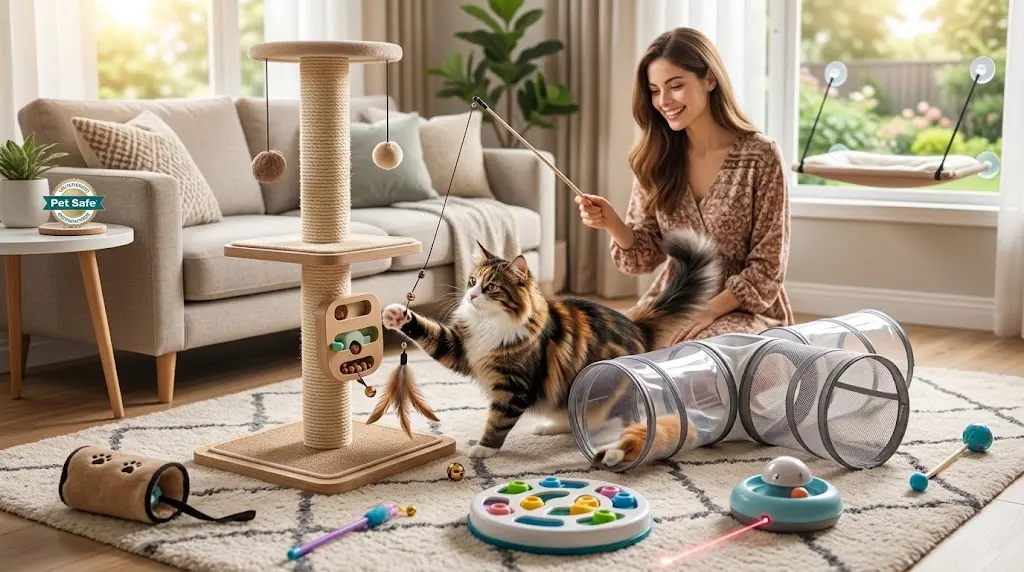
- Interactive tech feeders and cameras that trigger hunting instincts indoors
- Cat grass and foraging toys to satisfy natural behaviors
💧 See Meowant Cat Water Fountain →
🍜 Shop The Cat Ladies Cozy Bed →
Related Cat Care Guides
- Best Cat Breeds 2026: Temperament & Health Guide
- Solensia Cost + 5 Cheaper Cat Arthritis Options
- Bonqat, Convenia & Onsior Alternatives for Cats
- Pet Safety Hub — Full Indoor/Outdoor Safety
Frequently Asked Questions
At what age can you start leash training a cat?
Kittens as young as 8–10 weeks can start scent-introduction. Full outdoor walks are safer after all core vaccines are complete (usually 16 weeks).
How long does it take to train a cat to walk on a leash?
Most cats need 4–6 weeks of daily short sessions. Anxious cats may need 8+ weeks and benefit from a vet-formulated calming aid.
Is it cruel to walk a cat on a leash?
No — as long as you use a proper harness, never force the cat, and end sessions before overwhelm. The AAFP endorses supervised outdoor access as enrichment.
What if my cat freezes and refuses to move?
Freezing is fear. Sit down, wait quietly, offer a treat. If it persists, return to indoor training for another week.
Where can I buy the best cat harness online in the USA?
Look for escape-proof vest harnesses with double clips. Pair it with a calming chew for the first 30 days for the smoothest results.
About the Author
OHG Feline Care Team — a group of certified cat behavior consultants and veterinary writers publishing on onehealthglobe.com. Every article is reviewed by a licensed US veterinarian for medical accuracy. Follow us on Facebook and YouTube @ohgpetscare.
Affiliate Disclosure: This post contains affiliate links from vetted partners including Bailey’s CBD, Dutch Pet, Meowant, and The Cat Ladies. If you purchase through our links, One Health Globe may earn a commission at no extra cost to you. All recommendations are editorially independent and reviewed by our veterinary team. Always consult your licensed veterinarian before starting any new product or routine.