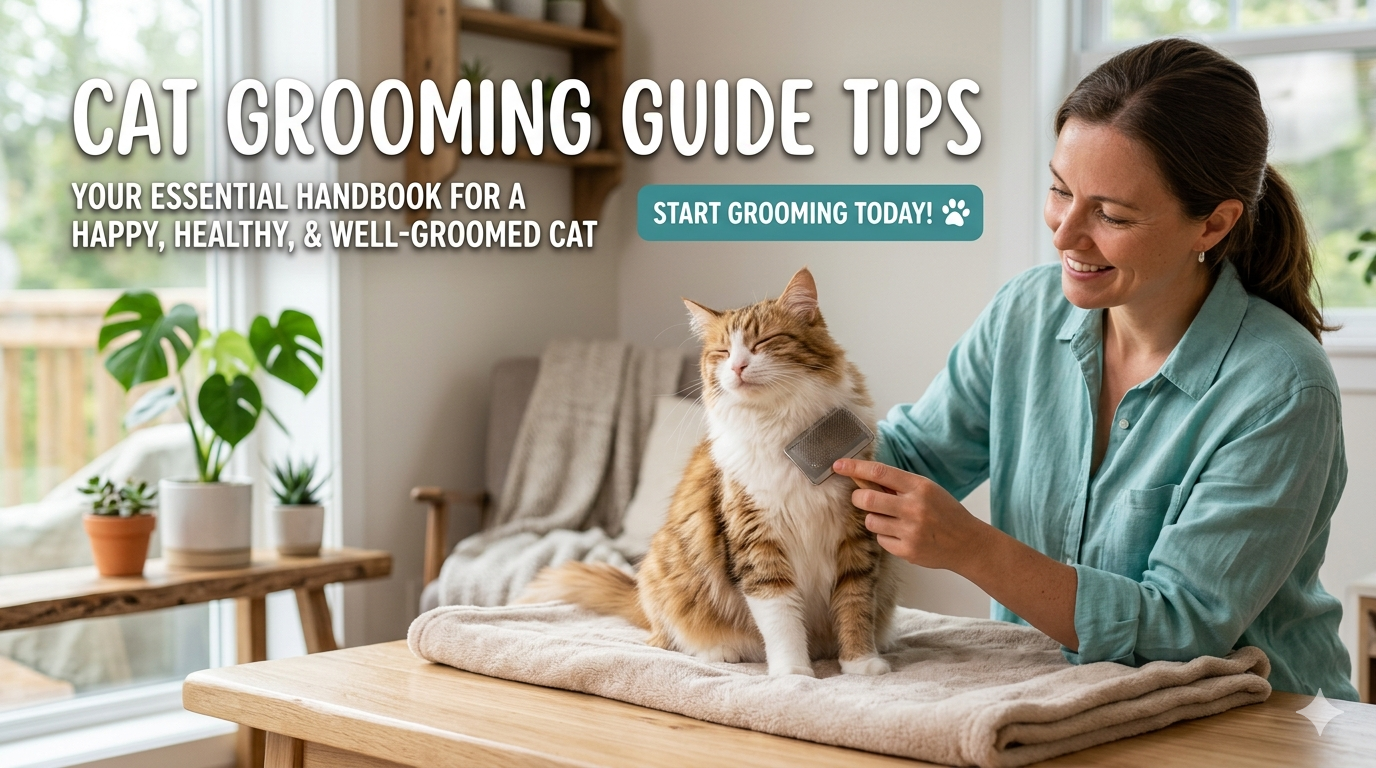
What this guide covers
- ✅ Complete grooming frequency schedule — daily, weekly, monthly by task
- ✅ Coat brushing by breed type — short-hair, long-hair, double-coat, and hairless cats
- ✅ Nail trimming step-by-step — how to do it without injury or stress
- ✅ Ear, eye, and paw cleaning — what’s normal and what needs a vet
- ✅ Dental hygiene at home — the most overlooked feline health habit
- ✅ Best cat grooming products 2026 — vet-approved picks with affiliate links
- ✅ Warning signs that need a vet — not just grooming fixes
- ✅ Free downloadable PDF booklet — save and print the full guide
Cat grooming at home does more than reduce shedding. The ASPCA links regular grooming to earlier detection of lumps, skin infections, dental disease, and parasites — all conditions that cost far more to treat when caught late. This guide gives you a practical, low-stress routine that works for even the most handling-averse cats. For more feline health tools, see our Pet Safety Hub and Pet Vaccine Tracker.
1. Complete Cat Grooming Frequency Schedule (2026)
The right grooming frequency for your cat depends on breed, coat length, age, and health status. Use this table as your baseline — then adjust based on your cat’s specific needs.
| Task | Frequency | Why It Matters |
|---|---|---|
| Coat brushing (short-hair) | 1–2× per week | Removes loose fur, reduces hairballs, distributes skin oils |
| Coat brushing (long-hair) | Daily | Prevents matting — mats cause skin sores and pain if untreated |
| Nail trimming | Every 2–4 weeks | Overgrown nails snag, curl into paw pads, and cause pain |
| Ear check | Monthly | Light wax is normal — dark discharge or odor means infection |
| Eye wipe | 2–3× per week | Prevents tear staining and crust buildup — especially flat-faced breeds |
| Teeth brushing | Daily ideally / 3× min | AVMA: periodontal disease affects 70%+ of cats by age 3 |
| Full bath | As needed | Most cats don’t need regular baths — see bathing section below |
| Sphynx skin wipe | Weekly | Hairless cats accumulate oils on skin — weekly cleaning prevents buildup |
| Water bowl wash | Daily | CDC recommendation — biofilm grows within hours in standing water |
| Food bowl wash | After every meal | Wet food grows bacteria rapidly at room temperature |
| Litter box scoop | Daily | Cats avoid dirty boxes — UTIs and stress follow poor litter hygiene |
| Bedding wash | Weekly | Reduces allergens, dust mites, and bacterial load in sleep areas |
Neakasa 5-in-1 Pro Cat Grooming Kit — Best for At-Home Cat Care
The most common question from cat owners: “What grooming tools do I actually need?” The Neakasa 5-in-1 Pro Kit handles brushing, deshedding, nail grinding, and cleanup in one quiet, low-vibration unit. The near-silent motor is critical for cats — high-pitched noise causes anxiety and resistance that makes grooming sessions impossible.
- ✅ 5 grooming attachments — brush, comb, deshedder, nail grinder, nozzle
- ✅ Near-silent motor — dramatically reduces cat anxiety during sessions
- ✅ Built-in vacuum captures loose fur before it reaches your sofa
- ✅ Ships from US warehouse — delivered in 1–3 business days
2. Coat Brushing — The Right Tool for Every Cat Type
Using the wrong brush for your cat’s coat type is one of the most common grooming mistakes. It can break the coat, miss hidden mats, or cause skin irritation. Here’s the right approach by coat type.
Short-Haired Cats (Domestic Shorthair, Siamese, Abyssinian)
Brush once or twice a week with a rubber curry brush or soft bristle brush. Work in the direction of coat growth using gentle strokes. These cats shed steadily but rarely mat. A quick wipe with a damp microfibre cloth after brushing removes loosened fur without needing a full bath.
Long-Haired Cats (Maine Coon, Persian, Norwegian Forest Cat, Ragdoll)
Daily brushing is non-negotiable. Start with a wide-tooth metal comb to work through the undercoat, then use a slicker brush for the topcoat. Check mat-prone zones daily: armpits, belly, behind ears, and base of tail. Never cut a mat with scissors — use a mat splitter or seek a professional groomer for severe cases.
Hairless Cats (Sphynx, Peterbald)
Hairless cats don’t need brushing but need weekly skin wiping with a warm, damp cloth or baby wipe to remove oil and dirt buildup. Without fur to absorb skin oils, buildup accumulates rapidly and causes odor and skin irritation. Check skin folds around neck and armpits carefully at each session.
Meowant Self-Cleaning Litter Box — Reduces Daily Cleaning Time by 90%
Litter box hygiene is directly linked to cat health. Cats who avoid a dirty litter box develop UTIs, stress-related over-grooming, and inappropriate elimination. The Meowant Self-Cleaning Litter Box auto-scoops after every use, seals odors, and sends alerts to your phone — so your cat always has a clean box, even when you’re away.
- ✅ Auto-scoops after every use — no daily manual scooping
- ✅ Sealed odor system — eliminates litter smell in the room
- ✅ App monitoring — tracks usage patterns that can signal UTI or digestive issues
- ✅ Ships from US warehouse — 1–3 day delivery
3. Nail Trimming — Step-by-Step Without Stress
Most cat owners fear nail trimming more than their cats do. With the right technique and a consistent desensitization routine, the majority of cats accept nail trims within 2–3 weeks of gentle practice.
Step-by-Step Cat Nail Trim Routine
- Choose the right moment — trim when your cat is relaxed or sleepy, never when alert or playful.
- Use cat-specific clippers — sharp, guillotine or scissor-style. Dull clippers crush and split nails, causing pain.
- Extend one claw at a time — press gently on the paw pad with your thumb and index finger.
- Identify the quick — the pink area inside the claw. Cut only the clear, curved tip beyond it.
- Trim one paw per session if your cat is resistant. That’s 4 sessions over 4 days — still 4 weeks ahead of the next trim.
- Reward immediately with a high-value treat after each paw — positive association is the whole game.
- If you cut the quick — apply styptic powder or cornstarch and gentle pressure. It stops bleeding within 2 minutes.
If you can hear your cat’s nails clicking on hard floors, they are already overdue. Overgrown nails can curl into paw pads — a painful condition requiring a vet visit. Use our free Paw Scanner tool for paw health checks between trims.
4. Ear, Eye, and Dental Care — The Three Most Skipped Habits
Ear Cleaning
Healthy cat ears are pale pink, odor-free, and produce minimal light-brown wax. Most healthy cats need ear cleaning only monthly — over-cleaning disrupts the natural balance and causes irritation. Use a vet-approved cat ear cleaner and a cotton ball, wiping only the outer visible area. Never insert anything into the ear canal.
Eye Wiping
Wipe eye discharge gently with a separate damp cotton pad for each eye, always wiping outward from the inner corner. Flat-faced breeds (Persians, Exotic Shorthairs, Scottish Folds) need daily wiping due to their eye anatomy. Yellow, green, or thick discharge plus squinting = vet visit immediately — not a grooming issue.
Cat Dental Care at Home
The AVMA reports over 70% of cats show periodontal disease by age 3. Dental disease causes chronic pain, tooth loss, difficulty eating, and bacteria that can reach the kidneys and heart. Yet most cat owners never attempt dental care at home. Start early — kittens accept tooth brushing far more readily than adults.
How to Start Brushing Your Cat’s Teeth
- Use cat-specific enzymatic toothpaste only — chicken or seafood flavors are most accepted. Never human toothpaste (fluoride is toxic to cats).
- Let your cat lick the paste from your finger for 5–7 days before introducing any brush.
- Introduce a finger brush — gentler and less intimidating than a full toothbrush.
- Work from the front canines toward the back molars — bacteria build fastest on the back teeth.
- Aim for 30–60 seconds per session. Reward every time without exception.
Dutch Pet — Cat Dental Toothpaste + Vet Dental Consult
If your cat has noticeably bad breath, visible tartar on teeth, or red gum lines — that’s active dental disease, not just hygiene. Dutch connects you with a licensed US vet tonight who can assess your cat’s dental health remotely, prescribe dental treatment, and recommend the right home care plan — no clinic trip needed.
- ✅ Licensed US vet assessment — same day
- ✅ Covers dental prescriptions, pain management, and home care plans
- ✅ Cat-formulated enzymatic toothpaste delivered to your door
- ✅ Consult your vet before starting any new dental treatment
5. Bathing Your Cat — When It’s Needed and How to Do It
Most healthy cats do not need regular baths. However, bathing is appropriate in these specific situations:
- Your cat has gotten into something sticky, oily, or potentially toxic
- Your vet has prescribed a medicated shampoo for a skin condition
- Your cat has severe matting that needs water to work through safely
- You have a Sphynx or other hairless breed (weekly skin cleaning)
- Your cat has fleas and you need to remove them mechanically
Bailey’s CBD — Cat Calming Chews + Cat CBD Oil
If your cat over-grooms to the point of hair loss, scratches constantly despite regular brushing, or becomes extremely stressed during grooming sessions — the root cause is often anxiety or skin inflammation. Bailey’s CBD is vet-formulated specifically for cats, works within 30–45 minutes, and supports the nervous system without sedation.
- ✅ Vet-formulated hemp CBD — designed for feline physiology
- ✅ Works in 30–45 minutes — useful before grooming sessions
- ✅ Addresses both anxiety and inflammatory skin responses
- ✅ Third-party tested · USA-made · Consult your vet before starting
6. Your Complete Cat Grooming Schedule at a Glance
Save or screenshot this for your fridge or phone.
- Litter box scooped
- Fresh water + bowl rinsed
- Food bowl washed after meals
- Brush (long-hair cats)
- Teeth brushing (ideal)
- Eye wipe if discharge present
- Full coat brush (all breeds)
- Bedding washed on hot cycle
- Nail check (trim if clicking)
- Eye wipe 2–3×
- Sphynx skin wipe (if applicable)
- Quick home health check
- Nail trim (2–4 week cycle)
- Ear check + clean if needed
- Toy cleaning (rubber + fabric)
- Full health observation session
- Check flea/tick prevention status
- Professional groom (long-hair: 6–8 weeks)
- Vet dental check (annually minimum)
- Medicated bath (per vet prescription)
- Paw pad check after outdoor access
Print-ready booklet covering the full grooming schedule, coat care by breed, nail trimming, ear/eye/dental care, and warning signs. Save it to your phone or print for your fridge.
📥 Download Free PDF →7. Warning Signs That Need a Vet — Not Just More Grooming
Regular grooming makes you the first person to notice when something is medically wrong. Don’t dismiss these signs as grooming problems — they require professional diagnosis.
🚨 See a Vet — Not a Groomer — If You Notice:
- Hair loss in circular patches (ringworm — contagious to humans)
- Over-grooming that creates bald strips on belly or inner legs
- Dark ear discharge with strong odor
- Yellow or green eye discharge, especially with squinting
- Red, swollen, or bleeding gum line
- Lumps, bumps, or asymmetrical swellings discovered during brushing
- Persistent scratching or skin sores that don’t heal in 3–5 days
- Cracked, bleeding, or raw paw pads
For same-day vet access, Dutch Pet connects you with a licensed US vet tonight who can assess your cat’s symptoms, recommend next steps, and prescribe medication if needed. Also review our Pet First Aid Checklist for at-home triage guidance.
More Cat & Pet Care Guides
Frequently Asked Questions
How often should I brush my cat?
Short-haired cats need brushing once or twice per week to remove loose fur and reduce hairballs. Long-haired cats like Maine Coons and Persians need daily brushing to prevent painful matting, especially around the armpits, belly, and behind the ears. During spring and fall shedding seasons, increase brushing frequency for all coat types.
How do I trim my cat’s nails at home?
Use sharp, cat-specific nail clippers. Gently press the paw pad to extend the claw. Clip only the clear curved tip — avoid the pink quick, which contains blood vessels and nerves. If your cat resists, trim one paw per session and reward with high-value treats. Most cats need nail trims every 2–4 weeks. If you can hear nails clicking on hard floors, they are overdue.
Do cats need baths?
Most healthy cats do not need regular baths — they self-groom effectively. Bathing is recommended when your cat has skin condition requiring medicated shampoo, has gotten into something toxic or sticky, is a hairless breed needing weekly skin cleaning, or has a flea infestation. Always use cat-specific shampoo — never human or dog shampoo.
How do I clean my cat’s ears at home?
Healthy cat ears need cleaning only monthly. Use a vet-approved ear cleaner and a cotton ball, wiping only the outer visible area — never insert anything into the ear canal. Dark brown discharge, strong odor, head shaking, or scratching at ears are signs of infection that need a vet, not home cleaning. Dutch Pet can prescribe ear treatment tonight →
What grooming signs mean my cat needs a vet?
See a vet if you notice hair loss in patches, skin sores or hot spots, dark ear discharge with odor, cloudy or excessive eye discharge, red or swollen gums, lumps discovered during brushing, persistent scratching, or cracked paw pads. These are medical issues that require proper diagnosis — not grooming solutions.
A Well-Groomed Cat Is a Healthier Cat
Regular at-home grooming catches health problems early, reduces vet bills, strengthens your bond, and keeps your cat comfortable. Start with the daily essentials, build the weekly habits, and act early when you spot a warning sign.
Follow @ohgpetscare on YouTube for weekly vet-reviewed cat care tips