How Water Access Supports Feline Hydration and Kidney Health
Cats have a well-earned reputation for being picky drinkers. Many owners notice their cat barely visits the water bowl, even on hot days — and that’s not a behavioral quirk. It’s rooted in biology, and understanding it is one of the most useful things a cat owner can do for their pet’s long-term health.
Why Cats Don’t Drink Like Other Pets
Domestic cats descend from desert-dwelling ancestors that historically got most of their moisture from prey rather than from standing water. Wild prey — rodents, birds, insects — typically contains around 70-80% water, which meant cats rarely needed to seek out a separate water source to stay hydrated. That evolutionary history left modern cats with what veterinarians describe as a naturally low thirst drive, along with the ability to produce highly concentrated urine to conserve water when intake is limited.
The problem is that most indoor cats today eat kibble-based diets, which contain only around 6-10% moisture, compared to the 70%+ moisture in a natural prey-based diet. Without meaningfully compensating through drinking water, that gap between what a cat’s biology expects and what a modern diet provides can add up to chronic, low-grade dehydration over time. Find easy to clean cat water fountains to increase drinking water frequency.
The Connection to Kidney and Urinary Health
This matters most because of what concentrated urine and low fluid intake mean for a cat’s urinary system over time. Chronically concentrated urine is associated with a higher risk of urinary crystals and lower urinary tract issues. On the kidney side, chronic kidney disease (CKD) is one of the most common conditions diagnosed in older cats — estimates vary across studies, but several report prevalence in the range of 20-50% of cats over age 10, climbing further in cats over 15.
Cornell University’s Feline Health Center notes that maintaining good hydration is essential for cats with CKD, since dehydration can accelerate kidney damage and worsen clinical signs. VCA Animal Hospitals similarly recommends encouraging water intake as part of standard care for cats with reduced kidney function, alongside dietary management under veterinary guidance.
Importantly, hydration isn’t just a “CKD cats” concern — it’s a preventive habit worth building into any cat’s routine well before a diagnosis ever comes up, since chronic mild dehydration is difficult to notice day-to-day and tends to develop silently.
Evidence-Based Ways to Encourage Better Hydration
A few approaches consistently show up in veterinary guidance for improving a cat’s water intake:
Add Moisture Through Food, Not Just the Bowl
Since prey-based diets naturally supplied most of a cat’s water, incorporating wet food — even partially, alongside dry food — is one of the most reliable ways to increase total fluid intake without relying on a cat’s thirst drive to kick in on its own.
Rethink Water Bowl Placement and Freshness
Cats are notably particular about water sources. Veterinary guidance generally recommends placing multiple water sources around the home, away from food and litter areas, and changing the water at least daily — stagnant or old-tasting water is a common reason cats avoid drinking.
Consider a Flowing Water Source
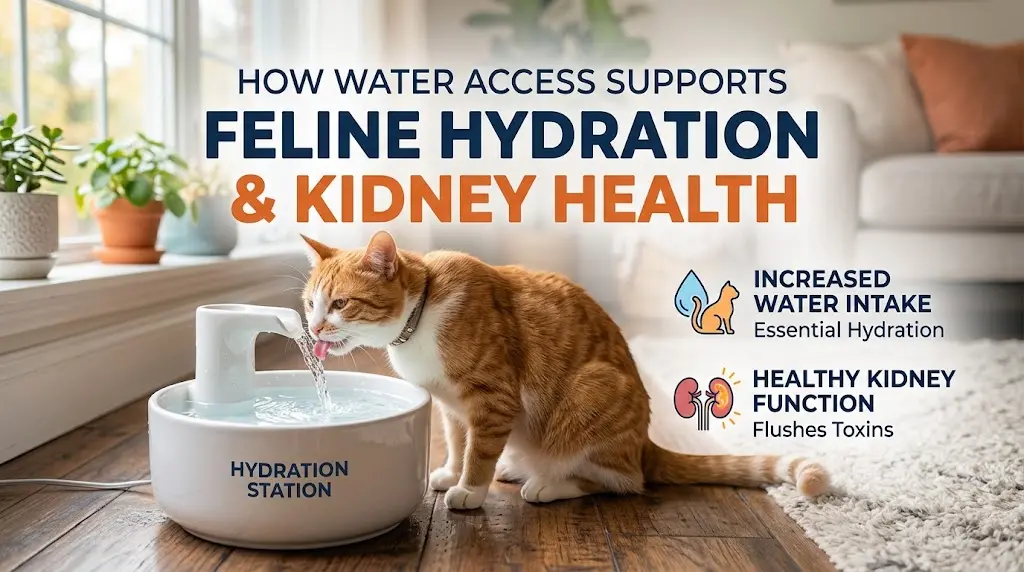
Many cats show a preference for moving water over still water in a bowl, likely tied to the same instinct that made their wild ancestors wary of stagnant, potentially contaminated water sources. This is one reason automatic pet water fountains have become a common recommendation in feline hydration guidance — though as with any change, it’s worth observing whether an individual cat actually responds well to it, since preferences vary from cat to cat.
Loop in Your Veterinarian for Anything Beyond the Basics
For cats already diagnosed with CKD or recurring urinary issues, veterinarians may recommend more targeted interventions — specific therapeutic diets, hydration supplements, or in some cases at-home subcutaneous fluid support. These should always be guided by a vet familiar with the individual cat’s bloodwork and history, rather than attempted independently.
The Takeaway
A cat’s low thirst drive isn’t a flaw to correct — it’s a trait to work with. Small, consistent habits — more moisture in meals, fresher and better-placed water, and paying attention to what a specific cat actually responds to — do far more for long-term urinary and kidney health than any single product or fix. For cats with an existing diagnosis, hydration becomes one of the few factors owners can meaningfully influence day to day, which is exactly why veterinary guidance treats it as a genuine part of care, not an afterthought.
Sources: Royal Canin, Purina, Cornell University College of Veterinary Medicine Feline Health Center, VCA Animal Hospitals, and peer-reviewed epidemiological research on feline CKD prevalence.
Bio: Harvey M., editorial lead at Tails You Trust, an independent cat accessory review site focused on evidence-based, manufacturer-verified content.