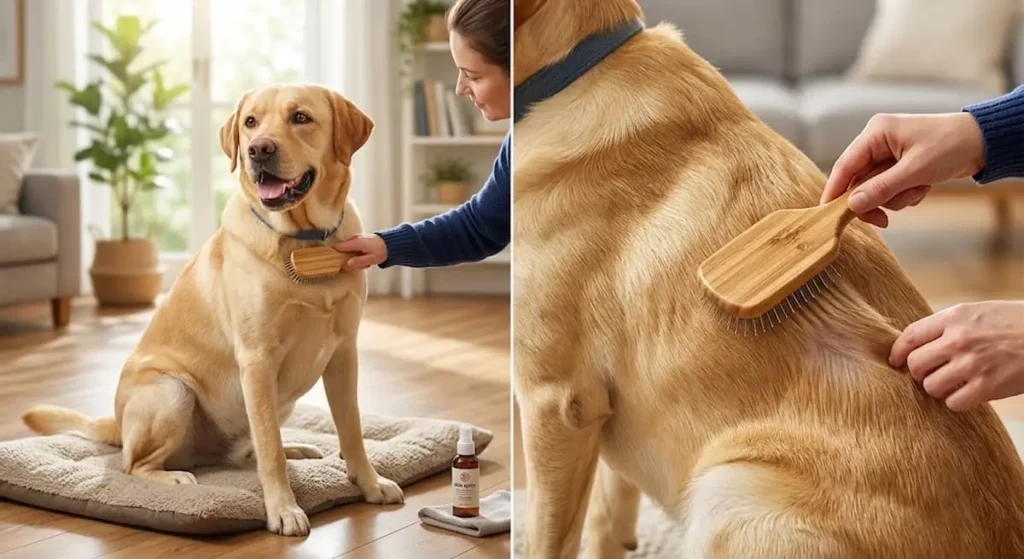
Common Skin Conditions in Labrador Retrievers and the Grooming Habits That Help
Introduction
A Labrador may come back after a swim appearing absolutely delighted and then spend the whole evening licking one paw. By morning the flesh between the toes might be inflamed. With a coat this thick, a tiny discomfort may be easily overlooked and before you know it, the scratching is hard to ignore. Regular grooming allows owners to see these improvements. It also helps to eliminate debris and loose hair, but a brush and wash can’t solve every skin condition.
Why Are Labrador Retrievers Prone to Skin Problems?
The Labrador has a short outer coat and a thick undercoat of silky hair. The second layer protects the dog in cold water and in changing settings. It also indicates that the skin is tougher to see than it seems. A moment’s length may detect no soreness behind the collar or a location near the tail.
Labradors like workouts that will really get their coats going. Water flows out around the ears and between the toes while swimming. Long walks bring in pollen and grass seeds and the odd flea. If not dried properly, the fur could remain damp and adhere to the skin when you return back after a walk in the mud.
There’s a genetic aspect to it, too.Labradors are more likely to develop atopic dermatitis, a skin condition that causes inflammation and is often triggered by environmental allergens such as pollen, dust mites, and mold. But that doesn’t imply that every itchy lab has an allergy.Parasites, viruses and other diseases may also cause pain.
The breed might even be a challenge as it can involve appetite. If a dog is overweight, it might be hard for him to reach specific areas of his body to brush himself. Furthermore, look at the skin creases and locations where there’s not much ventilation. Even a healthy Labrador requires frequent checkups, especially after swimming or a long stroll in the grass. Some dogs are okay swimming every day and have no issues, while dogs might have their paws affected after one session. Breed traits are not a diagnosis for one dog, but are a good indicator.
Common Skin Conditions in Labrador Retrievers
First, many skin conditions are similar. As well as how there’s the presence of redness and itching only. However, there still will be some irritating location and pattern matter.
- Eczema 1 – The cases can revolve around the foot, cheek, ear, belly and armpit allergens as they all may cause itching. Seasonal-flat dogs exist. Some individuals have year-round itching. Veterinary guidelines for atopic dermatitis recommend investigating for other reasons before using an allergy test.
- Flea allergy dermatitis – Some dogs are severely allergic to the flea bite, especially on the lower back and base of the tail. Fleas are hard to find in thick fur.
- Hot spots – Uncomfortable inflamed regions that become moist and rough owing to frequent licking or scratching. You have quick growers, probably in a little moist clothing.
- Bacterial and yeast infections- They might seem as greasy, smelly, crusted or small bumpy patches on the skin. These symptoms may be signs of an underlying allergy rather than a separate health issue.
Otitis If your dog is smelling sweet or leaking fluid or is shaking its head it may have an ear condition. Allergies may seem like the obvious cause, but a medical examination is needed to find out what is actually responsible.
Other causes include food sensitivities and parasites such as mites. Not all hair loss is caused by allergies. The real difficulty may be if you treat each rash as if they were the same ailment. On top of that, you may require some eligible online dog grooming expert if you have some ordeals to deal with during the crucial moments. Hence, flea problems. Parasite Control can also be checked as you may need medication to combat a secondary bacterial infection. If the reason is an untreated allergy, the itching might continue after the damaged area has healed.
How to Identify Early Signs of Skin Problems in Labradors
A scrape from a walk? That is nothing.That poor paw, bitten night after night, deserves a little extra care and attention.
Usually there’s a change in behavior before the owner notices a mark on the skin.
A Lab who all of a sudden doesn’t want you to massage a painful place. Someone else may touch his face on the sofa. Or wear out scraped up ears. At other times the light fur is tinged with rust by the saliva that has been resting there in the form of an ordinary lick.
The coat may be opened along the back, tummy, underarms and tailbase for a fast check. Another thing to look for is in between the toes. Symptoms are: Warning signs are:
- Frequently licking, biting or clawing the same region
- New lumps Redness Slight scaling or scabs
- Strong or bad scent of ears or garments
- Thin hair or sensitive skin or wet patches
- Touch his ears and he’ll shake his head or problem
A great shot in the light might provide some idea whether a patch is growing. Notes on recent walks, pools, changes in diet or flea treatment may also be helpful to the vet. These insights are worth more than a quick glance diagnostic. It’s easy to compare, since you have it once a week. If you don’t know what the usual skin of a dog appears like you may not appreciate a subtle difference.
Essential Grooming Habits to Keep Your Labrador’s Skin Healthy
Prefer basic procedures to complex ones. Brushing loosens the undercoat and reveals lumps, ulcers and hot areas. Use rubber cleaning gloves or excellent shed-fur tools carefully.
After swimming, it’s crucial that you rinse it off with fresh water in order to push aside all the salt, chlorine and filth that causes issues later on. On top of that, there should be a case for you to dry the dog’s collar, legs and paws. Towels aggravate inflamed skin.
Limit and hearing issue. You may also want to check any external area of the ear for redness, discharge and smell. A vet may also recommend a safe cleaning method. Strange home remedies and earbuds may harm.
Also, wash the bedclothes. A Labrador returning after a walk, on a wet blanket, is damper than he needs to be. Cleaning equipment should be cleansed between pets and not shared without cleaning.
Even if you don’t see fleas, flea prevention is part of the regimen. A vet may suggest a product depending on the dog’s age, health and local parasite threats. Parasite control is a different process but good grooming could help you see some improvement. You may want to provide a soft mat or cloth on the floor so that the worried dog can stand comfortably throughout the examination. A little relaxation and a few treats and often the next session will be less of a struggle.
How Often Should You Bathe and Brush a Labrador Retriever?
p>Now, if we are talking about a genuine case of a healthy labrador, it must begin once or twice a week. Heavy seasonal shedding may benefit from daily sessions. Choose five minutes over a protracted struggle with pulling equipment.Activity and coat condition are more important than a plan, although most labs do well inside for 4-6 weeks. Your dog may require a wash sooner if he rolls in something he doesn’t enjoy. A cleaner one may last longer. Use dog shampoo. Make sure that you also remember to rinse thoroughly.
A skin allergy may reduce Labrador bathing. To address disease or allergies, your vet may recommend extra shampooing and cleaning. Choose treatments above quick fixes.
Furthermore, you must now wash and dry to wipe away all the remaining filth. Let dry thoroughly. Generally hot water is more comfortable than water that is overly hot. If needed, use a low setting in a dryer gently. If your ears are sore or the skin’s raw, it’s time to change your game plan and seek some help. If your dog dislikes bath time, attempt to divide the process down into smaller calmer portions. A quick wash may not rinse well enough, leaving residue in the coat.
Common Grooming Mistakes That Can Worsen Labrador Skin Problems
The greatest folly of all may be to try to cure one medical ailment with another bath. You have a labrador. It itches when you wash it . Still sore so more heavy washing is coming. From the initial illness, even after a number of washings, the dog’s skin is irritated on examination.
Don’t use human shampoo. Dog skin may not be edible. Some cleansers and perfumes might irritate spots where your dog licks.
This is a double layer hair loss, not a natural reaction to the summer heat or drop. The coat keeps safe. Best to cut round a wound then clip the entire body and this should be done on the counsel of a vet.
Deshedding tools may damage skin if applied too hard or in one place. Like massaging a sore. What’s more, a dog tends to avoid discomfort but never disobedience.
Moving on, you may leave a damp collar after swimming, use banned ear drops, ignore fleas or cover a warm area with a tight bandage are easier to miss. Skin irritation demands a diagnosis, not bathroom cabinet experimentation.
When Should You See a Vet for Your Labrador’s Skin Problems?
If itching persists or prevents the animal resting or injuring the skin, see your vet. If you see a red area developing in a day, an unpleasant swelling, pus or a strong smell, get it inspected before the next regular grooming appointment.
Take extra care of your ears. If your dog jerks his head or screams when you touch his ear over and over again, it might signal there’s an inflammation or infection deep in the canal. Cleaning the home while blind might exacerbate pain.
The vet may inspect for fleas, take skin samples and examine them under a microscope or seek for an underlying allergy. Depends on what the test shows. We need well-planned dietary research. As a rule of thumb, random modifications to your food aren’t the solution.
Seek immediate examination if you experience a skin response with face swelling, difficulty breathing, collapse or evident weakness. Virtual consultations may help you determine whether a minor ailment is important but certain wounds, ear canals and suspected infections need to be seen in person.
How Professional Dog Grooming Training Supports Better Skin Care
A groomer has seen the finished coat. Normal visit, paws, belly, tail, hands neck. You can see a suspicious place that would have been covered by thick fur at home.
During professional training you will learn how to work correctly, using the suitable instruments and to navigate delicate regions without damaging the skin. It also covers drying, hygiene and when to terminate a grooming session. If a Lab has an ear that hurts, they may need to be checked out before any additional cleaning can be done.
Good groomers know their business . They may notice a difference, report what they perceive and encourage a veterinarian’s assessment. They shouldn’t diagnose you with a yeast infection based just on scent or recommend medication for a rash. Communicate! An owner will be more interested in the exact location of the sore than a generic statement that the skin looks awful.
Sometimes the best results are the simplest of trades. Owner to advise of known allergies and any prescribed shampoos. The groomer runs these instructions and discovers additional problems. The veterinarian diagnoses and treats as appropriate.
Conclusion
You’d be surprised at how effectively a Labrador’s coat can cover a skin disease that is developing. Regular brushing and a watchful eye makes it easier to spot changes, but prolonged discomfort necessitates complete medical treatment. complete drying of the coat. A little concern might be enough for a first conversation with online dog grooming expert to help them decide what to do next. Hands on treatment for symptoms that are uncomfortable or deteriorating rapidly.
.