Pet Training for Health and Fitness
A Basic Guide
📋 What You’ll Learn in This Guide
Pet training health and fitness is not only about tricks. It builds daily routines that improve movement, reduce stress, and support safer behavior for the whole family. This matters more than many owners realize — excess weight is now one of the most common and preventable health problems in pets worldwide.
Why Pet Training Health and Fitness Matters
Regular movement and mental stimulation directly improve your pet’s quality of life — reducing anxiety, preventing obesity-related disease, and building the kind of calm, cooperative behavior that makes home life safer for everyone. According to AAHA guidelines, consistent physical activity is one of the top three controllable factors in pet longevity.
A well-exercised pet is also a better-behaved pet. Boredom and excess energy are among the leading causes of destructive behavior, excessive barking, and aggression in dogs — all of which increase household stress and safety risk. This connects directly to the broader One Health approach where animal wellbeing supports family wellbeing.
The 3 Non-Negotiables — Your Weekly Routine Framework
Start with three core pillars and keep them consistent every week. These are the minimum foundations of any effective pet fitness routine — regardless of breed, age, or current fitness level.
Move
Short, safe physical activity every single day. Start with 5–10 minutes per session, 2–3 times daily. Increase duration slowly week by week.
Think
Small brain games and short training sessions daily. Mental stimulation burns as many calories as physical exercise and reduces anxiety significantly.
Recover
Rest, fresh water, and calm time after every activity session. Recovery prevents injury and allows the body to adapt to increasing fitness demands.
If your pet is new to exercise, begin with 5–10 minutes per session and repeat 2–3 times daily. Increase slowly. If you’re building a safer home routine overall, also review your pet and family safety basics to ensure the environment supports consistent training.
Safe Exercise for Dogs and Cats
Exercise needs differ significantly between dogs and cats. The right approach for each prevents injury and builds sustainable fitness habits rather than short bursts of activity followed by long periods of inactivity.
Dogs — Daily Walk Foundation
AAHA recommends at least 30 minutes of walking daily, then adjust for breed, age, and fitness. Mix walking with dedicated “sniff time” — letting the dog smell freely reduces pulling and adds valuable mental work that tires them as much as the physical movement.
Cats — Short Play Bursts
Use frequent 5–10 minute play sessions with wand toys and chase games. Stop before the cat becomes exhausted — cats are sprinters, not endurance athletes. Keep sessions brief and frequent throughout the day rather than one long session.
For cats especially, pair play sessions with clean routines from food safety and hygiene guidelines to reduce contamination risks around bowls and litter areas — particularly important in multi-pet households.

Professional clicker with wrist strap for consistent training sessions. Builds positive reinforcement habits in days — supports both fitness goals and safe behavior. Rated 4.6 stars by verified buyers.
🛒 Shop on DHgate →Training as Workouts — Movement Through Learning
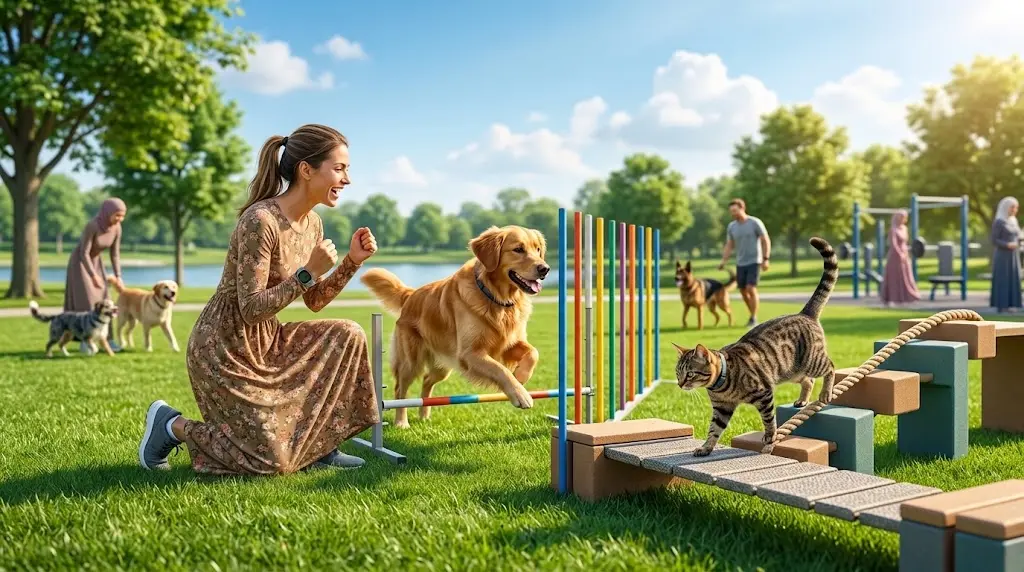
One of the most underused fitness strategies is treating training sessions as structured physical workouts. Every repetition of a trained behavior involves muscle use, coordination, and mental effort — all of which contribute to overall health and fitness goals.
🏋️ Recommended Training Workout Circuit
Keep rewards small. If weight is a concern, use part of the pet’s daily measured food portion as training treats — this keeps calorie intake controlled while still rewarding consistently. This supports a balanced One Health approach where animal wellbeing supports family wellbeing.

WiFi-controlled feeder with programmable meal sizes and scheduling. Supports accurate portion control during fitness training programs. Prevents overfeeding between training sessions.
🛒 Shop on DHgate →🔗 Related OHG Guides You Should Read
- Pet Safety Hub — Complete Family & Pet Safety Resource
- Free Paw Health Scanner — Check Paws Before Every Walk
- Pet First Aid Kit — What to Keep Ready During Exercise
- Free Vaccine Tracker — Stay Up to Date on Pet Health
- 5 Deadly Dog Diseases — Signs to Watch During Exercise
- Shop Vet-Reviewed Pet Training Products — 68 Expert Picks
🔬 Check Your Pet’s Paw Health Before Every Walk
Cracked pads, nail issues, or early infections can turn a healthy walk into a painful setback. Our free paw scanner detects problems in 30 seconds — no vet visit needed.
Check Progress with Body Condition Score
Never guess your pet’s fitness progress. Use a Body Condition Score (BCS) chart to objectively assess fat coverage, waist definition, and abdominal tuck. WSAVA resources provide detailed visual guides explaining ideal body shape cues across all breeds and sizes.
⚖️ Body Condition Score — Quick Reference (1–9 Scale)
If your pet scores 6 or above, increase activity gradually — never dramatically — and consult your vet before adding intense exercise. Sudden high-impact activity in an overweight pet risks joint injury and cardiac stress.
A Safe Home Tip That Supports Training
Consistent training routines depend on consistent home conditions. One often-overlooked risk is nighttime navigation — both for pets and their owners. Night slips and falls on poorly lit stairs, hallways, and gate areas can disrupt a carefully built exercise routine through injury.
Adding smarter pathway lighting in training and transition areas — stairs, hallways, and outdoor gate zones — reduces fall risk for both pets and owners during early morning or late evening walk times. A scheduled smart lighting setup supports the routine consistency that makes fitness habits stick.
🏠 Home Setup Checklist for Safe Training Routines
Frequently Asked Questions
How much exercise does a dog need daily?
How do I exercise a cat safely at home?
What is a Body Condition Score for pets?
How many pets are overweight?
Can training sessions count as exercise for pets?
Continue Reading on One Health Globe
Free AI paw scanner checks for pad damage, nail issues and infection in 30 seconds. Essential before and after every walk — no signup needed.
Run Free Paw Scan →Complete family and pet safety resource — toxic plants, emergency awareness, safe handling, and zoonotic disease prevention for active pet homes.
Visit Safety Hub →68 vet-reviewed pet training and fitness tools — clickers, smart feeders, GPS trackers, harnesses, and more selected for safety and effectiveness.
Shop All Products →