Home › Dog grooming › How to Stop Dog Shedding
Disclosure: This is a sponsored guest article. It contains links to grooming and cleaning products from Pawfessor Co. The information below reflects general pet-care practices and is not a substitute for veterinary advice.
How to Stop Dog Shedding: 8 Ways to Reduce Pet Hair at Home

Written by Dr. Muhammad Usama, DVM, RVMP (PVMC 9472) · Published November 17, 2026 · 8 min read
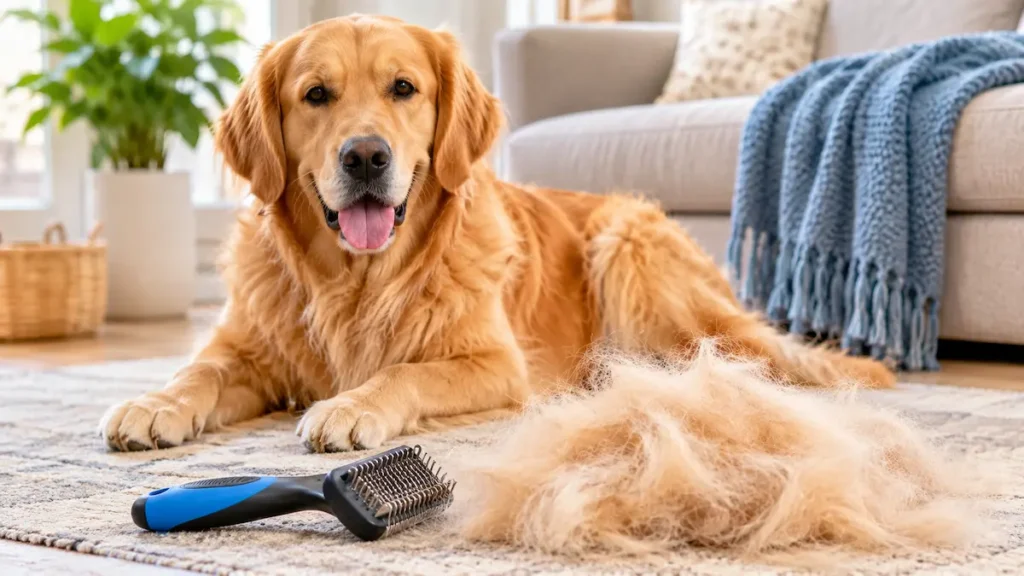
If you share your home with a dog, you already know the reality: fur on the couch, fur on your clothes, fur drifting across the kitchen floor the moment you finish sweeping. The honest answer to how to stop dog shedding is that you usually cannot stop it entirely, because shedding is a normal, healthy process. What you can do is dramatically reduce how much hair ends up on your furniture and floors with the right brushing routine, a few coat-care habits, and a simple home-cleaning system.
This guide covers why dogs shed, how to reduce dog shedding at the source, which tools actually help, and how to clean up the hair that still makes its way into your living room.
Can You Stop a Dog From Shedding Completely?
No, and that is actually good news from a health standpoint. Shedding is how a dog’s coat renews itself, pushing out old or damaged hair to make room for new growth. Every dog sheds to some degree, including breeds often marketed as “hypoallergenic,” which typically shed less noticeably rather than not at all.
Trying to eliminate shedding through excessive bathing, aggressive brushing, or unproven supplements can do more harm than good by irritating the skin or stripping natural oils from the coat. A more realistic and safer goal is to manage shedding so it is less disruptive to your home.
Why Is My Dog Shedding So Much?
Before changing your routine, it helps to understand what is driving the shedding. There are usually several factors at play at once.
Seasonal shedding
Many dogs, especially double-coated breeds, shed more heavily in spring and fall as they swap between a lighter summer coat and a thicker winter undercoat. This can make shedding feel dramatically worse for a few weeks even though nothing is wrong.
Breed and coat type
Dogs with a dense undercoat tend to shed in noticeable tufts, while dogs with short, single coats may shed small hairs constantly. Short-haired dog shedding is easy to underestimate because the individual hairs are small, but they accumulate quickly on dark furniture and clothing.
Indoor living and consistent temperatures
Dogs that live indoors with heating and air conditioning do not experience the same seasonal light and temperature cues as outdoor dogs, which can lead to steadier, year-round shedding rather than two defined seasons.
Stress or environmental changes
Moving, travel, a new household member, or a stressful vet visit can temporarily increase shedding. It usually settles once your dog adjusts.
Skin irritation, parasites, or underlying health issues
Fleas, allergies, skin infections, and some medical conditions can increase shedding beyond what is typical. Ordinary shedding is diffuse and even, while shedding linked to a health issue often comes with other signs, covered below.
How to Reduce Dog Shedding: 8 Practical Tips
You cannot switch shedding off, but these habits are the most effective ways to reduce how much loose hair your dog releases into your home.
- Brush consistently. Regular brushing is the single most effective tool for managing shedding because it removes loose fur before it falls out on its own.
- Match the tool to the coat. A brush designed for your dog’s coat type removes more loose hair with less effort and less discomfort.
- Brush in the direction of hair growth. This is more comfortable for your dog and helps avoid skin irritation.
- Avoid over-brushing. Brushing too hard or too often can irritate sensitive skin.
- Bathe on an appropriate schedule. Too rarely lets loose hair and debris build up; too often can dry out the skin. Ask your veterinarian or groomer what suits your dog’s coat. A long-handle pet bath brush can make bath time easier by helping you work shampoo through the coat and loosen dead hair while keeping your hands clear of the tub.
- Support nutrition and hydration. A complete, balanced diet and fresh water support healthy skin, which plays a role in normal shedding levels.
- Stay current on flea and parasite prevention. Parasites are a common, often overlooked cause of excess shedding.
- Watch for unusual patterns. If shedding suddenly increases or looks different from your dog’s normal, get a veterinary check rather than guessing at home remedies.
Choosing the Best Dog Brush for Shedding
Not every deshedding brush works the same way, and the wrong one can leave loose undercoat behind or feel uncomfortable for your dog. Here is a general comparison of common types.
| Brush Type | Best For | What It Does |
|---|---|---|
| Slicker brush | Medium to long coats, tangle-prone fur | Fine, angled wires lift loose hair and gently work through light tangles |
| Undercoat rake | Double-coated breeds with heavy shedding | Longer teeth reach through the topcoat to pull out loose undercoat |
| Bristle brush | Short, smooth coats | Removes loose surface hair and distributes natural skin oils |
| Double-sided deshedding brush | Dogs needing both detangling and deshedding in one session | Two brushing surfaces in one tool, so you can switch by area and coat condition |
For many households, a double-sided tool is convenient because it reduces the number of separate brushes you need. For example, the double-sided dog deshedding brush from Pawfessor Co. offers two brushing surfaces in a single tool, which can suit dogs with mixed coat needs, such as a light undercoat plus a few tangle-prone areas.
Short-coated dogs: look for a brush with shorter, closely spaced teeth or soft rubber nubs rather than long rake-style teeth, which are designed for thick undercoats. Whatever you choose, introduce new tools gradually and watch your dog’s skin for redness or sensitivity.
How to Get Pet Hair Out of Your Home
Even with a solid grooming routine, some loose hair will always land on furniture, floors, and clothing. These methods save time and keep your home more comfortable.
How to remove dog hair from furniture and upholstery
For couches and chairs, a reusable, textured hand tool is often more effective than a standard vacuum attachment because it grips and lifts embedded hair in short, firm strokes. Check your fabric’s care instructions first, since delicate materials need a gentler approach. A reusable pet hair removal brush can be a practical addition to a weekly routine for sofas and rugs because it needs no disposable refills.
How to remove dog hair from carpets and rugs
Hair embedded in carpet fibers can resist a single vacuum pass. Loosen it first with a stiff-bristled brush or rubber broom, then vacuum slowly in one direction, using a pet-specific attachment if you have one. Moving too quickly often leaves hair behind.
How to remove dog hair from clothes and bedding
Before washing, shake off loose hair outdoors or use a lint roller. A short no-heat tumble-dry cycle before washing can loosen hair so it collects in the lint trap instead of your wash load. Clean the dryer’s lint filter regularly, since built-up pet hair can reduce efficiency.
A Simple Weekly Dog Hair Cleaning Routine
Consistency matters more than intensity. A simple schedule might look like this:
- Daily: A one- to two-minute brushing session, especially during heavy shedding periods.
- Several times a week: Vacuum high-traffic areas such as hallways, the living room, and wherever your dog naps.
- Weekly: Wash pet bedding, wipe down furniture with a hair-removal tool, and vacuum carpets more thoroughly.
- Monthly: Check grooming tools for wear, clean vacuum filters, and deep-clean fabric areas your dog uses most.
When Heavy Shedding May Need Veterinary Attention
Most shedding, even when it feels like a lot, is normal. Certain signs suggest something beyond ordinary coat renewal and are worth discussing with a veterinarian rather than addressing with grooming alone:
- Bald patches or thinning in specific spots rather than even, all-over shedding
- Red, inflamed, flaky, or scabbed skin
- Persistent scratching, licking, or chewing at the skin (see why is my dog itching constantly)
- Sudden, dramatic changes in coat thickness or texture
- Shedding accompanied by lethargy, appetite changes, or other signs of illness
A veterinary visit can identify whether allergies, parasites, a skin infection, or another condition is contributing, so it can be treated properly instead of guessed at with home remedies.
Frequently Asked Questions About Dog Shedding
What is the best way to stop dog shedding?
There is no single way to stop dog shedding completely, since shedding is a normal part of a healthy coat cycle. The most effective approach combines regular brushing suited to your dog’s coat type, a balanced diet, routine parasite prevention, and consistent home cleaning to manage the loose hair that is released.
Does brushing really reduce dog shedding?
Yes. Brushing removes loose undercoat and dead hair before it has a chance to fall out on its own around the house. Regular brushing does not stop the natural shedding cycle, but it significantly reduces the amount of visible hair on furniture, floors, and clothing.
How often should I brush a dog that sheds a lot?
Dogs with heavy or seasonal shedding often benefit from brushing several times a week, and sometimes daily during peak shedding periods. Dogs with lighter, short coats may only need brushing once or twice a week. Always adjust frequency based on your dog’s coat, comfort, and skin condition.
Do short-haired dogs shed less than long-haired dogs?
Not necessarily. Short-haired dogs can shed just as noticeably as long-haired breeds, and the hair can be harder to remove from fabric because it is short and bristly. Coat density, undercoat type, and season affect shedding more than hair length alone.
Can diet affect dog shedding?
A balanced, species-appropriate diet supports healthy skin and coat, which can help minimize excessive shedding over time. However, diet changes should be discussed with a veterinarian, especially if shedding is sudden, severe, or accompanied by other symptoms.
How do I remove dog hair from a couch or carpet?
For furniture, a rubber-edged or textured hand tool can lift embedded hair in short strokes across upholstery. For carpets and rugs, loosening hair with a stiff brush before vacuuming slowly with a pet-hair attachment typically removes more fur than vacuuming alone.
Is heavy shedding ever a sign of a health problem?
Sometimes. While most shedding is normal, sudden bald patches, red or inflamed skin, persistent itching, sores, or a dog that seems unwell alongside heavy shedding should be evaluated by a veterinarian rather than managed at home.
Conclusion
Stopping dog shedding in the absolute sense is not realistic, but reducing it and managing the hair it leaves behind absolutely is. A consistent brushing routine matched to your dog’s coat, basic health and nutrition care, and a simple weekly cleaning system make a noticeable difference in how much fur ends up on your furniture and floors. Pairing the right grooming tool with the right cleaning tool, such as those among Pawfessor Co.’s pet-care supplies, can make the routine easier to keep up. And if shedding ever looks or feels different than usual, a quick veterinary check offers peace of mind.
About the author: Dr. Muhammad Usama, DVM, RVMP
Founder of One Health Globe. DVM, The Islamia University of Bahawalpur; MPhil in Zoology. Registered with the Pakistan Veterinary Medical Council (license no. 9472); not licensed to practice in the United States. He writes on dog health, nutrition and pet care. Full profile