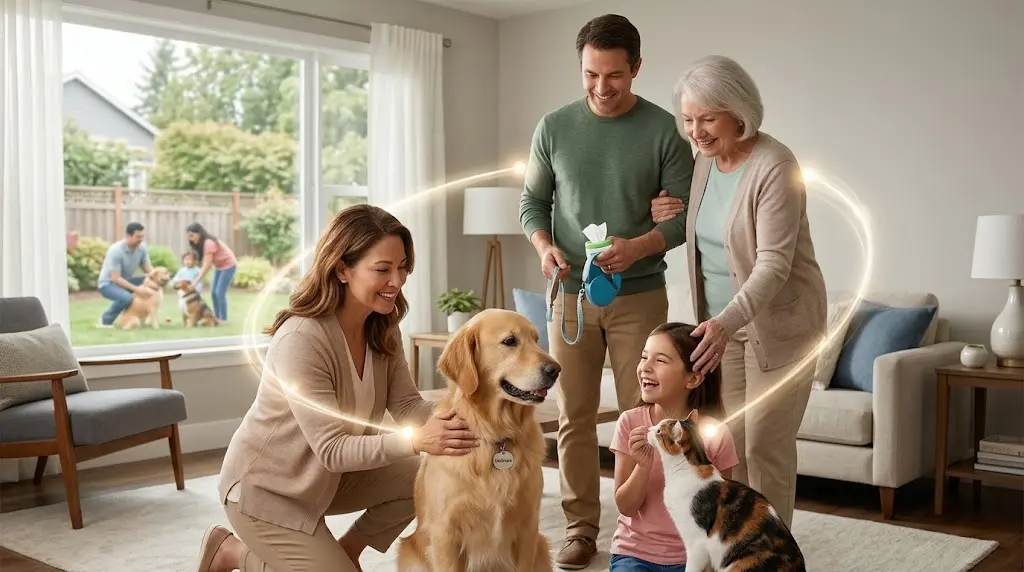
What this guide covers
- ✅ Kitchen hazards — toxic foods, cleaning chemicals, hot surfaces, open bins
- ✅ Living room risks — wires, batteries, candles, child-pet interactions
- ✅ Bedroom & laundry — medicines, detergents, swallowable clothing items
- ✅ Bathroom safety — chemicals, standing water, razor blades, slippery floors
- ✅ Stairs, windows & balconies — fall prevention and escape risks
- ✅ Yard & outdoor transitions — paw checks, gate security, pesticide risks
- ✅ Weekly safety review template — printable room-by-room checklist
- ✅ Emergency warning signs — when to call a vet immediately
The ASPCA Animal Poison Control Center receives over 400,000 calls per year — the vast majority involving household items pets accessed inside the home. A room-by-room review converts a vague safety goal into specific, actionable changes that actually prevent emergencies. For broader protection resources, visit our Pet Safety Hub, First Aid Checklist, and Pet Vaccine Tracker.
1. Kitchen — The Highest-Risk Room in Most Pet Homes
The kitchen combines toxic foods, hot surfaces, sharp tools, cleaning chemicals, and open waste bins in one room. Dogs are especially likely to investigate counters, bins, and floor spills. Cats jump onto cooking surfaces and lick residues from pans. This room deserves the most structured prevention of any space in the home.
The ASPCA lists the following as the most common kitchen-related pet toxins: chocolate, grapes and raisins, onions and garlic, xylitol (found in sugar-free gum, peanut butter, and baked goods), macadamia nuts, alcohol, and cooked bones that splinter.
- Never leave accessible: chocolate, grapes, raisins, onions, garlic, xylitol products, cooked bones, alcohol, or raw dough
- Store knives, skewers, foil, and plastic wrap in latched drawers
- Lock cleaning products, dish pods, and disinfectants in a cabinet with a childproof latch
- Use a bin with a locking or weighted lid — dogs tip open standard pedal bins
- Keep pets out of the kitchen during active cooking — hot oil, steam, and boiling water cause burns
- Clean floor spills immediately — even cooking oil on tile causes dangerous slipping
- Wash food bowls after every meal and keep feeding areas away from the cooking zone
Dutch Pet — Licensed US Vet Available Tonight, No Waiting Room
If your dog or cat has eaten something from this list and you’re unsure whether it’s an emergency, don’t wait for a Monday morning clinic appointment. Dutch connects you with a licensed US vet in minutes — they can triage the situation, tell you whether to induce vomiting, and prescribe treatment if needed, all from your phone.
- ✅ Licensed US vets available same day, 7 days a week
- ✅ Covers toxin ingestion, digestive emergencies, and urgent symptom triage
- ✅ Prescription delivery to your door in 1–3 days if needed
- ✅ Far cheaper than an emergency vet clinic visit
2. Living Room & Family Spaces — More Hazards Than You Think
The living room feels safe because it’s familiar — but it’s often where children and pets interact most, supervision is most relaxed, and small objects accumulate fastest. Remote batteries, loose change, decorative plants, candles, wires, and dropped snacks all create real risks for dogs and cats in this space.
This is also the room where dogs and cats spend the most time resting near people — which means stress from loud noise, overstimulation by young children, and lack of a retreat zone become behavioral and health issues over time.
Safer Family Room Habits
- Pick up remote batteries, coins, hair ties, small toys, and buttons daily — all are swallowing risks
- Never leave open human snacks (chips, raisins, macadamia nuts, xylitol gum) in pet-accessible areas
- Bundle wires and chargers behind furniture — cord chewing causes electrocution burns
- Replace lit candles with pet-safe flameless alternatives — knocked candles are a fire hazard
- Create one designated quiet corner for your pet to rest undisturbed — a crate, bed, or gated section
- Teach children: never disturb a sleeping pet, never offer human food, never chase or corner
- Check under sofa cushions weekly — this is where small swallowable objects collect unseen
3. Bedroom, Laundry & Storage — Hidden Risks in “Safe” Spaces
Families rarely think of bedrooms and laundry areas as high-risk pet zones — but these spaces contain some of the most dangerous household items. Human medications are the single most common cause of pet poisoning calls to ASPCA Poison Control, and they’re usually found in bedside tables, bathroom cabinets, or on countertops.
Laundry areas add detergent pods, dryer sheets, bleach, and fabric softener to the risk list — all highly toxic when ingested. Cats explore dryers and front-load washing machines. Dogs swallow socks, underwear, and ribbons, causing intestinal blockages that require emergency surgery.
- Human medications — NSAIDs (ibuprofen, naproxen), antidepressants, sleep aids, vitamins with xylitol — all toxic to pets even in small doses
- Laundry detergent pods — highly concentrated, attractive to puppies, cause severe chemical burns and GI damage
- Dryer sheets — cationic detergents cause drooling, vomiting, and neurological signs
- Socks, underwear, hair ties, ribbons — linear foreign bodies cause life-threatening intestinal perforation in cats especially
- Loose phone chargers — electrocution risk for puppies and kittens that chew cords
Bedroom & Laundry Safety Checklist
- Store all medications in a latched cabinet — never on nightstands or countertops
- Keep laundry products on high shelves or in locked cabinets
- Check the dryer drum before every cycle — cats sleep inside them
- Remove clothing, socks, and small fabric items from floor before leaving the room
- Unplug chargers when not in use or use cord protector covers
- Keep closet and storage doors closed — cats explore and become trapped in small spaces
4. Bathroom & Utility Areas — Chemical and Water Risks
Bathrooms contain concentrated cleaning chemicals, human personal care products, standing water, slippery floors, and small hygiene items that are all hazardous to pets. Dogs drink from toilets treated with chemical drop-in cleaners. Cats investigate mop buckets and damp corners. Razors, cotton buds, and denture tablets are all swallowing risks.
Utility areas and laundry rooms often store bleach, ammonia-based products, and rodenticides — some of the most acutely toxic substances a pet can encounter. Even brief exposure to concentrated bleach causes chemical burns to the mouth, esophagus, and stomach lining.
Bathroom & Utility Area Checklist
- Keep toilet lids closed — especially if you use chemical drop-in tablets
- Lock bleach, ammonia cleaners, drain unblockers, and disinfectants in a closed cabinet
- Empty mop buckets and standing water containers immediately after use
- Store razors, cotton buds, tweezers, and nail scissors out of reach
- Wipe slippery tile floors before letting pets enter — wet tile causes leg injuries in excited dogs
- Keep your pet’s water bowl in the kitchen — never let bathroom water substitute for clean bowl water
- Never use rodenticides (rat poison) anywhere pets can access — even second-generation poisoning through rodents is fatal
5. Stairs, Windows, Balconies & Entry Points — Fall and Escape Risks
Height and escape risks are consistently underestimated by pet owners because the pet “has never done that before.” A single startling noise, a visiting guest, or a new smell is enough to trigger an escape attempt or a fall from a window or balcony that seemed previously safe.
Cats are particularly vulnerable to “high-rise syndrome” — the AVMA documents this as a genuine clinical pattern of injuries from window and balcony falls in urban cat households. Dogs are more likely to escape through doors left open by guests, delivery drivers, or children.
Entry Point & Height Safety Checklist
- Window screens: install reinforced pet-proof screens — standard fly screens fail under cat or dog pressure
- Balconies: never allow unsupervised balcony access — install railings with small enough gaps that paws can’t slip through
- Stairs: use baby gates for puppies under 6 months, senior dogs, and dogs recovering from surgery
- Front door: create an airlock habit — close one door before opening another when guests arrive or leave
- ID and microchip: every pet should wear ID tags and be microchipped before any outdoor access begins
- Teach visitors: post a visible note reminding guests to keep doors closed — most escapes happen during ordinary arrivals
Meowant Treat Dispenser + 2K Camera — Watch Entry Points & Pet Zones Remotely
For families worried about pet movement near entry points, windows, or balconies when they’re not home, the Meowant 2K camera gives you real-time visibility of any room from your phone. See when your pet approaches a dangerous zone, dispense treats to redirect them, and get motion alerts — all without being physically present.
- ✅ 2K clear video — see exactly what your pet is doing in real time
- ✅ Remote treat dispenser — redirect pets from dangerous zones from anywhere
- ✅ Motion alerts to your phone — know instantly when a pet enters a restricted area
- ✅ Ships from US warehouse — 1–3 day delivery
6. Yard, Garden & Outdoor Transition Areas
Even primarily indoor pets encounter outdoor risks through transition zones — muddy paws tracked inside, parasites picked up in grass, hot pavement burns, fertilizer residue on paw pads, and gate security failures during guest arrivals.
June through August is peak flea, tick, and heartworm season across most of the USA. Dogs and cats that access any outdoor space — even a small yard or patio — are at risk without active preventive medication. Mosquitoes that transmit heartworm larvae are present in all 50 US states.
🖨 Outdoor Transition Checklist — Printable
After every walk: wipe paws · check between toes for debris · check ears and coat for ticks · check collar fit
At entry points: gate latched · no gap under fence · door procedure followed · ID tag checked
Yard setup: fertilizer and pesticides stored locked · standing water removed · sharp objects cleared · toxic plants identified and removed
Parasite prevention: flea/tick medication current · heartworm prevention current · vet check current
Dutch Pet — Vet-Prescribed Flea/Tick & Heartgard Plus Heartworm Prevention
June is the highest-risk month for flea infestations, tick-borne disease, and heartworm transmission across the USA. Over-the-counter flea and tick products are often under-dosed or wrong for your dog’s weight. Dutch connects you with a licensed US vet who prescribes the correct medication for your dog’s exact size and delivers it to your door in 1–3 days.
- ✅ Vet-prescribed — correct dose for your dog’s weight and breed
- ✅ Covers both fleas and ticks in one chewable monthly treatment
- ✅ Heartgard Plus prevents heartworm infection from mosquito bites
- ✅ No clinic trip — licensed vet consultation + home delivery
7. Weekly Home Pet Safety Review — Room-by-Room Template
Use this as a weekly 5-minute walk-through. Assign one family member to run through each room — it takes less than one episode of TV and prevents more pet emergencies than any single product purchase.
- Toxic foods secured or removed
- Bin lid locked or covered
- Cleaners in latched cabinet
- Food bowl washed after meals
- Floor spills wiped clean
- Batteries, coins, hair ties removed
- Wires bundled or covered
- Candles replaced or removed
- Pet rest zone clear and accessible
- Toxic plants checked or removed
- Medications in locked cabinet
- Laundry pods stored high/locked
- Dryer drum checked before use
- Clothing items off the floor
- Chargers unplugged or protected
- Toilet lid closed
- Bleach and chemicals locked
- Mop buckets emptied
- Razors and small items stored
- Wet floors wiped dry
- Window screens secured
- Balcony access controlled
- Stair gate in place if needed
- Front door airlock habit checked
- ID tags on all pets
- Gate latched and gap-free
- Fertilizer/pesticides locked away
- Standing water removed
- Flea/tick prevention current
- Paw wipe station stocked
8. When to Call a Vet — Emergency Warning Signs
Even a perfectly safety-proofed home cannot prevent every incident. Act fast — not wait-and-see — if your pet shows any of the following signs after a potential household exposure or incident.
🚨 Call a Vet Immediately If You See:
- Suspected toxin ingestion — chocolate, grapes, medications, cleaning products, xylitol
- Swallowed foreign object — sock, coin, string, plastic, sharp material
- Chemical exposure — bleach, detergent pods, ammonia, rat poison
- Fall from height — window, balcony, or stairs — even if the pet seems fine initially
- Cord chewing with signs of electrical burn (burned mouth, collapse, irregular breathing)
- Repeated vomiting or diarrhea that doesn’t resolve within 2 hours
- Collapse, seizures, or sudden extreme weakness
- Labored breathing, blue-tinged gums, or obvious pain
- Swollen abdomen following any incident or food ingestion
For same-day vet access without a waiting room, Dutch Pet connects you with a licensed US vet in minutes. For trusted poison information, the ASPCA Animal Poison Control hotline (888-426-4435) is available 24/7. Also review our Pet First Aid Kit Checklist for at-home triage steps.
Frequently Asked Questions
Which room is most dangerous for pets?
The kitchen is typically the highest-risk room — it combines toxic foods, hot surfaces, sharp tools, cleaning chemicals, and open bins in one space. However, bedrooms and bathrooms are close behind due to human medications and concentrated cleaning products. The most dangerous room depends on your pet’s specific habits.
How often should I review my home for pet safety?
A quick weekly walk-through using this guide takes under 5 minutes and prevents more incidents than any single purchase. Also re-check after moving furniture, buying new cleaning products, introducing a new pet, or with seasonal changes — summer heat, holiday decorations, and winter chemicals all introduce new risks.
Do indoor-only pets need room-by-room safety checks?
Yes — indoor pets face just as many hazards as outdoor ones. Common indoor risks include electrical cords, toxic houseplants, cleaning chemicals, small swallowable objects, open windows without secure screens, and dangerous human foods. Indoor does not mean risk-free, and the ASPCA confirms most poisoning cases involve household items accessed indoors.
What are the most toxic household items for dogs and cats?
The ASPCA lists the top household toxins as: human medications (NSAIDs like ibuprofen, antidepressants), toxic foods (chocolate, grapes, xylitol, onions), cleaning products (bleach, ammonia, detergent pods), insecticides, rodenticides, certain houseplants (lilies for cats, sago palm for dogs), and essential oils. Keep all of these locked away or completely removed from pet-accessible areas.
What is the fastest way to improve pet safety at home right now?
Three immediate high-impact actions: (1) lock all cleaning chemicals and human medications in a cabinet with a childproof latch, (2) remove or relocate all toxic houseplants, and (3) secure windows and balconies with proper reinforced screens or barriers. These three changes address the most common causes of pet poisoning and fall injuries in US homes.
A Safer Pet Home Is Built Room by Room
When families reduce small risks consistently — one room at a time, one routine at a time — they prevent the majority of pet emergencies that feel sudden and avoidable. Start today. Use the weekly template. Act early when something feels wrong.
Follow @ohgpetscare on YouTube for weekly vet-reviewed pet safety tips