ONE HEALTH GLOBE · PET HYDRATION & CLINICAL PREVENTIVE CARE
Best Pet Water Habits at Home: Daily Hydration Tips for Dogs & Cats (2026)
A veterinary deep-dive into daily water math for dogs and cats, fountain circulation science, bowl material hygiene, travel hydration, and clinical remedies for pet dehydration.
30-Second Summary for Pet Parents
Essential pet hydration habits at home: Maintaining optimal daily hydration is critical for protecting dogs and cats against chronic kidney disease (CKD), feline lower urinary tract disease (FLUTD), canine urolithiasis (kidney stones), digestion sluggishness, and heat-induced metabolic stress. Dogs generally require 1 fluid ounce of water per pound of body weight daily (60 mL/kg), while cats require 3.5 to 4.5 fluid ounces per 5 pounds of body weight (45–60 mL/kg). Because domestic cats originated from desert ancestors (*Felis lybica*) and possess a low natural thirst drive, while active dogs lose substantial fluid through panting, establishing proactive water habits—such as deploying recirculating stainless steel fountains, offering wide ceramic bowls, incorporating high-moisture wet food, separating water from feeding areas, and serving low-sodium bone broth—is essential for long-term organ health.
Daily Water Math: How Much Should Dogs & Cats Drink?
Water is the single most vital nutrient for mammalian survival, accounting for 60% to 70% of a healthy adult pet’s total body mass. Every cellular biochemical reaction, kidney filtration cycle, joint cartilage lubrication mechanism, and thermoregulatory panting process relies on a steady fluid balance. However, daily fluid requirements differ significantly between canine and feline biology due to body weight, diet type, and metabolic activity.
Veterinary clinicians calculate baseline maintenance fluid requirements using standard weight-based formulas:
- Canine Daily Water Rule: Healthy adult dogs require approximately 1 fluid ounce of water per pound of body weight daily (60 mL per kg). An active 30 lb dog requires roughly 30 fluid ounces (nearly 4 cups) of water per day. Active working dogs, pregnant females, and heat-exposed dogs may require up to 1.5 to 2.0 ounces per pound. For custom meal calculations, check our Dog Food Safety Calculator and Dog Feeding Schedule Guide.
- Feline Daily Water Rule: Healthy adult cats require approximately 3.5 to 4.5 fluid ounces of water per 5 pounds of body weight daily (45 to 60 mL per kg). A 10 lb cat needs approximately 7 to 9 fluid ounces (about 1 cup) of water every 24 hours.
| Pet Type & Weight | Baseline Water Goal (fl oz) | Baseline Water Goal (mL) | Fluid Intake On 100% Dry Kibble | Fluid Intake On 100% Wet/Canned Food |
|---|---|---|---|---|
| Small Cat (6 to 8 lbs) | 4.5 to 7.0 oz | 130 to 205 mL | Must drink 90% from bowl/fountain | Gets ~75% of water directly from food |
| Medium Cat (10 to 12 lbs) | 7.0 to 10.5 oz | 205 to 310 mL | Must drink 90% from bowl/fountain | Gets ~75% of water directly from food |
| Large Cat (15 to 20 lbs) | 10.5 to 16.0 oz | 310 to 475 mL | Must drink 90% from bowl/fountain | Gets ~75% of water directly from food |
| Toy Dog (5 to 10 lbs) | 5.0 to 10.0 oz | 150 to 300 mL | Must drink 85% from bowl | Gets ~60% of water directly from food |
| Medium Dog (30 to 45 lbs) | 30.0 to 45.0 oz | 900 to 1,330 mL | Must drink 85% from bowl | Gets ~60% of water directly from food |
| Large Dog (65 to 80 lbs) | 65.0 to 80.0 oz | 1,920 to 2,360 mL | Must drink 85% from bowl | Gets ~60% of water directly from food |
Biology Comparison: Feline Thirst Drive vs. Canine Fluid Loss
Understanding the physiological differences between dogs and cats explains why hydration strategies must be tailored specifically to each species.
Feline Biology: The Desert Lineage & Low Thirst Drive
Domestic cats (*Felis catus*) evolved from the African wildcat (*Felis lybica*), a desert-dwelling predator adapted to surviving in arid climates with minimal open water sources. Desert felines obtained up to 80% of their daily fluid requirements directly from the moisture contained within live prey. Consequently, cats evolved a low natural thirst drive; they do not instinctively feel thirsty until they have already lost 8% to 10% of their total body fluid.
Furthermore, feline kidneys are highly efficient at concentrating urine (producing specific gravity readings above 1.035–1.050). While this trait preserved water in desert environments, in modern indoor cats fed dry commercial kibble (containing only 8% to 10% moisture), it creates a dangerous environment: highly concentrated, stagnant urine rich in calcium, phosphorus, and magnesium. This chronic low-grade dehydration is a primary driver of feline lower urinary tract disease (FLUTD), painful struvite/calcium oxalate crystals, urethral obstructions, and accelerated chronic kidney disease (CKD).
Canine Biology: Panting, Heat Loss & High Activity
Dogs (*Canis lupus familiaris*), in contrast, possess a much higher natural thirst drive and drink readily from water sources. However, dogs face unique fluid loss vulnerabilities due to thermoregulation. Because dogs do not sweat through their skin (possessing functional sweat glands only on their paw pads), they rely heavily on panting to cool down through evaporative heat loss from the tongue, respiratory tract, and nasal membranes.
During warm weather, vigorous exercise, or outdoor play, a dog can lose several cups of water per hour purely through rapid panting. If this fluid is not replenished promptly, blood volume drops, heart rate spikes, internal body temperature rises, and the dog risks acute heatstroke, muscle tremors, and kidney injury. For puppies navigating teething discomfort, frozen treats provide dual relief for sore gums and fluid intake; see our Puppy Teething Pain Relief Guide and Dog Dental Care Guide.
Water Bowls vs. Recirculating Fountains: Material & Circulation Science
The container holding your pet’s water plays a significant role in determining how frequently they visit the water station. Both the material construction and water movement impact cleanliness, scent, and sensory comfort.
| Container Type | Hygiene & Bacteria Resistance | Odor & Taste Neutrality | Pros | Cons |
|---|---|---|---|---|
| Stainless Steel Bowls | ⭐ Excellent (Non-porous, dishwasher safe) | ⭐ 100% Odor-free, no chemical leaching | Indestructible, resists scratches, repels slime | Static water requires manual daily refills |
| Ceramic Bowls | ⭐ Excellent (Heavy, non-porous glaze) | ⭐ Odor-free, keeps water naturally cool | Tip-proof for heavy dogs, easy to clean | Can chip or crack if dropped |
| Plastic Bowls | ❌ Poor (Porous, easily scratched) | ❌ Retains plastic smell & detergent residue | Inexpensive, lightweight | Claw/teeth scratches harbor bacteria & cause skin acne |
| Stainless Steel Smart Fountains | ⭐ Superior (Continuous filter + UV sterilizer) | ⭐ Charcoal filter removes chlorine & odors | Encourages drinking via running stream; 2.5L+ reservoir | Requires electrical outlet & filter replacement |
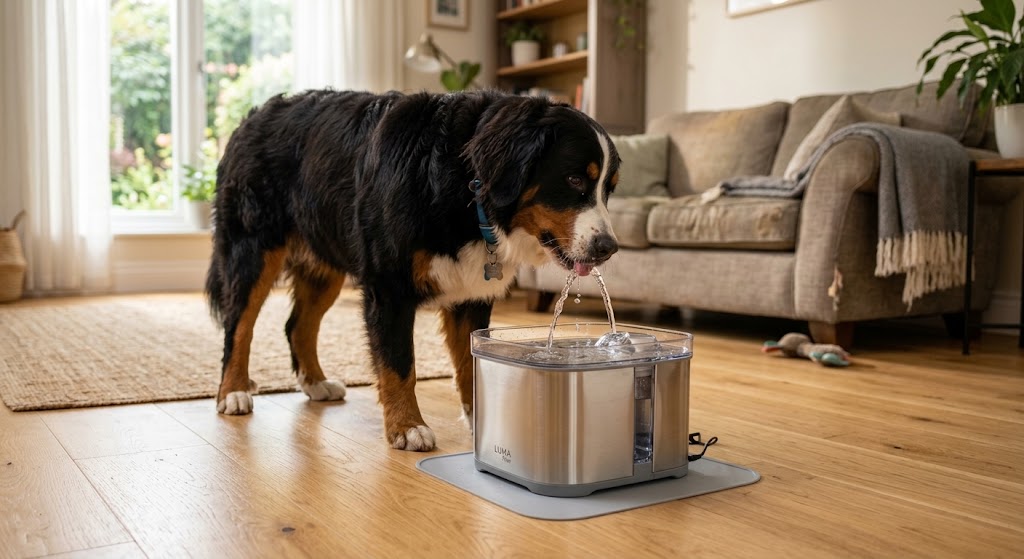
In clinical trials, pets provided with recirculating, continuous-flow stainless steel water fountains increased their daily voluntary drinking frequency by 30% to 45% compared to static water bowls. Running water satisfies the instinctive wild preference for fresh, moving streams—which instinct tells pets are far less likely to harbor parasites or stagnation than standing puddles.
10 Daily Pet Hydration Habits That Work (Step-by-Step)
Implementing a structured daily hydration protocol at home ensures your dogs and cats maintain healthy urinary tract function, digestion, and systemic vitality.
Habit 1: Incorporate High-Moisture Wet Food
Replacing or topping dry kibble with commercial canned wet food, gently cooked human-grade fresh meals, or raw diets is the single most effective way to boost pet fluid intake. Commercial wet food consists of 75% to 82% water. A pet eating two cans of wet food per day automatically ingests substantial water directly from their meal.
Nourish Your Pet’s Gut & Cellular Hydration
Upgrade dry kibble with live probiotics, digestive enzymes, Omega-3s, and organic greens to support optimal digestion and nutrient absorption.
Claim Your Ruff Greens Free Trial Kit → Sponsored Link · Vet-formulated micronutrient topper for dogs and cats.Habit 2: Deploy Recirculating Stainless Steel Pet Fountains
Replace static plastic water dishes with quiet, continuous-flow stainless steel or ceramic fountains. Fountains equipped with multi-stage carbon and ion-exchange resin filters remove heavy metals, debris, hair, and chlorine taste while continuously aerating the water with fresh oxygen. Explore our recommended Meowant Stainless Steel Pet Fountain for whisper-quiet circulation.
Habit 3: Separate Water Stations from Food Areas
In the wild, predators avoid drinking water located directly adjacent to a fresh feeding site to prevent consuming water contaminated by organic matter. Placing water dishes 6 to 10 feet away from food bowls—or in separate rooms entirely—aligns with natural instincts, leading to higher voluntary drinking.
Habit 4: Prevent Whisker Fatigue with Wide, Shallow Dishes
Cats and sensitive dogs possess highly sensitive tactile nerve receptors in their facial whiskers (vibrissae). When forced to dip their snout into narrow, deep bowls, their whiskers bend repeatedly against the sides, causing sensory overstimulation known as whisker fatigue. Switch to broad, low-rimmed ceramic or stainless steel dishes that allow your pet to drink comfortably without whisker friction.
Habit 5: Add Flavor with Salt-Free Bone Broth or Broth Ice Cubes
For reluctant drinkers or pets recovering from illness, add a tablespoon of unsalted chicken, beef, or turkey bone broth (formulated specifically for pets without onions, garlic, or excessive sodium) to their water bowl. Freezing broth into ice cubes creates an engaging summer treat that releases enticing scents as it melts.
Habit 6: Follow the N+1 Water Station Rule
In multi-pet households, territorial resource guarding can quietly prevent submissive pets from accessing water bowls. Follow the veterinary N+1 rule: provide one more water station than the total number of pets in the home (e.g., 3 water stations for 2 pets), distributed across multiple floors or rooms. For mental stimulation tips, review our Dog Mental Enrichment Guide and Dog Behavior Training Guide.
Habit 7: Warm Up Wet Food & Water Toppers
Warming wet food or broth toppers to slightly below body temperature (~100°F / 38°C) volatilizes food fats and aromas, making the meal far more appealing to senior pets with diminished senses of smell.
Habit 8: Supplement Meals with Digestive Enzymes & CBD Soft Chews
A healthy gut microbiome improves intestinal fluid absorption and electrolyte transport. Adding daily whole-food supplements rich in active digestive enzymes or soothing CBD chews for anxious pets helps lower stress-induced urinary retention. See Bailey’s Vet-Formulated CBD Chews for calming support.
Habit 9: Wash Bowls Daily & Replace Fountain Filters Monthly
Standing water bowls quickly develop a slick bacterial film called a biofilm. Biofilms harbor pathogenic bacteria (*Pseudomonas*, *E. coli*) and emit subtle sour odors that turn pets away. Wash daily water dishes with hot, soapy water every 24 hours, and replace fountain carbon filters every 2 to 4 weeks.
Habit 10: Offer Filtered or Spring Water
Municipal tap water often contains dissolved chlorine, chloramines, or heavy mineral deposits that pets detect immediately with their keen olfactory senses. Offering filtered pitcher water or spring water increases palatability significantly. For broader home health guidance, check our Pet Safety Hub and Pet Vaccine Tracker.
Travel & Outdoor Hydration Tips for Active Dogs & Cats
Taking active dogs on hiking trails, road trips, or beach outings—or traveling with cats in carriers—requires extra vigilance to maintain fluid balance and prevent heat distress.
- Carry Portable Silicone Bowls & Squeeze Bottles: Always pack a collapsible silicone water bowl and a dedicated pet water bottle. Offer small drink breaks every 30 to 45 minutes during outdoor activity rather than allowing large gulps after exhaustion. Review our Pet First Aid Kit Checklist before road trips.
- Avoid Stagnant Puddles & Public Water Bowls: Never allow dogs to drink from stagnant forest puddles, warm ponds, or shared communal dog park bowls. Outdoor puddles frequently harbor *Leptospira* bacteria (causing acute kidney failure) and *Giardia* parasites, while shared communal bowls spread canine papillomavirus and respiratory pathogens.
- Carrier Hydration for Cats: Attach a clip-on stainless steel water dish inside a cat carrier during travel, or offer wet treat pouches (squeeze tubes) during rest stops.
Recognizing Dehydration: The Skin Tent & CRT Gum Test
Because subtle dehydration escalates quickly into a medical emergency, every pet parent should know how to perform a 10-second home physical check.
The Skin Turgor Test (Skin Tenting)
Gently pinch a fold of skin over your pet’s shoulders or lower back, lift it upward slightly, and let it go:
- Normal Hydration: The skin snaps back smoothly into place in under 1 second.
- Moderate Dehydration (5–7% fluid loss): The skin returns slowly, taking 2 to 4 seconds to flatten.
- Severe Dehydration (8%+ fluid loss): The skin remains tented upward in a ridge, indicating a critical loss of tissue elasticity.
Capillary Refill Time (CRT) & Gum Examination
Lift your pet’s upper lip and examine their gums. Healthy gums should be bright pink, moist, and slippery to the touch. Press your index finger firmly against the gum line for 2 seconds to blanch it white, then release:
- Normal CRT: Pink color returns within 1 to 2 seconds.
- Prolonged CRT / Dehydration: Gums feel dry, tacky, or sticky, and blanched color takes 3 or more seconds to return.
If your pet exhibits sunken eyes, extreme lethargy, dry/tacky pale gums, rapid shallow panting, loss of appetite lasting over 24 hours, or persistent vomiting/diarrhea, contact an emergency veterinarian immediately or consult a telehealth clinician.
24/7 Virtual Vet Consultations for Pet Dehydration
Unsure if your pet is dangerously dehydrated? Connect with a licensed veterinarian online in minutes for immediate clinical triage and advice.
Consult a Telehealth Vet Online Now → Sponsored Link · Powered by Dutch Pet Telehealth.Frequently Asked Questions
How can I tell if my cat or dog is getting enough water?
A well-hydrated pet exhibits moist pink gums, elastic skin that snaps back instantly when pinched, normal energy levels, and regular urination (2 to 4 times daily for cats; 3 to 5 times for dogs) producing light yellow, non-foul-smelling urine.
Why does my cat or dog slap or splash water out of the bowl before drinking?
Pets splash water to gauge depth (since carnivores have poor close-up vision directly beneath their snouts), to create movement in standing water, or to relieve whisker fatigue caused by deep, narrow bowls.
Is tap water safe for pets or should I give them filtered water?
While tap water is generally safe in most US municipalities, high chlorine, heavy minerals, or hard water deposits can turn pets away due to sensitive scent receptors. Filtered or spring water is preferred for picky drinkers.
Can drinking too much water be a sign of illness in pets?
Yes. Excessive thirst and urination (polydipsia and polyuria) are hallmark early warning signs of chronic kidney disease (CKD), diabetes mellitus, hyperthyroidism (in cats), and Cushing’s disease (in dogs). Consult a vet if intake increases suddenly.
How long can a cat or dog go without water?
Pets can suffer severe organ failure after 24 to 48 hours without water. Dehydration escalates far more rapidly than starvation, making immediate medical intervention critical if a pet stops drinking.
Do pet water fountains really make a difference?
Yes. Clinical feline and canine studies show that continuous-flow stainless steel fountains increase voluntary water consumption by up to 45% compared to static bowls, reducing urinary crystal formation significantly.