AI Veterinary Receptionist 2026: How Clinics Are Fixing the Front Desk Bottleneck
It's 11 PM. A vet tech named Maria is the only person on shift at a small animal hospital. A dog just came in with a swollen leg, a client is on hold asking about a refill, and the phone is ringing again with a call she can't get to. By the time she picks it up, the caller has already hung up and dialed the clinic down the road.
This is exactly the gap an AI veterinary receptionist is built to close.
That scene plays out every night in clinics across the country. It's not a staffing failure. It's a math problem: too many calls, not enough hands.
TL;DR: Vet clinics are short-staffed and missing roughly a quarter of their incoming calls, and each one can cost hundreds of dollars in lost bookings. An AI veterinary receptionist answers every call, day or night, books appointments, and routes emergencies, without adding another salary to the payroll. Here's how it works and what it actually fixes.
Why Is the Veterinary Front Desk Under So Much Pressure in 2026?
The veterinary industry is short-staffed and getting shorter. A workforce study commissioned by the AAVMC projects a shortfall of more than 17,000 veterinarians in the U.S. by 2032, even after counting every new veterinary school in the pipeline.
That shortage doesn't stay in the exam room. When a clinic can't hire enough vets, front desk staff absorb the overflow: more calls per person, less time per call, more burnout. Veterinarian unemployment sits at just 0.7%, according to the AVMA's 2025 Census of Veterinarians, which tells you there's no reserve of extra hands waiting to be hired.
What Is an AI Veterinary Receptionist?
An AI veterinary receptionist is software that answers your clinic's phone calls, books appointments, and handles routine questions, without a human on the other end. It works like a virtual veterinary receptionist: picking up every ring, checking your schedule, and confirming bookings in real time.
Unlike a basic answering machine, it holds an actual conversation. It can explain office hours, quote a rough visit cost, or tell a worried pet owner when the next opening is, all without putting anyone on hold.
How Many Calls Are Vet Clinics Actually Missing?
Industry data reported by EVS7 shows the average veterinary clinic misses roughly 24% of its incoming calls. That’s about one in every four callers who never reach a person, and most of them won’t leave a voicemail.
For a three-doctor practice, that adds up fast. Missed calls translate into missed bookings, and missed bookings translate into real revenue walking out the door, often tens of thousands of dollars a year. A veterinary answering service AI closes that gap by making sure the phone never rings unanswered, even at 2 AM.
Pet Groomers Are Losing the Same Calls
The exact same problem is playing out one industry over, in pet grooming. Groomify, an AI platform built for pet groomers, reports that businesses using its AI receptionist recover an average of $3,000 a month in bookings that used to go to voicemail. A groomer with both hands on a dog can't answer a ringing phone any more than a vet tech mid-surgery can.
The fix looks the same in both industries: an AI front desk that answers, books, and follows up automatically, whether the business is a veterinary hospital or a grooming salon.
How Does an AI Veterinary Receptionist Work With Existing Clinic Software?
A good AI veterinary receptionist connects directly to your practice management system. It checks real appointment slots, books directly into your calendar, and updates client records without staff re-entering anything by hand.
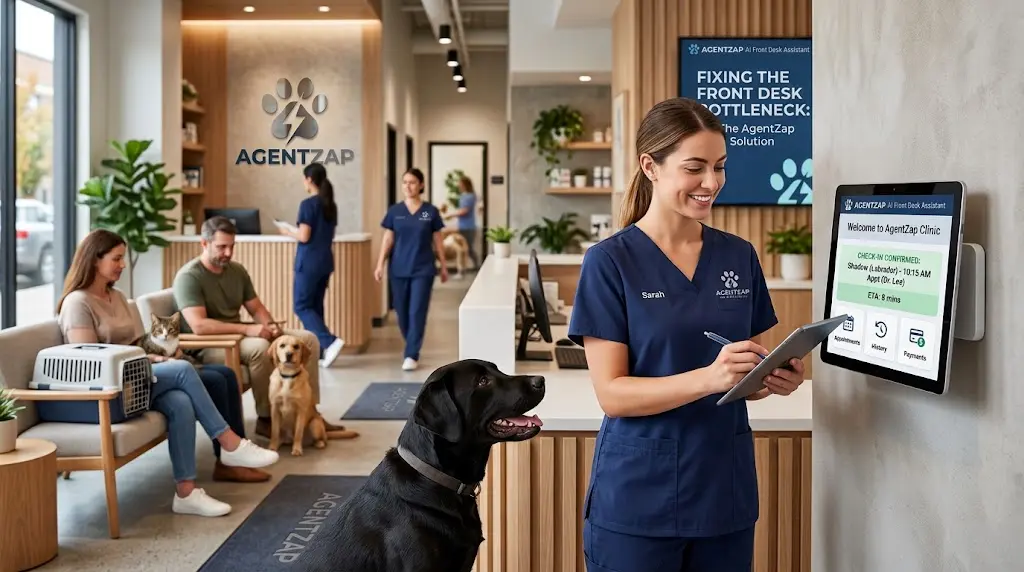
It also triages. A routine nail-trim request gets booked on the spot. A call about a dog that swallowed something gets flagged and routed to a live person immediately. An automated veterinary receptionist built for 2026 knows the difference between urgent and routine, which is what separates it from an old-fashioned answering service.
AI Veterinary Receptionist vs. Hiring More Front Desk Staff
Hiring another receptionist means a new salary, training time, and a person who still can't work 24 hours a day. An AI receptionist for veterinary clinics answers instantly, never calls in sick, and covers nights, weekends, and holidays without overtime pay.
That doesn't mean AI replaces your front desk team. It means your existing staff stop drowning in ringing phones and can focus on the clients standing in front of them. This shift toward smarter front-desk technology is part of a wider animal health conversation, one One Health Globe has been tracking closely.
Common Questions About AI Veterinary Receptionists
What is an AI veterinary receptionist?
It's software that answers your clinic's calls, books appointments, and answers routine questions automatically, working as an AI front desk for vet clinics around the clock.
How does an AI receptionist work for a vet clinic?
It connects to your practice management software, checks real availability, and books appointments directly into your calendar while holding a natural phone conversation with the caller.
Can AI answer emergency calls at a veterinary practice?
Yes. A properly configured AI veterinary receptionist can recognize urgent language and route the call straight to a live staff member instead of trying to handle it alone.
Is an AI receptionist better than hiring more front desk staff?
It's not a replacement for your team, but it covers the hours and call volume a human staff can't, especially after hours, which is when many clinics lose the most calls.
How much does an AI veterinary receptionist cost in 2026?
Pricing varies by call volume and features, but most clinics recover the cost quickly since even a handful of recovered appointments per month covers the monthly fee.
Will an AI receptionist replace veterinary front desk staff?
No. It handles the repetitive call volume so your existing staff can focus on clients in the clinic instead of being pulled in three directions at once.
Does an AI receptionist work after hours and on weekends?
Yes, that's one of its biggest strengths. A virtual veterinary receptionist answers at 2 AM or on a Sunday exactly the same way it does at 2 PM on a Tuesday.
Can an AI veterinary receptionist handle multiple languages?
Many AI receptionist platforms support multiple languages, which matters for clinics serving diverse communities where the front desk staff might not speak every language a caller does.
The Bottom Line
Maria's 11 PM shift doesn't have to look like that anymore. An AI veterinary receptionist takes the ringing phone off her plate so she can focus on the dog with the swollen leg instead of the caller she can't get to in time.
With a veterinarian shortage that isn't closing anytime soon, clinics that fix the front desk bottleneck now will be the ones still answering every call in 2026.