Home › Pet adoption › Naming a newly adopted dog
Guest post: written by a DogHIB contributor for One Health Globe. General education only; for health or behavior concerns, talk to your veterinarian or a qualified trainer.
Helping Families Name a Newly Adopted Dog
Written by Betty, DogHIB · Guest post · Reviewed for safety by Dr. Muhammad Usama, DVM, RVMP · Published November 21, 2026
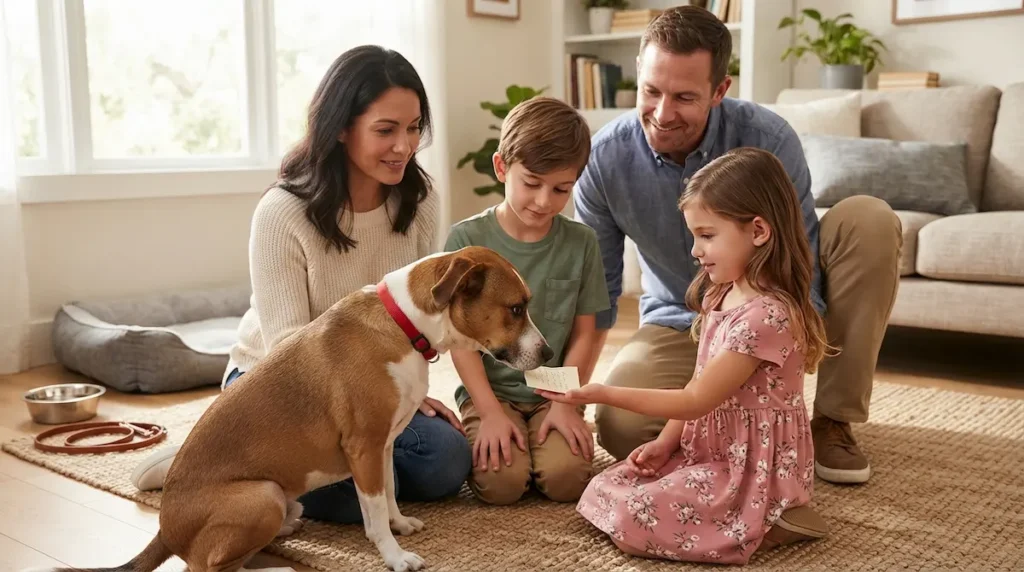
Bringing a dog home from a shelter or rescue is a joyful moment, and naming that dog is often the first family ritual. A name is how you call your new companion in from the yard, get their attention before a walk, and introduce them to neighbors.
This article is a practical guide for U.S. families who have just adopted a dog, or who are about to. It is not veterinary advice, and it is not behavior advice. If your dog seems fearful, unwell, or unsafe around people or other animals, contact your veterinarian or a qualified professional trainer or behavior consultant.
Why short, distinct names help with recall and training
According to the American Kennel Club (AKC), a dog’s everyday name, often called a call name, works mainly as a verbal cue. It signals that something relevant is about to happen, rather than serving as a human-style identity label. That is why the sound of the name matters as much as the meaning you attach to it.
The AKC recommends a name that is easy to recognize amid ordinary conversation: short and snappy, rather than long or singsong. If you need to call your dog quickly, you do not want a mouthful of words. Many trainers suggest one or two syllables for that reason.
Two-syllable names that end in a vowel, such as Daisy or Rocky, can also help you vary your tone. The AKC notes that dogs pay close attention to how we say words, not only to the words themselves. A name with room for pitch and emphasis can sound playful in the kitchen and more serious in the yard.
You will also say this name in public, at the vet, and at the park, so choose something you are comfortable calling out loud. The AKC advises against names that might make strangers uneasy, such as names that sound aggressive, because those first impressions can affect how people approach your dog.
A traditional tip is to include a hard consonant, such as a D or K sound, on the theory that it stands out more than a soft S or F. The AKC also notes research suggesting that many dogs do not distinguish similar human speech sounds the way people do. That is another reason to keep the name clearly different from the training words you use every day.
Avoid names that sound like common cues
If a name is too close to a cue you use often, you can accidentally mix signals.
The AKC offers clear examples. Kit can sound too much like “sit.” Moe or Joe can sound like “no.” Pasadena Humane adds other everyday words to watch, including stay, come, yes, and no.
Before you fall in love with a candidate, say it next to the cues you already plan to use. Try the name, then sit, stay, come, wait, down, and no, out loud and at a normal volume. If they blur together, pick another name.
Also listen for overlap with people and pets already in the home. The AKC cautions that names similar to family members or other pets can cause confusion. If your child is named Kit, or your resident dog is Joe, a new “Kit” or “Mo” is asking everyone to do extra work.
A simple family test helps. Write down two or three finalists and have each adult say them in a happy voice, then in a calmer voice, as if calling the dog in from the backyard. If a name is awkward, easy to mumble, or too close to a cue, drop it now.
Involving children without overwhelming the dog
Naming a dog is a wonderful way for children to feel part of the welcome. The arrival itself, though, can be a lot for a dog who has just left a shelter.
The ASPCA describes a useful 3-3-3 guideline for the adjustment period. In the first three days, a newly adopted pet may feel nervous and overwhelmed by new sounds, smells, people, and possibly other animals. The ASPCA recommends starting a routine, staying patient and calm, giving the dog time and space to observe, and not forcing interactions. Over the next three weeks, many dogs begin to settle, and that is a better window for basic training. Over the first three months, trust often grows and the dog’s true personality becomes clearer.
The Charlottesville-Albemarle SPCA offers similar advice for homes with children. Keep the first day calm, without rushing, crowding, or loud greetings, and let the dog explore at their own pace. Introduce children one at a time. Show kids how to offer a hand to sniff and how to stroke gently on the shoulder or chest. Help children notice signs that a dog needs space, such as lip licking, yawning, trembling, showing the whites of the eyes, sudden stillness, or walking away. Always let the dog step away. If the dog is in a crate, bed, or other quiet zone, children should leave them alone.
Involve children in the choice, but keep the first days calm. Before the dog comes home, or during a quiet moment after arrival, invite each child to suggest a name and then narrow the list together. Adults should make the final call and agree on one everyday call name. Nicknames can wait. A dog who hears four different names from four people may have a harder time learning any of them.
Once you have chosen, give children a clear job. They can say the name in a happy, ordinary voice when something good is happening, such as setting down a meal or starting a calm petting session. They should not use the name to chase, startle, or scold the dog. The AKC emphasizes that a name should predict good things, especially while the dog is still learning it.
Keep early name practice short and optional for the dog. If the dog walks away, let them. A quiet, consistent word spoken by a calm family will teach more than a chorus of excited shouting.
When to keep a shelter name, and when to change it
Many adopted dogs arrive with a name already on their kennel card. Families often worry that changing it will confuse or upset the dog. In most cases, you have more flexibility than you might think.
Pasadena Humane notes that it is fine to change an adopted dog’s name in most cases, and that stray pets were often named at the shelter and may not even know that name. The AKC also explains that dogs of any age can learn a new name, and that shelters often rename dogs when they arrive.
There are good reasons to keep the name you were given. The AKC suggests you may want to think twice if the dog has a long and positive history with that name, such as a dog from a loving home who already lights up when they hear it. Consistency can make a transition easier. The same is true if you adopt a working or service dog whose name is already tied to trained cues.
There are also good reasons to change it. If the name is hard to say, sounds like a cue, feels uncomfortable in public, or simply does not fit your family, a new call name is reasonable. The AKC especially recommends a change if the dog does not respond to the old name, or if that name seems linked to bad experiences. In those cases, the AKC suggests a fresh word, taught kindly, so the dog can start over with a new sound.
If the old name has happy associations and you still want something new, the AKC suggests choosing a name with a similar sound or starting letter, such as changing David to Dash, and briefly pairing the two (David, then Dash) before fading the old name. If you suspect the old name carries unhappy associations, choose something that sounds clearly different.
Whatever you decide, pick the everyday name as a family and stick with it. If you plan to change it, it helps to agree before the dog comes home so everyone starts with the same word.
A simple way to teach the name
The AKC describes a straightforward name game. In a quiet room, say the new name in a happy tone. When the dog looks at you, mark that moment with a click or a short word such as “yes,” then give a treat or another reward the dog enjoys. If the dog does not look right away, do not keep repeating the name. Make a gentle noise or pat your legs to get their attention, then reward the look.
Keep sessions short and practice when the house is calm. As the dog starts to turn toward the sound, you can gradually add mild distractions. The AKC also cautions against using the new name right before something the dog dislikes, such as a time-out or taking away a chew, until the name is well learned. At first, the name should mean, “Pay attention: something good or interesting is for you.” It should not, by itself, mean “come here” or “stop that.”
Use the same call name at meals, on leash, and during quiet affection. Family consistency matters more than fancy technique.
A practical first-week plan for families
- Agree on one short, distinct call name, and write it on a note near the door or food bowls so visitors use it too.
- Say the name out loud next to your common cues and the names of people and pets in the house, and change it if anything clashes.
- Give the dog a quiet place to rest, and teach children that this spot is off limits.
- In the first days, use the name calmly when offering good things, and skip crowded, high-energy naming games.
- Once the dog is eating, resting, and starting to settle, practice the name game in short, upbeat sessions.
- If you changed a well-loved old name, pair old and new for a while, then drop the old one.
- Schedule a new-pet visit with your veterinarian, as the ASPCA recommends during the early weeks. If anything about the dog’s comfort or safety worries you, ask your vet or a qualified trainer for personalized help.
A name will not, by itself, train a dog or solve adjustment problems. It is one clear word your family can share. Chosen well, and used kindly, it helps a newly adopted dog learn that when you speak to them, good things follow.
Sources
- American Kennel Club, “How to Choose Your Dog’s Name,” by Stephanie Gibeault, MSc, CPDT: http://www.akc.org/expert-advice/lifestyle/choose-your-dogs-name/
- American Kennel Club, “Can You Rename Your Dog? What to Consider,” by Stephanie Gibeault, MSc, CPDT: http://www.akc.org/expert-advice/advice/can-you-rename-a-dog/
- ASPCA, “Navigating Adoption: Finding and Welcoming Home Your Pet” (includes the 3-3-3 guideline): http://www.aspca.org/adopt-pet/adoption-tips
- Pasadena Humane, “People names, nicknames or silly names: What’s best when naming your pet pal?” by Dia DuVernet: pasadenahumane.org/people-names-nicknames-or-silly-names-whats-best-when-naming-your-pet-pal/
- Charlottesville-Albemarle SPCA, “Integrating an Adult Dog Into a Home with Children”: http://www.caspca.org/integrating-an-adult-dog-into-a-home-with-children
About the author
Betty writes for DogHIB, an international dog-care brand that has published practical dog-care guides since 2022. She covers everyday topics for families, including how to choose a name for a newly adopted dog. DogHIB’s free dog name generator offers more than 200 names across five categories and is built to help families find a short, distinct name they are happy to use at home and in public.