How to Socialize a Puppy: A Practical Guide to Confident Dogs
Most adult dogs that are fearful, reactive or easily overwhelmed did not become that way overnight. Many of them simply missed the chance, as puppies, to learn that the world is mostly safe. Good socialization is not about meeting as many dogs and people as possible. It is about building calm, positive experiences so your puppy grows into an adult that can cope with everyday life.
What puppy socialization really means
Socialization means introducing your puppy to new people, animals, places, surfaces, sounds and handling, in a way that feels safe and ends on a good note. The goal is a relaxed puppy, not a busy one. A single quiet, pleasant experience does far more than ten overwhelming ones.
Quality matters more than quantity. If your puppy is curious, loose in the body and willing to take a treat, you are on the right track. If your puppy freezes, hides or refuses food, the experience was too much, and it is better to move farther away and try again.
Why the first months matter most
Puppies are especially open to new experiences from roughly 3 weeks of age until about 14 to 16 weeks. During this window, new things tend to feel normal rather than frightening. After it closes, you can still help a dog gain confidence, but it takes more time and patience.
Many puppies come home at around 8 weeks, so you will have only a few weeks of this window left. That is why it is worth starting on the first day. Ask your veterinarian which outdoor places and which dogs are safe before your puppy has finished its vaccinations. Many vets advise a supervised puppy class once the first vaccines have been given, but the right timing depends on your puppy and your area.
A step-by-step socialization plan
The first week at home
Start inside your home and garden. Let your puppy explore different floor surfaces, such as tiles, carpet and wood. Play recordings of everyday sounds at low volume, like a vacuum cleaner, doorbell or traffic, and reward calm behavior. Introduce gentle handling for a few seconds a day: touch the paws, ears, tail and mouth, and then give a treat.
Weeks 8 to 12: calm introductions
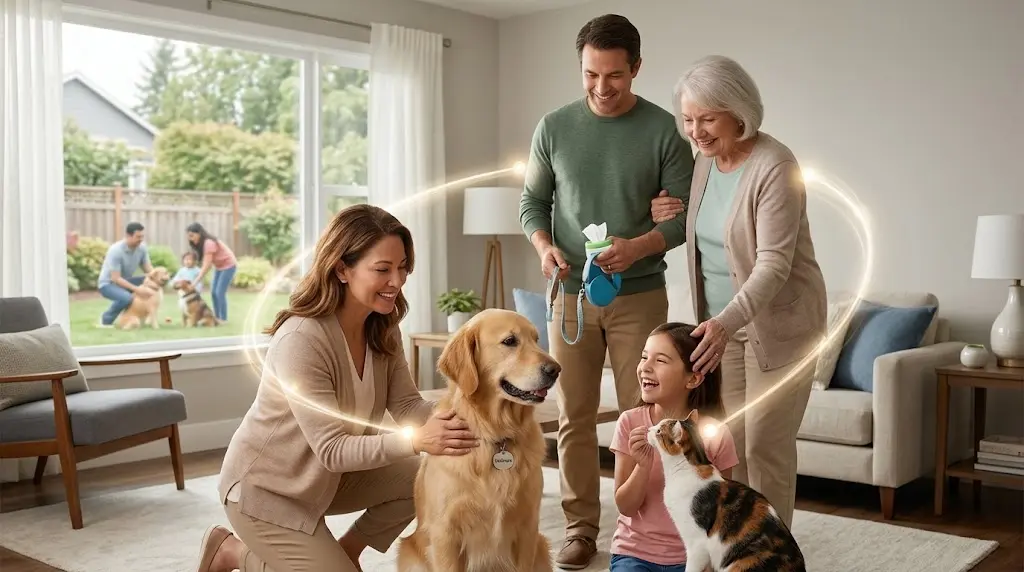
Invite a few friendly, calm people over, one or two at a time. Ask them to let the puppy approach rather than reaching down and grabbing. Include different ages and appearances: children (supervised), people with hats, beards or umbrellas, and someone using a walking stick or wheelchair. Take short car rides, carry your puppy in your arms to see the neighborhood, and visit your vet’s clinic just to say hello and get a treat.
Weeks 12 to 16: widening the world
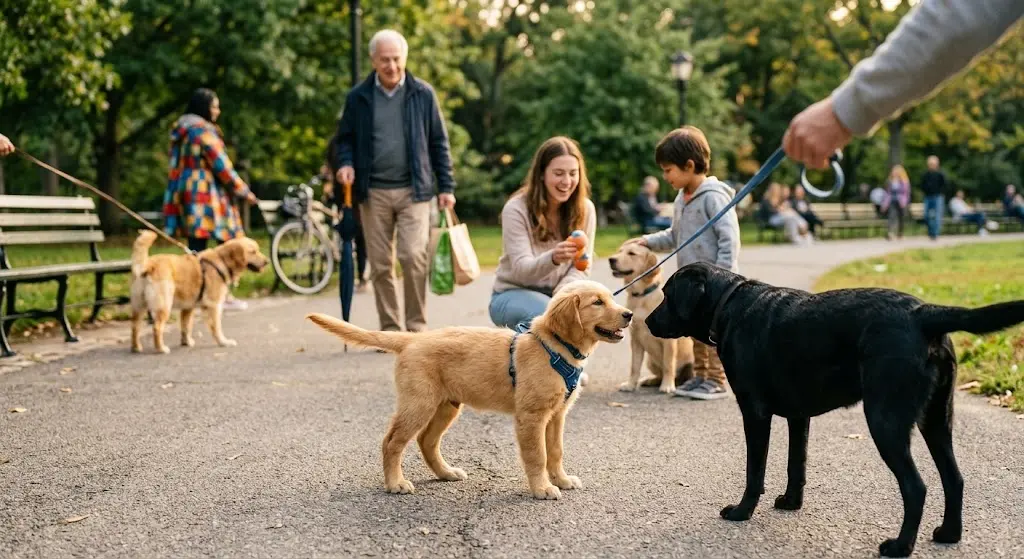
Once your vet agrees, move on to new places: a quiet street, a pet shop that allows dogs, a friend’s garden. Arrange short meetings with healthy, vaccinated, friendly adult dogs that you know well. This is also a good time to practice wearing a collar and harness comfortably, and to start walking on a lead. Our guide to leash training a puppy explains the equipment and the first walks in more detail.
Four months and beyond
Do not stop when the window closes. Keep visiting new places, meeting new people and practicing calm behavior around distractions. Adolescent dogs often go through a more cautious phase, so keep experiences easy and positive. Combine socialization with basic obedience so your puppy learns to focus on you in busy places. If you want to see what to teach at each age, this puppy training timeline by age is a helpful companion.
A simple socialization checklist
Aim for calm, rewarded exposure to as many of these as you can in the first months:
- People: men, women, children, visitors, people in uniforms, hats or sunglasses.
- Animals: healthy, vaccinated, friendly dogs, and any other pets that live in your home.
- Surfaces: grass, gravel, tiles, metal grates, stairs and wet ground.
- Sounds: traffic, doorbells, vacuum cleaners, kitchen noises and thunder recordings at low volume.
- Handling: brushing, nail touching, ear and mouth checks, being held and lifted.
- Places and travel: car rides, the vet clinic, a groomer visit and a quiet shop.
- Being alone: short, calm periods in a crate or pen so your puppy learns that quiet time is normal.
How to read your puppy’s body language
Watching your puppy’s body tells you whether to continue or to take a break.
Signs of comfort: a loose, wiggly body, a relaxed face, a soft tail, curiosity and a willingness to take treats.
Signs of stress: a tucked tail, ears pinned back, lip licking, yawning, turning away, trembling, hiding behind you or refusing food. If you see these, increase the distance, lower the intensity and let your puppy settle before trying again. Never force a puppy to meet someone or something it is afraid of.
Common mistakes to avoid
- Flooding: taking a puppy to a crowded place and hoping it will cope. This can create fear instead of confidence.
- Letting strangers pick up or crowd the puppy: it is your job to speak up and give your puppy space.
- Uncontrolled dog meetings: rough play with an unknown dog can teach a puppy to be afraid of other dogs. Choose calm, known, vaccinated partners.
- Skipping vaccinations advice: do not take your puppy to dog parks or places with many unknown dogs until your veterinarian says it is safe.
- Comforting fear with overexcited attention: stay calm and cheerful, and give your puppy room to recover.
- Stopping too early: socialization needs to continue through adolescence.
When to ask for professional help
If your puppy shows intense fear, growls or snaps, or does not recover after a scary event, speak to your veterinarian first, since pain or illness can affect behavior. A qualified, reward-based trainer or a veterinary behaviorist can then help you build a plan. Early help makes a real difference.
Final thoughts
Raising a confident dog does not require perfect timing or a long list of outings. It requires patience, a pocket full of small treats and a willingness to let your puppy set the pace. Keep the experiences short, calm and positive, and your puppy will learn that new things are nothing to worry about.
This article is for general information and does not replace advice from your veterinarian or a qualified behavior professional.
About the author: Adam Steve writes practical guides on puppy training, feeding and everyday dog care.