Could Your Dog’s Breath Detect Heartworm Before a Blood Test Can?
Approximately 1.1 million dogs are infected with heartworm disease each year, according to the American Heartworm Association.
Heartworms are transferred to dogs through mosquito bites. When the infected mosquito bites the dog, it injects microscopic larvae through the bite wound. Those larvae then migrate through the dog’s tissues, enter the bloodstream, and travel until they eventually settle in the pulmonary arteries, which are what carry blood from the heart to the lungs.
After settling into the pulmonary arteries, the worms continue growing until they reach maturity, which usually takes six to seven months after the dog was first infected. Because a mature heartworm averages 10 to 12 inches, its body eventually expands into the heart and lungs.
Why Blood Tests Sometimes Get It Wrong
Traditional heartworm screening involves drawing blood for two different tests.
First is the antigen test. Rather than looking for the worms themselves, antigen tests detect proteins produced by mature female heartworms. But heartworms usually don’t reach maturity until they’ve been in the dog’s body for at least six months. Depending on how recently the dog was bitten by an infected mosquito, it may develop heartworms while still testing negative.
The second type of heartworm test is called a microfilaria test. It also involves drawing blood, then looking for microscopic offspring in the blood. Again, these microfilariae usually are undetectable until at least six months after infection.
Meanwhile, heartworms can already cause inflammation and injury to the vessels where they live, and they can begin spreading into the heart and lungs.
Coughing, exercise intolerance, labored breathing, weight loss, and lethargy can all be signs that your dog has heartworm disease. Sometimes, however, dogs may show no obvious signs. Left untreated, heartworm disease eventually leads to heart failure.
That’s one reason routine testing and year-round prevention matter. Owners cannot rely on symptoms to determine if their dog is infected. But they also can’t rely on current blood tests if the test is done too soon.
That’s why researchers are interested in identifying ways to detect the infection earlier.
Your Dog’s Breath May be Key to Early Heartworm Detection
Every time a dog exhales, they release chemical compounds that are naturally produced by metabolic processes throughout the body. These are called volatile organic compounds, or VOCs.
Every VOC has a specific chemical pattern, or breath signature. These patterns change when the body experiences infection, inflammation, disease, or other health conditions. Microorganisms in the body also release their own unique VOCs that change the host’s breath signature as well.
Scientists have investigated breath diagnostics in humans for years, with strong results in several areas, including cancer detection.
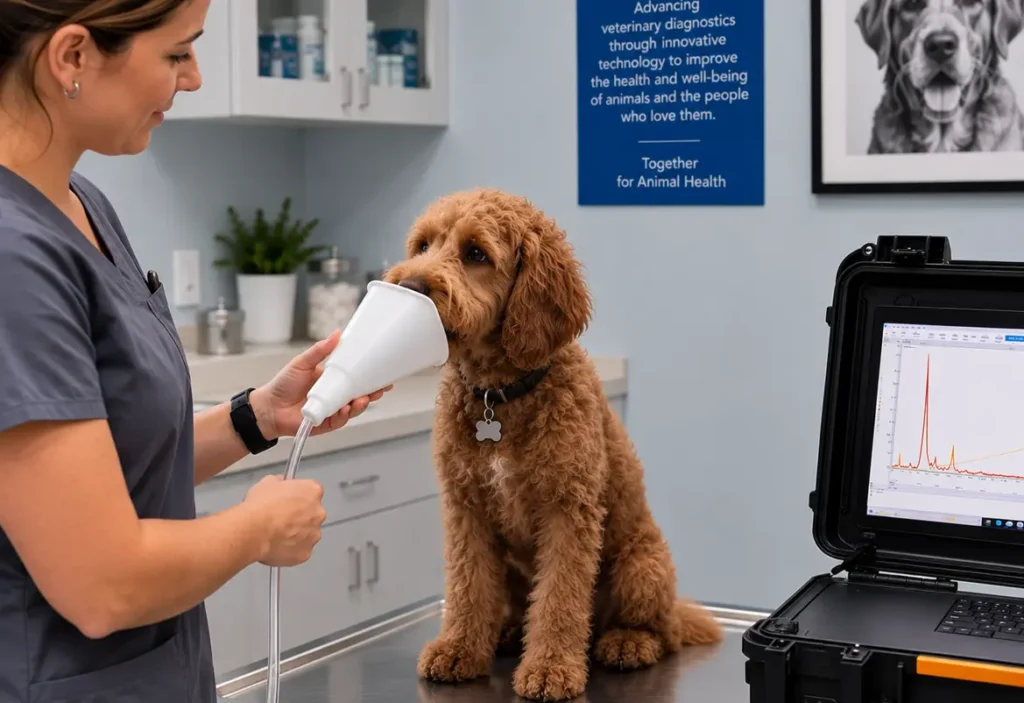
These days, researchers at VetBreath Analytics, a division of Global Innovative Platforms, Inc. (OTCID:GIPL), are studying whether breath can detect heartworm disease. The results are promising and may even shorten the current six-month diagnostic window.
In 2025, VetBreath Analytics completed the first phase of a study that tested a non-invasive breath test for canine heartworm infection. Not only was the breath test successful in detecting a unique VOC pattern in heartworm-positive dogs, but it also identified early-onset heartworm disease, something that current blood tests cannot do.
Why Earlier Detection Matters
Heartworm treatment is costly and hard on dogs, especially as the disease progresses. It’s also hard on the families who love them.
Consider a dog that has missed several doses of heartworm preventive. Current recommendations are to test the dog, then test again about six months later since a recent infection may not show up on the first test.
That wait can feel like an eternity.
If veterinarians can identify heartworm disease earlier, they can begin treatment plans sooner.
That doesn’t mean that an earlier test would replace heartworm prevention, which is still far preferable to diagnosing and treating an established infection.
But for dogs with heartworm disease, breath testing may make the road to recovery simpler, giving dogs, and the families who love them, a reason to breathe a little easier.